Content Strategy Framework for Algorithm-Driven Distribution
Fit and format matter more than follower count in algorithm-driven feeds.
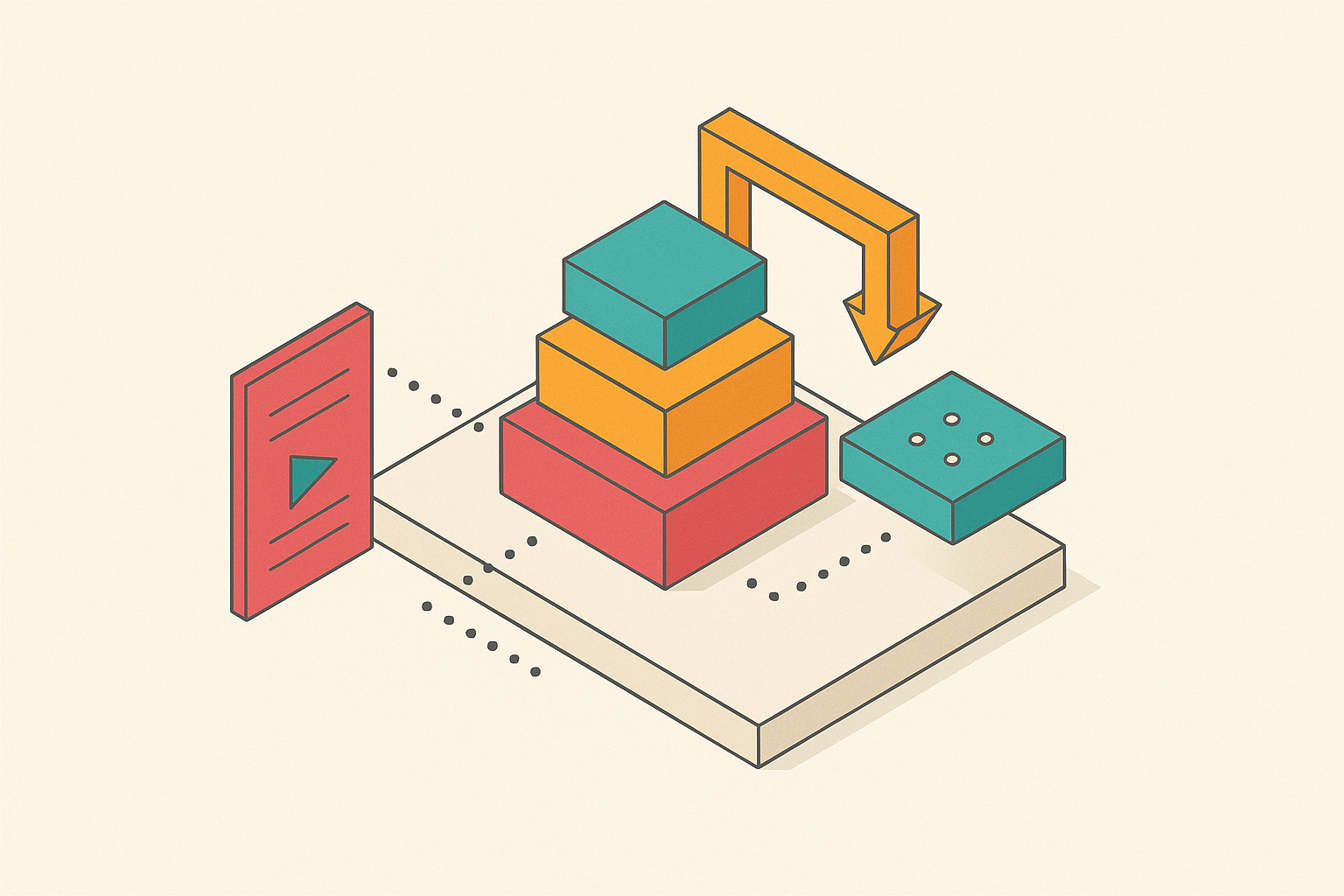
Every platform guards its ranking signals like a poker hand, but the shared priorities leak out anyway: watch time, engagement quality, topic fit, and how well your post matches whatever the user clicked on last Tuesday. Miss those four and your caption doesn't matter much. Hire the best copywriter in the city and the outcome barely moves.
The bigger shift, the one most content teams still haven't caught up to, is the move from social-graph distribution to interest-graph distribution. Social-graph distribution meant reaching your followers. Interest-graph distribution means reaching people who've never heard of you, and often skipping right past the ones who have. Most of what shows up in anyone's feed now comes from accounts they don't follow, surfaced because some model decided it's a good match. Follower count barely predicts reach anymore. Fit does, and that's a hard pill for anyone who spent five years building a following the old way.
Engagement quality outweighs engagement volume, and this is where a lot of brands trip over their own shoelaces. A video watched all the way through by two hundred genuinely interested people can outperform one that racked up two thousand passive views from people scrolling past with the sound off. Comments, shares, and DMs tell the platform "this mattered to someone." Likes and views carry far less weight, and that weight keeps sliding every year. On Meta's platforms, a DM share (someone sending your post to a friend) reads as a high-trust vote of confidence.
Organic reach keeps shrinking, too. Only a sliver of a brand's followers ever see a given post, and yet teams keep doubling down on volume, posting constantly while ignoring the signals the algorithm actually uses to decide who to trust. Post often with weak completion rates and you're teaching the system to trust you less over time. Recycled content, aggregated round-ups, anything that smells purely promotional, gets pushed toward the back of the line behind original work. Measure what the algorithm measures, and let the content calendar follow from that.
Audience signals as the foundation (what to know before deciding what to make)
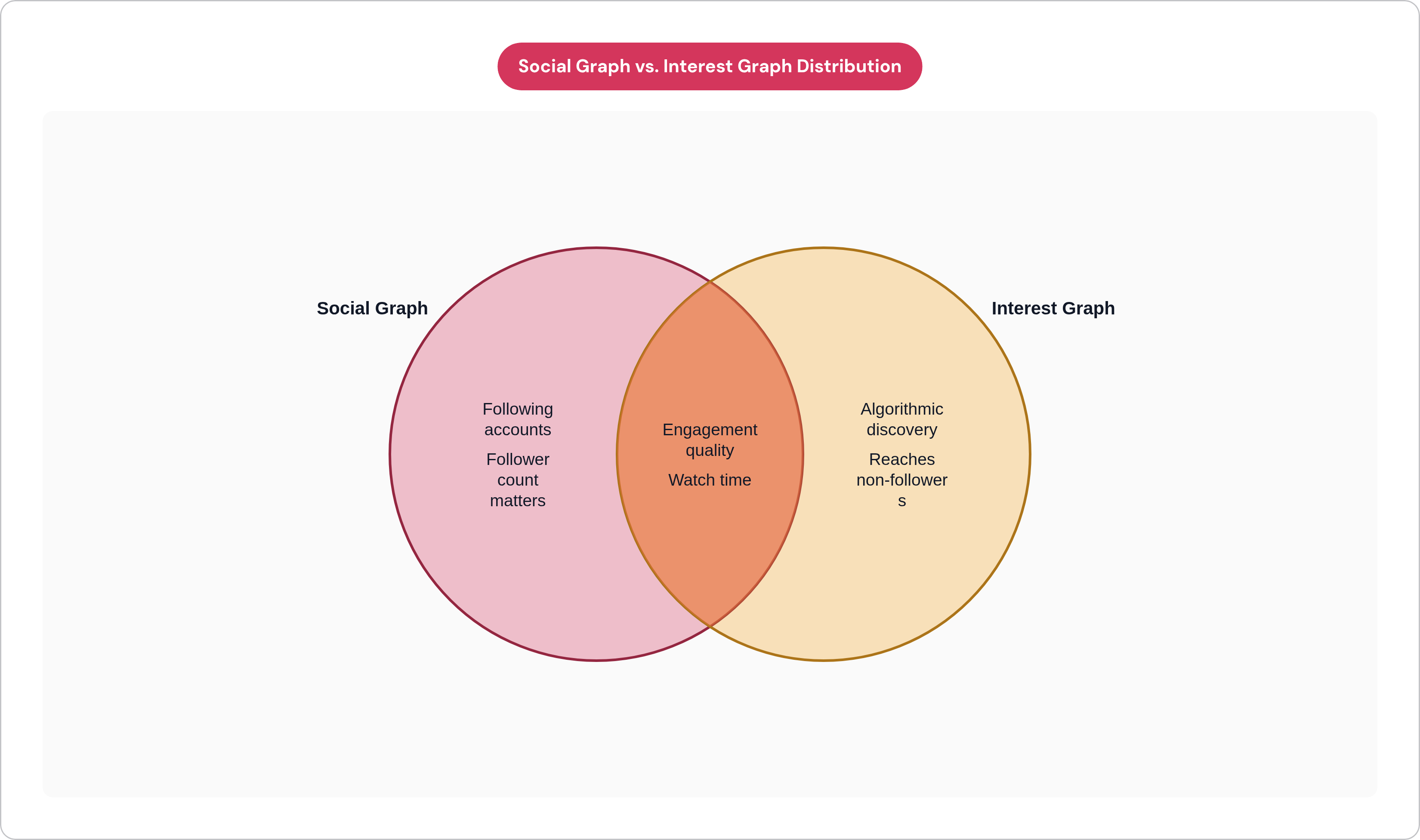
Interest-graph distribution changes the math on audience size in a way that trips up a lot of "bigger is better" thinking. A narrow topic that matches real behavioral intent beats broad, everything-for-everyone content aimed at maximum reach, almost every time. Fit beats size, and no amount of budget fixes a mismatch.
First-party data is the one signal a brand actually owns. Email lists, CRM records, on-site behavior, direct replies inside your own community: these tell you what a specific group of people cares about, regardless of what a platform decides to surface today. As third-party cookies die off and platforms lock down data access further, first-party signals become the one thing you can count on still existing next quarter. They also feed lookalike and suppression audiences for paid campaigns, which lets a brand grow reach while getting choosier about who actually sees the ad.
Platform-level signals matter too, but they answer a different question. They tell you which formats hold attention on a given platform, which topics keep resurfacing in the comments, what gets saved and shared instead of liked once and scrolled past. Instagram's "Your Algorithm" feature now lets users directly declare topic interests, so the audience is, in effect, filling out its own preference form. Content that matches those declared interests gets a real lift from that signal alone.
Sequencing is the whole point here. Audience signal collection comes before content planning, not after. Teams that open with "what should we post this month" skip the one step that decides whether any of it gets seen at all. Ask instead what your audience is telling you it wants, and on which platform, and you end up with a plan the algorithm actually wants to work with. First-party data sits underneath everything else, platform behavior stacked on top of it, and that base layer is the one part of the whole system a brand fully controls, the part nobody can yank away in a policy update.
How video dominance reshapes content structure decisions
Video pulls noticeably higher engagement than images, plain text, or link posts across large studies of platform activity, and the gap isn't small. Short-form video does even better than long-form on a per-view basis. The reason isn't much of a mystery: ask less of the viewer's time, get a higher completion rate, and a higher completion rate tells the algorithm it's safe to hand your content to strangers.
Most businesses now treat video as a core marketing tool, and most say it pays off. This stopped being a bet a while back. Short-form leads in reported return across format types in recent marketing surveys, ahead of both long-form and live video, though live video still wins on raw attention when it actually works, which, to be fair, isn't every time.
The platform-specific details change what "using video" means, channel by channel, and this is where a lot of teams get lazy. Reels now eat up a large and growing share of total time spent on Facebook, something Meta has confirmed on its own earnings calls. On TikTok, the For You Page drives most video views, so the bulk of watch time comes through algorithmic discovery, not people checking in on accounts they already follow. YouTube split its Shorts recommendation engine off from long-form entirely, meaning doing well in one format tells you nothing about the other. Each one needs its own plan, its own hook, its own math.
What that means in practice: format, length, where the hook lands, how hard you engineer for completion. These are distribution decisions wearing creative-decision costumes. A well-written long-form article, posted as a plain link, reaches a fraction of the audience the same idea would reach as a native short-form video on most platforms. Repurposing long-form work into short video saves production time, sure, but it also works as its own distribution engine on top of that. And the bar keeps moving: TikTok raised the completion-rate threshold required for wider reach, so a video that would've spread easily two years ago might now stall in a tiny test audience and never leave it.
Platform-specific algorithm logic and what it means for sequencing distribution
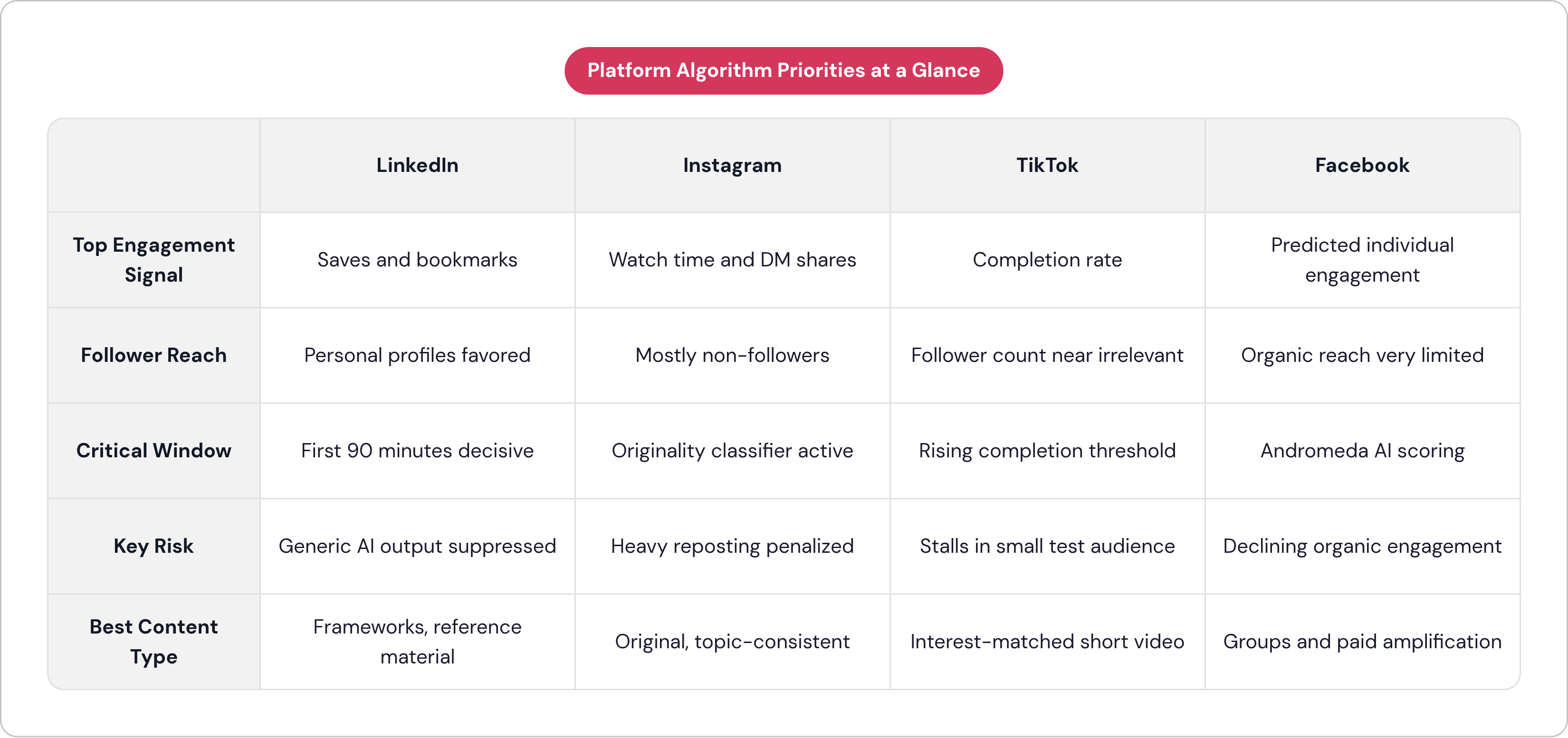
No single distribution sequence works everywhere, and that's the part brands keep learning the hard way, usually after the fifth cross-post flops. Each platform runs its own ranking signals and its own engagement hierarchy. Post the same asset to all of them and you'll likely underperform on every single one at once.
LinkedIn treats saves as its strongest engagement signal, worth considerably more than a like, which makes bookmark-worthy content (frameworks, checklists, reference material) an actual strategy instead of a nice-to-have. Substantive comments carry real weight; "great post!" contributes close to nothing. The first ninety minutes after posting matter disproportionately, since the algorithm leans on early engagement to decide whether a post earns a bigger audience later. Personal profiles get a much bigger share of feed space than company pages, worth remembering before a B2B brand defaults to the corporate account for everything. LinkedIn's detection systems now suppress content flagged as generic AI output once it tries to travel past a user's immediate network, so real reach depends on original thinking.
Instagram ranks watch time, likes, and sends at the top, with DM shares as its highest-trust signal. Its originality classifier penalizes heavy reposting, so original content is closer to a requirement than a preference. Sticking to a clear, consistent topic pays off through the declared-interest system users can steer themselves. Most Feed posts come from accounts people don't follow, so interest-graph reach is real here, though it only shows up for content that actually earns it.
TikTok runs almost entirely on interest-graph logic, so a brand-new account can outreach a ten-year-old one if the content matches what viewers are signaling they want. Follower count barely predicts anything on this platform. Completion rate is the real gate; anything that doesn't hold viewers past a rising threshold never leaves its initial test audience. Worth watching: the shift of US infrastructure to Oracle's cloud and the US-only retraining of the recommendation model, meaning the American For You feed might drift from the global version over time.
Facebook runs on its Andromeda AI system, which predicts engagement at the individual level, weighing things like lingering on a post or scrolling straight past it, alongside plain like counts. Content posted inside active Groups gets a real reach bump, since those spaces get treated as higher-trust environments. Platform-wide engagement has kept declining for years, which is why most strategists now treat Facebook as a paid-amplification and community channel first, with organic reach a distant second.
Plan channel by channel. Adapt to each platform's signal hierarchy instead of formatting once and copy-pasting the rest.
Search as a distribution layer (what Google's helpfulness integration means for content strategy)
Google folded its Helpful Content System into the core ranking algorithm in early 2024, which sounds like a small technical update until you sit with what it actually means: helpfulness stopped being a periodic check-in and became a constant factor baked into every ranking decision, all the time, everywhere.
The evaluation happens at the site level, not the page level. A domain full of thin, SEO-first content can drag down rankings across an entire site, including the handful of pages that were genuinely good. An analysis of hundreds of travel publishers found a substantial share lost most of their organic traffic after this update, and recovery has been slow and incomplete for most of them. Here's the uncomfortable part for anyone who built a content operation around volume: publishing lots of SEO-optimized pages without asking whether they help anyone now sits on the balance sheet as a liability.
Add to that the rise of AI Overviews and zero-click search. A growing share of searches now resolve without anyone clicking through to a website at all, and queries answered directly by an AI Overview show sharply lower click-through rates to the sites underneath. Meanwhile, community and forum platforms have picked up real search visibility since the helpfulness update, with actual user discussion now occupying spots that used to belong to brand content.
Google's E-E-A-T framework, Experience, Expertise, Authoritativeness, Trustworthiness, added "Experience" as its own explicit signal. That's a structural advantage for content written by someone who's actually done the thing being described, and it's hard to fake at scale. Getting harder every quarter, too. The test for search ends up matching the test for social: content built to solve a specific problem for a specific reader, written with real expertise, holds up over time. Organic search still drives most traffic for the majority of content sites, so chasing AI-search hacks instead of search quality carries its own real risk, whatever this month's newsletter headlines are telling you.
The AI content suppression problem and where human authorship fits in the framework
AI-generated content flooded every platform at once, and the platforms answered with enforcement dressed up as polite guidelines. TikTok uses metadata-level detection through C2PA Content Credentials to flag AI-generated video, and undisclosed AI content gets actively suppressed once it's caught. YouTube requires disclosure whenever generative AI significantly alters or simulates realistic content; skip that disclosure and you risk removal or reduced reach. LinkedIn's detection systems suppress generic AI content once it tries to travel past a user's immediate network. The platform reports high accuracy here, though it hasn't published a false-positive rate, which tells you something on its own.
Audiences are pushing back too, and not quietly. A majority of users say AI-generated content disrupts their experience on a platform, and a real share say they'd cut back on using a platform altogether if AI content in their feed kept increasing. That's a demand-side problem sitting right on top of a supply-side enforcement problem, both pointing the same way.
The fix that's actually working splits AI's job in two. There's intelligence, and there's production, distinct tasks wearing different hats. AI handles hook validation, brief generation, mining patterns across competitor content, running the numbers on what's already working: the layer that makes human writing faster and better aimed. The thing that actually gets published, the piece that has to earn its own distribution, needs a person behind it. Original perspective. Demonstrable expertise. A point of view a chatbot couldn't spit out on the fifth try. AI-assisted content can still earn full distribution on LinkedIn and elsewhere, so long as real thinking sits inside it. The suppression targets generic output, regardless of whether a tool touched the draft somewhere along the way.
Google's addition of "Experience" to E-E-A-T reflects the same instinct on the search side. First-hand experience is hard to fake convincingly at scale, and the algorithms on both search and social keep getting better, slowly, at spotting the difference between someone who did the thing and someone who read about the thing. Across every platform covered here, the pattern holds: AI speeds up the strategy and briefing work, and people produce what has to earn its own distribution. Whether that was the intent behind these systems or just a side effect of chasing engagement, the outcome rewards the same division of labor either way.
Building the framework: sequencing audience signals, content structure, and distribution decisions
Put the pieces together and what you get is a sequence, where each step depends on the last one actually getting finished. Skip a step and the whole thing tips over, usually at the worst possible time, right after you've told your boss the campaign is "basically ready."
Start with audience signals: first-party data first, platform-level behavioral signals second. That layer decides what to make in the first place. Skip straight to production without it, and you've found the single most common reason distribution falls flat before it gets a chance to try.
From there, content structure, format, length, where the hook sits, how hard you're engineering for completion, has to be decided with the destination platform in mind. That's the second most common failure: picking one format and cross-posting it across four platforms with four different signal hierarchies, then acting surprised when three of them flop.
Only after those two layers are settled does the platform-by-platform logic from earlier make any sense: LinkedIn's ninety-minute window, TikTok's completion-rate gate, Instagram's originality classifier, Facebook's Andromeda-driven scoring. That's step three, and it only works because it follows the first two instead of arriving as an afterthought bolted onto the end. None of this is complicated, exactly. It's a lot of small, correct decisions made in the right order, and most teams still make them backward, then wonder why the post everyone loved in the room never left the room.