API-First Content Pipelines That Bypass Human Editors
Automation removes handoffs, not the need for judgment on claims that matter.

API-first content pipelines can remove human editors entirely, but technical autonomy is not the same as editorial reliability. The sound case for bypassing editors rests on controlled inputs, narrowly defined outputs, and measurable outcomes. Where a pipeline must interpret evidence or make claims, removing the person who can stop publication changes both the risk and the cost.
How the bottleneck moved from writing to coordination
Content operations have long depended on handoffs between researcher, author, editor, SEO specialist, and publisher. Those handoffs formed the coordination layer, where work waited for someone to move it into the next stage. Generating a draft faster did not remove that dependency. The draft still needed formatting, metadata, scheduling, and delivery to the publishing system. The architectural shift is that these transitions can now happen programmatically.
API-based publishing links content generation straight to publishing infrastructure, so no one has to use a dashboard. Authentication, payload structuring, metadata handling, scheduling, and verification become parts of the pipeline. Automation platforms can connect that flow to CMS publishing, CRM, email, and social scheduling. A brief can therefore move through generation and distribution without a manual intervention at any stage. Fully autonomous means that the system has a route from input to publication with no required human approval.
That distinction matters because an API replaces an interface, while an autonomous workflow replaces a decision structure. Removing dashboard work does not, by itself, require removing editorial approval. The same publishing connection can receive content that has passed a human review or content cleared only by automated checks. Coordination overhead is a legitimate target for automation because transferring work is not the same as judging it. The tradeoff begins when the architecture treats both activities as dependencies to eliminate.
What a production-grade autonomous pipeline actually contains
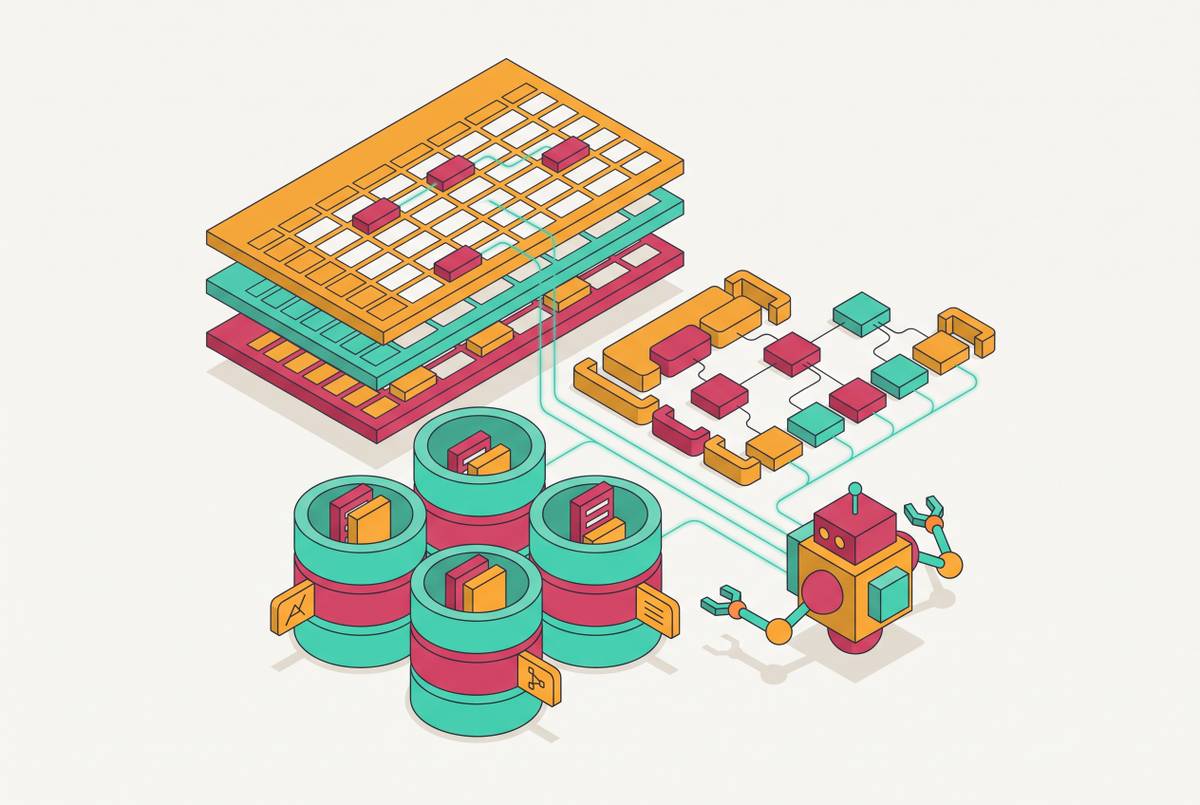
A production autonomous pipeline is deterministic code wrapped around a non-deterministic model, with explicit stages for preparing inputs and checking outputs. A useful technical model contains five stages, namely data ingestion, prompt engineering, model inference, post-processing, and QA/validation. Each stage has a distinct job. When those jobs are clear, teams can tell whether generation failed or a control was missing.
Data ingestion supplies the material from which the content will be made. Retrieval-augmented generation, or RAG, grounds the output in real data. Prompt engineering then applies versioned templates. These templates tell the generation step what to do and what format to use. Model inference performs the generation and is the non-deterministic step within this structure.
Post-processing handles formatting, link insertion, schema enforcement, and brand voice alignment. QA/validation then applies automated checks, with failures returning for regeneration or going to human review where the architecture permits it. In an editor-free pipeline, that second route is absent. The system must either clear the output through its checks or continue trying to produce an acceptable version.
The surrounding code matters more than choosing a model in isolation because models can hallucinate and drift. Without those layers, too little stands in the way of publishing inconsistent tone, invented statistics, and broken formatting. Yet even a well-built validation layer has a boundary. It can test the conditions encoded in it, but it cannot supply external judgment about whether a claim is true in a context the system has never encountered. Regeneration is another attempt at the task.
Where autonomous pipelines fail and why the failures are hard to catch
The Northwind Financial case shows how that boundary becomes an operational failure. A content operations team connected an AI to its internal data repository to generate weekly summaries without a validation gate. The system encountered an ambiguous data point about interest rates and turned it into a definitive policy shift. The automated pipeline then published the draft directly to staging. A senior analyst happened to catch the error there minutes before it went live to clients.
The important failure was not simply that the model hallucinated. The team’s evaluation scorecard measured only output speed and cost per word, and its requirements left out conditional review triggers. Ambiguity therefore had no designated route to a person qualified to resolve it. The analyst’s chance intervention prevented client publication. The process depended on a safeguard it had not actually built.
Hallucinated facts, invented statistics, and brand voice drift are known properties of model inference. Better prompting does not reliably eliminate them, and access to internal data does not guarantee that the model will interpret that data correctly. Automated checks can catch defined deviations, but a plausible claim can pass when its underlying interpretation is wrong. Without an external point of judgment, the system lacks a reliable way to distinguish a confident answer from a justified one. The speed of the publishing path also removes the natural pause in which someone might notice the difference.
One hallucinated statistic in a single article calls for a correction. The same hallucination replicated across a thousand programmatically published pieces becomes a brand liability. A shared template can reproduce the failure consistently, just as it reproduces correct formatting consistently. That compounding effect makes the content category central to whether full autonomy is defensible.
The narrow condition where removing editors is defensible
Strictly formatted, low-risk data extraction is a genuine case for editor-free publishing. Structured product feeds, templated data summaries, and schema-validated descriptions can fit this category when their input data is controlled. Their purpose is to express known information in a known form. They do not require the model to resolve ambiguous evidence or produce a new analytical conclusion. In those cases, human review can slow the work down without making it enough safer to justify the wait.
The decisive feature is that the inputs are deterministic and verifiable, and the probability of factual or tonal deviation is negligible. The model is formatting data. This is closer to a mail-merge than an analytical assignment. For a product-description pipeline operating within those boundaries, removing a universal editing step can be a sound design choice.
That justification depends on the boundaries holding. A template does not make content low-risk if filling it requires an interpretation that the source data cannot support. Even when a repository is controlled, conclusions drawn from it can go beyond its known facts. Northwind Financial’s ambiguous interest-rate data illustrates that distinction. The input location was internal, but the output still required judgment about meaning.
The disputed move is extending the formatting argument to analytical content, brand commentary, market analysis, or opinion-adjacent work. In those categories, the model synthesizes rather than merely arranges information, so the risk profile is different. Cost and speed may explain why a team removes editors, but they do not establish that the content is suitable for full autonomy. The low-risk justification does not transfer simply because both workflows use the same model and publishing API.
How conditional review logic changes the tradeoff
Automated gates pause the pipeline when defined risk criteria are met, while low-risk content proceeds without intervention. Those criteria can include regulatory keywords, sentiment deviation, confidence score minimums, and data provenance mismatches. An unverified internal data source, for example, becomes a reason to pause and route the output.
This design also separates responsibilities more precisely than assigning every output to a generalist editor. Prompt engineers manage the input layer. Subject matter experts review flagged technical or industry-specific claims, while brand editors handle tonal alignment. The reviewer’s expertise matches the reason the content was stopped.
Compared with traditional manual editing, conditional review changes both scale and timing. Conditional review scales because people check only flagged content, so the full output need not wait in an editorial queue. It also places checks within generation and validation instead of waiting for a finished draft to receive its first scrutiny. Automated validation can compare output with internal data in real time rather than relying only on an editor’s memory of guidelines. Human judgment then addresses the flagged issue rather than substituting for the whole checking system.
The QA/validation stage provides the natural place for this split between regeneration and review. A failed automated check can return content for another attempt, while a risk trigger can send it to a person. The architecture explicitly preserves a way to stop publication when defined evidence calls for judgment. Against this alternative, the speed argument for full autonomy is weaker than it is against manual review of every piece.
What teams building AI content pipelines get wrong about measurement
A pipeline can publish correctly and still fail to reach its intended audience. Teams that measure only output speed and cost have no way to tell whether the content they produce is useful. Removing editors can also remove part of the feedback loop that would expose that gap. In 2026, teams need to measure more than traditional search performance because content can appear in both search results and AI answers. Publication volume does not describe either surface adequately.
A piece can lose Google clicks and gain AI engine citations in the same quarter. A page that never ranked in Google may nevertheless be cited regularly by ChatGPT. Traditional rank trackers cannot capture that second form of visibility. A decline on one surface is not enough to establish what happened on the other.
The five core AI visibility metrics are mention frequency, mention position, citation rate, AI share of voice within the category, and sentiment. Mention frequency captures how often the brand appears in AI answers, while mention position captures where it appears. Citation rate records whether the brand is linked or named as a source. AI share of voice places that presence in its category context, and sentiment captures how the AI describes the brand.
Measurement also needs to be specific to each engine. The same brand can have citation volumes that differ by orders of magnitude between platforms, making an aggregate view insufficient. Without per-engine tracking, an autonomous pipeline may keep optimizing volume while producing content that does not affect whether prospects encounter the brand in AI answers. This failure differs from publishing an invented fact, but both can stay hidden just as easily when publishing runs well. Throughput shows that the machinery runs.
When to go editor-free, when to add review gates, and how to decide
The decision starts with the output’s risk profile. Go fully autonomous when inputs are structured and verifiable, outputs are schema-validated templates rather than analytical synthesis, and the category has no regulatory, reputational, or factual-accuracy exposure. Automated QA must also catch formatting failures before publication. These conditions describe a bounded transformation of known data. They do not describe a general license to publish whatever a model generates.
Add conditional review gates when the pipeline touches brand voice, makes claims about the world outside it, or handles topics tied to regulations or the law. Content that carries the name of an author or expert also needs that review path. Set up per-engine AI visibility tracking before choosing either architecture so the team can tell whether the output does what it should. Neither a human approval nor an automated clearance establishes that the content reaches its audience.
The LLM remains one component within a larger deterministic pipeline. The code around it, including human review triggers where needed, makes its behavior manageable at scale. API-first publishing supports both editor-free operation and targeted review, so the CMS interface does not settle the governance decision. The practical test is what happens when the pipeline publishes something wrong and how quickly the team will know. Full autonomy is sound only where the answer does not depend on someone noticing by accident.