Bot Buyer Personas vs Human Buyer Personas
AI agents now drive buying decisions, forcing marketers to rethink buyer personas entirely.
AI agents now buy things. Not "recommend" things or "surface" things in a search result: actually place the order, complete the checkout, mediate the transaction from search to purchase. That changes what a buyer persona has to be, because the standard buyer persona (built on emotion, motivation, and lived experience) assumes a human is on the other end of the decision. Increasingly, that assumption is only half true.
The scale at which AI agents are entering the buyer role
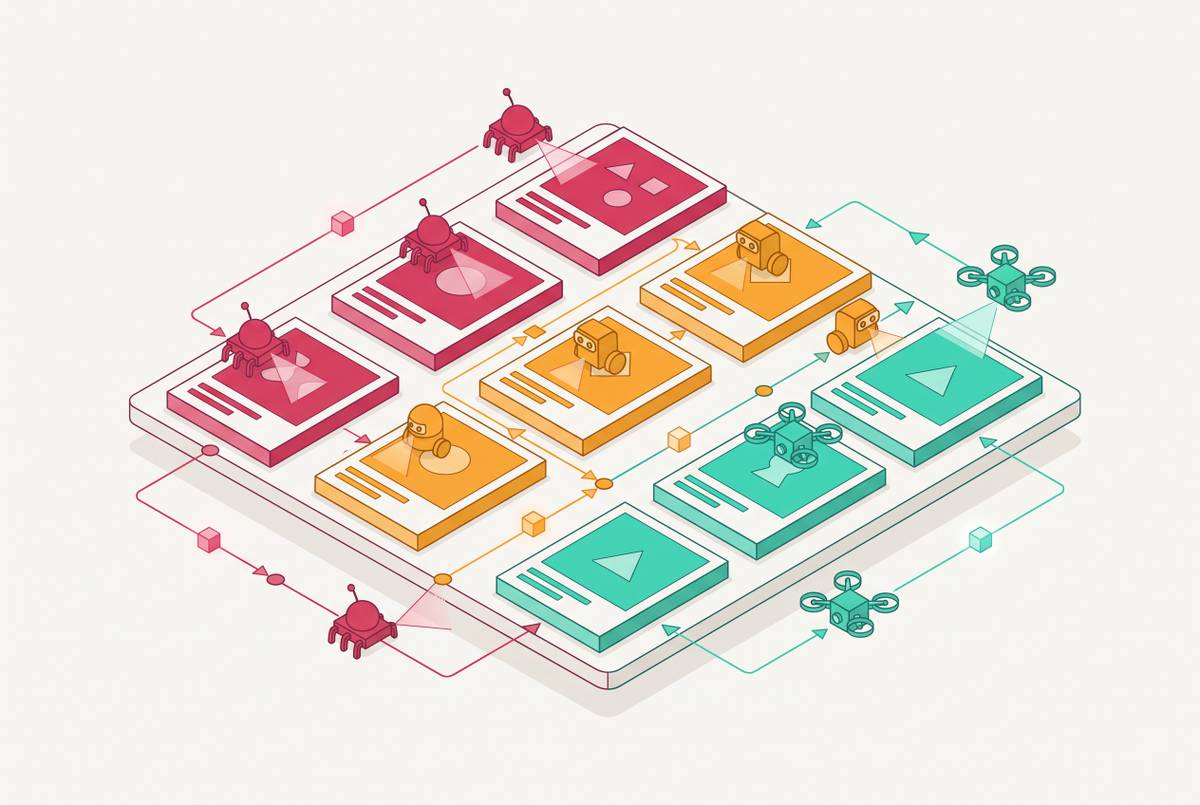
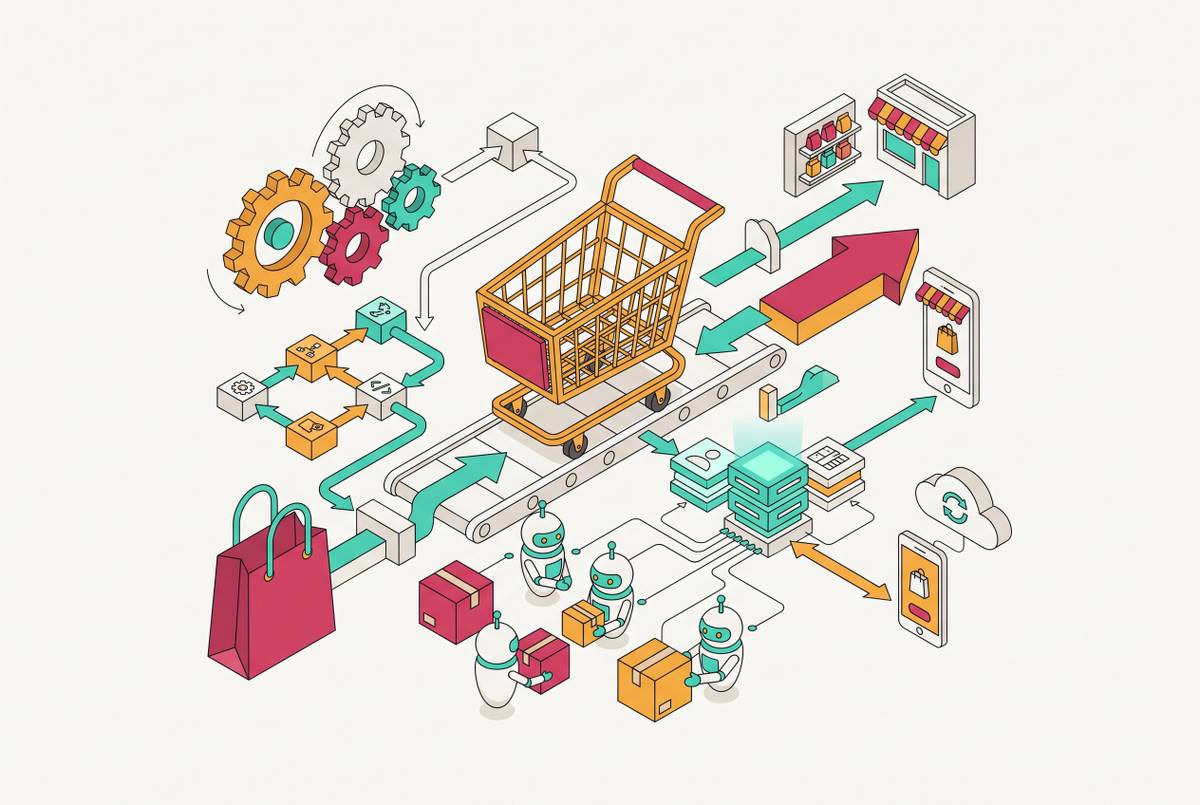
Agentic commerce means an AI system handling a purchase decision on its own: setting a goal, reasoning through steps, pulling in tools, comparing options, and executing the transaction without a human clicking "buy." That's a different animal than a recommendation widget bolted onto a product page.
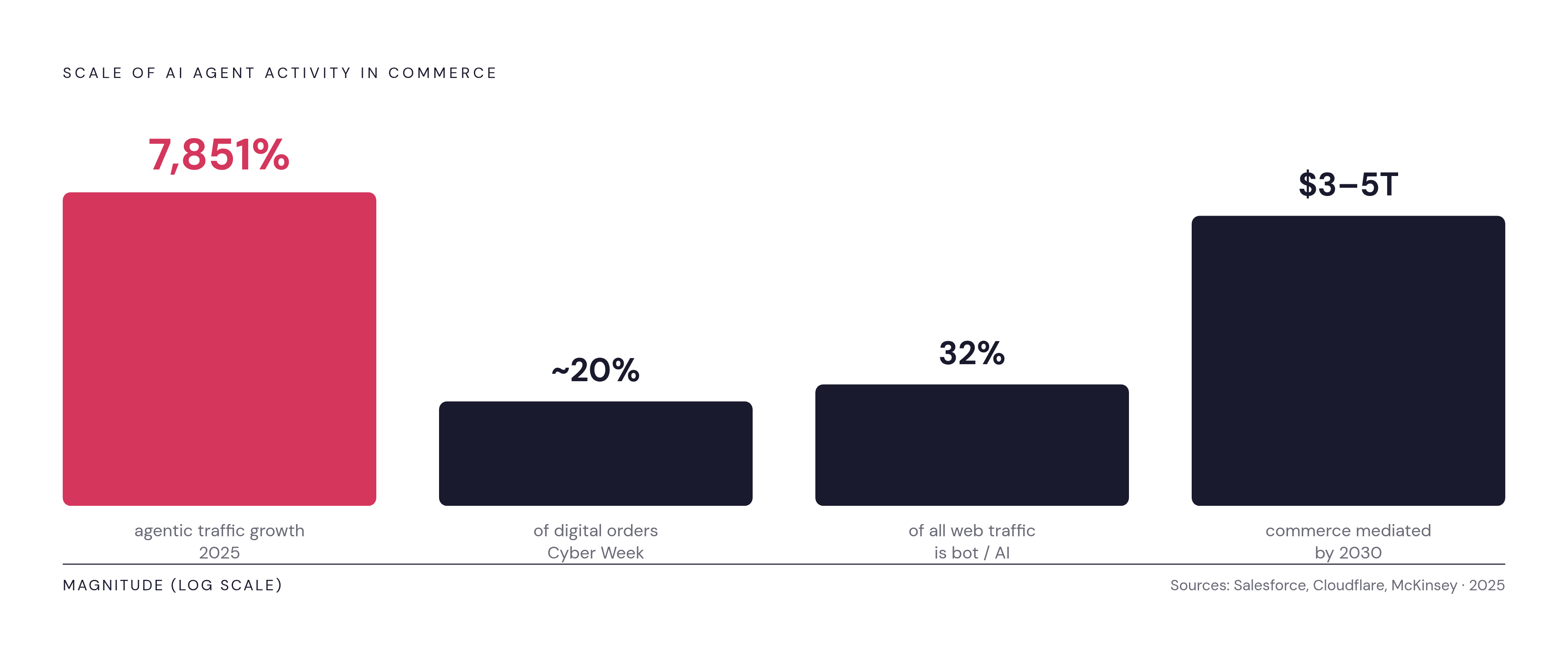
The growth curve on this is almost comically steep. Agentic AI traffic grew 7,851% in 2025 — a figure that's not a typo and not a mature market settling into a rhythm, it's a channel being built in real time, the digital equivalent of laying track in front of a moving train. McKinsey projects AI agents could mediate somewhere between $3 trillion and $5 trillion of global consumer commerce by 2030, which is the kind of number that sounds abstract until you notice it's already showing up in quarterly retail data. During Cyber Week alone, AI-driven interactions influenced roughly $67 billion in global online sales, about 20% of total digital orders, according to Salesforce.
The infrastructure numbers back this up from a different angle. Bot traffic now makes up 32% of all HTTP requests hitting the web, by one measure of the overall request landscape. Vercel's AI Gateway saw tool-using agent requests jump from 11.4% to 22.2% of total traffic, and those agent requests now carry 58.9% of all tokens moving through the system. Put plainly: the buyer side of a transaction routinely includes something that was never human to begin with. A persona framework built entirely around feelings and lived experience is missing half its audience before it even opens.
How human buyers actually make decisions, and why personas are shaped around that
Humans feel first and justify after. That's not a cynical read on consumer behavior, it's closer to a documented sequence: the emotional reaction fires, and the rational explanation gets built to support a decision that's already been made in some quieter part of the brain.
What shapes that emotional layer is messy by design: mood on a given day, personality, cultural background, cognitive biases nobody consciously chose, social cues picked up without noticing. None of it holds still long enough to be modeled cleanly, which is exactly why persona work leans on interviews instead of spreadsheets.
Social proof is the clearest example of this at work. Peer reviews, word of mouth, an influencer holding up a product on camera, all of it taps something closer to a survival instinct than a logic function: the need to belong, to copy what the group is doing, to not be the one person who bought wrong. Brand trust behaves the same way, and it comes with a price tag attached. Salsify's 2026 Consumer Research report found that 68% of customers will pay more for products from brands they trust, which is an irrational premium by any strict cost-benefit math. FOMO, scarcity, nostalgia, identity alignment with a brand's story, these are the levers a well-built human persona tracks, because these are the levers that actually move people.
Human personas exist the way they do because the inputs that drive real decisions are subjective, social, and emotional, with logic showing up afterward as the wrapper paper. Which raises an obvious question: what happens when the buyer has no emotions to wrap?
How AI agents evaluate and decide, the inputs that actually drive bot purchasing behavior
An agent doesn't have a mood. It doesn't get nostalgic about the brand of cereal its parents bought. What it has is an objective function, structured data, and a process for scoring one option against another.
A July 2025 academic framework breaks agent decision-making into six stages: Target Confirmation, Information Gathering, Reasoning Process, Decision Mechanism, Action Execution, Feedback Acquisition. Across all six, agents and humans behave in measurably different ways. Where a human persona wants a story, an agent wants a field: price, specs, availability, certifications, compatibility, delivery time. These aren't nice-to-haves for an agent, they're the entire input set.
Flashy ads, emotional storytelling, brand narrative, urgency copy screaming that only three are left: none of it registers, because none of it maps to anything an objective function can score. That doesn't mean agents chase the cheapest option like some kind of algorithmic bargain hunter, though. A well-built agent optimizes across several variables at once, quality, reliability, long-term cost, risk, so total cost of ownership and durability are legitimate inputs even without a human getting emotionally attached to "buying quality." Something structurally important follows from this too: agentic commerce compresses what used to be days of research and comparison shopping into something closer to instant. The window to influence the decision is shorter, full stop, because the deliberation that used to happen over a weekend now happens in milliseconds.
Because agent cognition is governed by parameters set before deployment, decision behavior tends toward patterns that are more consistent and observable than human choice. Which sounds like it should make marketing to bots simple. It doesn't, and the next section explains why.
Where bot logic breaks down, documented irrationalities in agent purchasing behavior
Here's the part that should make anyone confidently building "rational bot personas" pump the brakes: AI agents are not, in fact, perfectly rational. Peer-reviewed research keeps finding cracks, and some of those cracks are wide enough to drive a marketing strategy through.
Research accepted by PNAS in 2026 found that LLM-powered agents are typically far more sensitive to ordinary choice architecture cues, the small nudges of layout and framing, than humans are. Some of those cues push the model toward better outcomes, some push it toward worse ones, and the agent doesn't seem to know the difference any better than a person scrolling half-asleep at midnight would.
A 2025 arXiv study testing Claude Sonnet 4, GPT-4.1, and Gemini 2.5 Flash found that where a product sits in a list can significantly swing which one gets picked. In some categories, market share concentrated hard on a handful of products while other brands got selected essentially never, a pattern that looks less like rational comparison and more like a popularity contest with extra math. The same study found agents respond positively to higher average ratings and larger review counts, and they're sensitive to price, which sounds obvious until you notice how much the sensitivity varies from one model to the next. Claude doesn't weigh things the same way GPT-4.1 does. Gemini 2.5 Flash has its own quirks entirely.
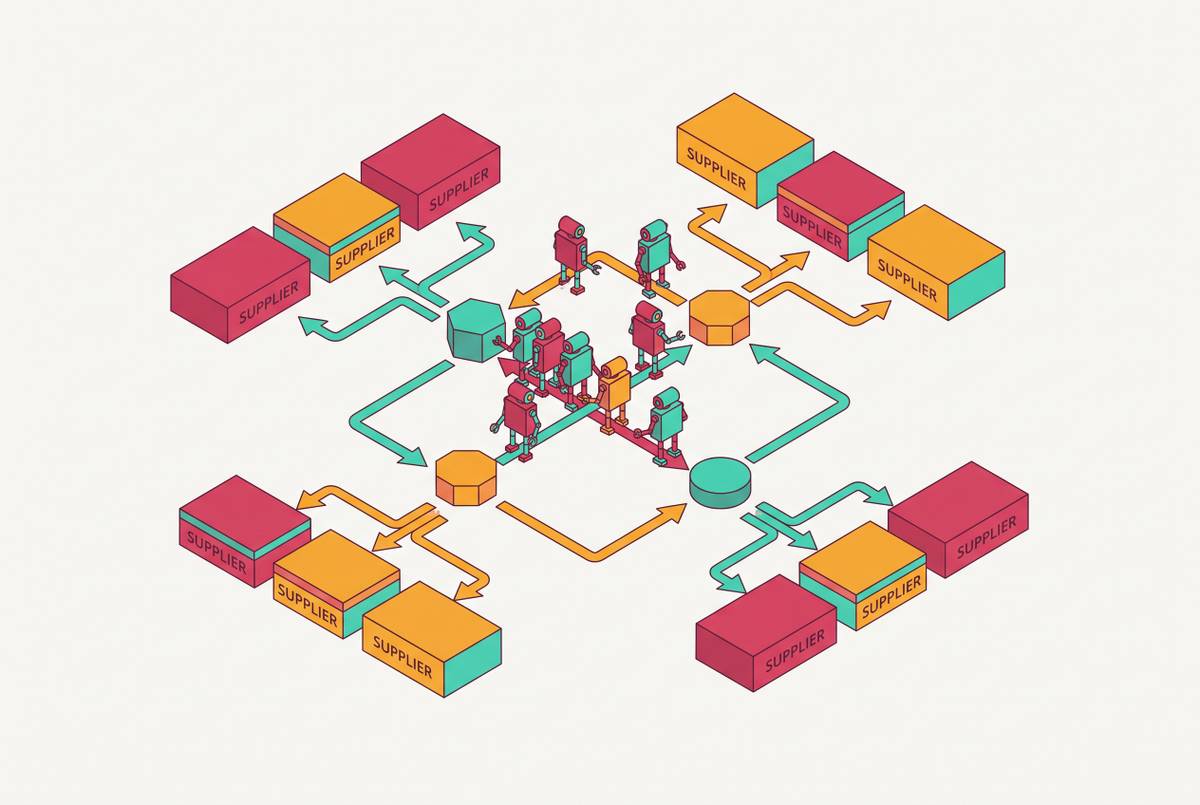
Training data drags its own bias along for the ride, too: agents built on data skewed toward large, well-documented brands tend to inherit that skew, which means a smaller or newer brand can be functionally invisible to an agent unless someone has deliberately optimized for how generative engines find and cite information. And because the exact same product query returns different vendor picks depending on which model is doing the shopping, a single bot buyer persona document may not be enough, because the selection logic underneath genuinely differs from one model to the next.
The hybrid zone, where AI mediates human decisions without replacing them
Most transactions right now don't sit cleanly on either side of the human-or-bot line. They sit in between, and that middle ground is getting crowded.
According to Geisheker's research, 94% of B2B buyers now use AI somewhere in their buying process, up from 89% the year before, with generative AI and conversational search now named a more meaningful information source than vendor-produced content. 6sense's 2025 research found that 95% of deals get won from a shortlist buyers build on Day One, independent of any sales rep, and the vendor sitting on top of that shortlist before contact wins the deal 80% of the time. Increasingly, an AI is the one drawing up that shortlist.
G2's April 2025 Buyer Behavior Report found that 69% of buyers ended up choosing a different vendor than the one they originally planned to, based on guidance from an AI chatbot, and a meaningful share of buyers purchased from a vendor they'd never even heard of before that conversation. That's not a small nudge, that's a chatbot rewriting the vendor list from scratch.
Yet trust still closes the deal. Research into B2B buying behavior suggests final decisions still hinge on trust, industry expertise, and the quality of the response a buyer gets from a human, even when AI built the shortlist that got them there. High-consideration purchases, luxury goods, a house, a wedding ring, still tend to keep a human in the driver's seat for final execution, even when an agent did the early legwork. And only 34% of Americans currently trust AI to make a purchase entirely on their own behalf, according to a TechRadar survey, so full delegation is trending, not universal.
Which produces a strange, slightly absurd fact worth sitting with: for most purchases today, the persona has two bosses. One is the human it's meant to represent. The other is the AI standing between that human and the brand, quietly summarizing, filtering, and shortlisting on their behalf.
What separates a bot buyer persona from a human buyer persona as a working document
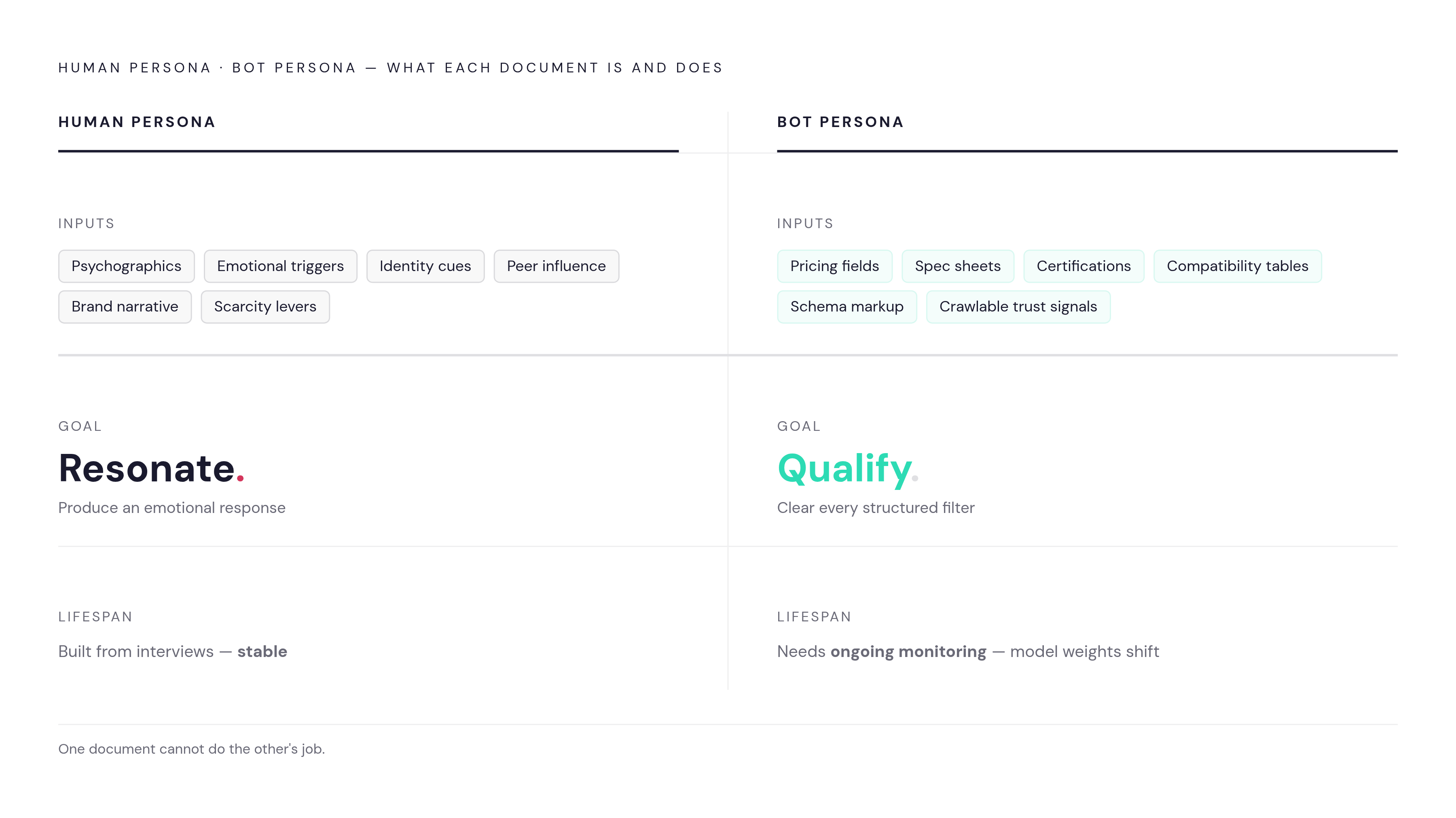
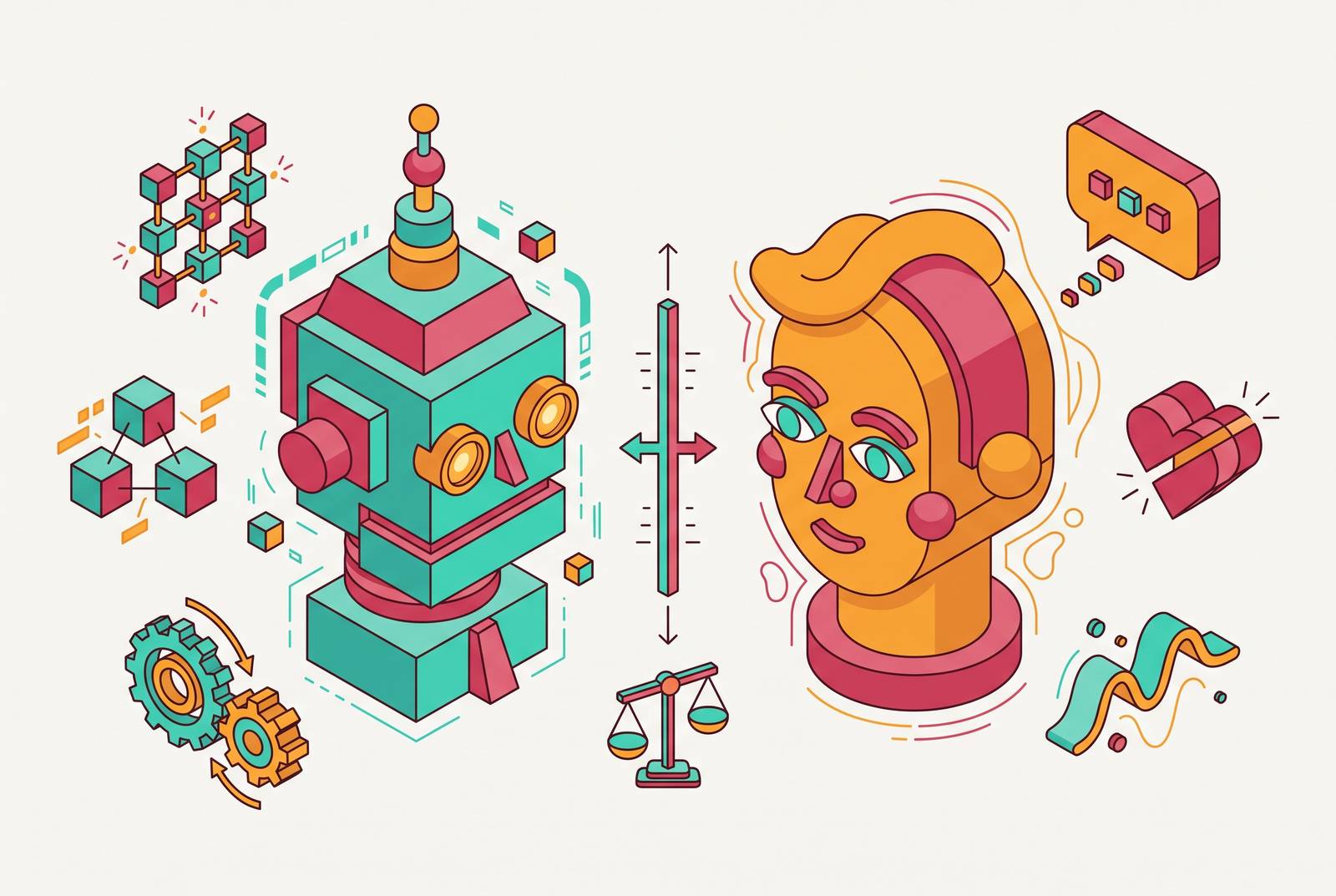
Lay the two documents side by side and the contrast is almost funny. A human persona is built from psychographics, emotional triggers, identity cues, peer influence maps, brand narrative hooks, scarcity levers. A bot persona is built from structured product data: pricing fields, spec sheets, certifications, compatibility tables, schema markup, trust signals a crawler can actually parse, and content formatted so an answer engine can lift it cleanly.
The goals diverge just as sharply. A human persona exists to resonate, to produce an emotional response that carries someone through a buying journey. A bot persona exists to qualify, to make sure a brand clears every structured filter an agent applies before a human ever sees the shortlist. Neither goal is harder than the other, they're just answering completely different questions.
Timeframes differ too. Human personas get built from interviews with recent buyers and people who almost bought but didn't, a snapshot that stays reasonably accurate for a while. Bot personas need ongoing monitoring, because the model's training data and internal weighting shift over time in ways no single interview could capture. The inkbotdesign.com 2026 analysis makes the case that static PDF personas, the kind that get built once and shelved, are already obsolete: the modern standard is a living document with memory, live signal feeds, and automated content audits. That same logic applies double to bot personas, since the "market" they describe is a set of models that keep getting retrained.
Neither persona replaces the other. One answers "what makes this person feel confident?" The other answers "what makes this brand retrievable inside an agent's reasoning process?" Different questions, different documents, same brand trying to win both audiences at once.
What content strategy looks like when it is built for both personas at once
Content built for this moment has to do two jobs that don't naturally overlap. It needs an answer-engine layer: structured evidence, named sources, formatting an AI system can lift and cite when a target persona (human or otherwise) asks a related question. That layer isn't a nice extra anymore, it's load-bearing.
Structure serves both readers at once, oddly enough. Clear headers, explicit specs, direct answers to comparison questions read as good SEO hygiene to a human and as legible data to a bot. It's one of the rare cases where doing right by one audience doesn't cost the other anything.
Human-facing content still needs its emotional architecture intact, though: trust signals, demonstrated expertise, an actual narrative, because the evidence already shows trust closes deals even after AI built the shortlist. Cut the emotional layer to chase bot-legibility and the brand wins the algorithm and loses the human standing behind it.
Smaller brands carry an extra burden here. Since agents inherit training data bias toward large, well-documented names, deliberate optimization for generative engine visibility isn't optional if the brand sits outside the top tier already. And on the B2B side specifically, Gartner's research puts the average buying committee at 6 to 10 stakeholders, meaning content has to serve several human personas simultaneously, plus whichever AI tool each of those stakeholders happens to be running searches through.
None of this has to slow things down. Strategy-first content workflows that pair AI writing tools with actual editorial judgment can produce material structured for both audiences without dragging out a traditional agency timeline. The marketingmary.ai 2026 analysis found that 68% to 72% of B2B marketing teams already use personas, but only 42% deploy them across more than two channels, and persona-driven campaigns only show that 15% to 25% engagement lift when the personas are actually wired into daily workflows rather than sitting in a shared drive nobody opens. The gap there isn't strategic, it's operational.
Which leaves a fairly concrete task for anyone running marketing at a brand right now: pull up the existing persona documents and check them against both frameworks. Note what's missing for the bot audience specifically, then build that structural layer alongside the human-facing one instead of treating it as a future project. The buyer on the other end of the next transaction might not have feelings, but it definitely has criteria, and those criteria are readable right now, waiting for content that speaks their language.