Organic Developer Content Is a Distribution Problem, Not a Content Problem
Developer content needs deliberate channels and timing, not just better writing.
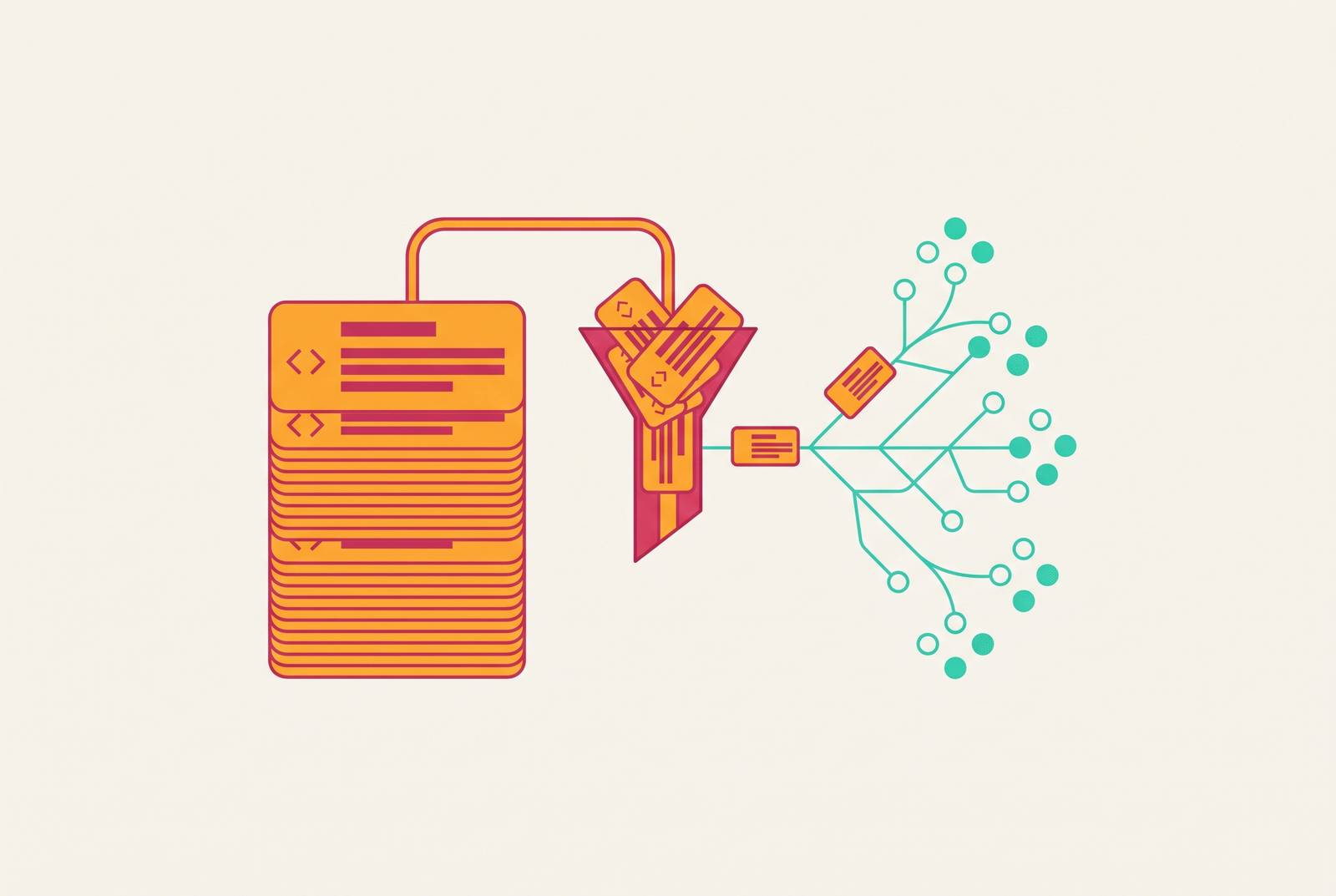
Organic developer content usually faces constraints on distribution. When good work stalls, it often lacks a distribution architecture, a deliberate system of channels, formats, timing, and measurement. Building that system takes the care of an engineer and the same technical standards that make the content worth sharing.
Why developer content stalls after publication even when the writing is good
A content team sees low traffic and decides the next article needs a better opening, a sharper argument, or more depth. That diagnosis skips a question. How far did the existing article actually travel? If it received one launch-day push and then disappeared from view, the traffic says little about whether its potential readers would have found it useful. The team is treating weak exposure as evidence of weak writing.
To distinguish those problems, the practical test is to examine the best-performing piece from last quarter. Did it reach the audience available to it, or fade after the first push? A second test is to count how often the last five pieces were actively promoted after launch day. If the answer approaches zero, distribution is the first constraint to investigate.
AI tools have made decent content easy to find, but the means to get it to readers are still scarce. The bottleneck has moved downstream from production to reach. Developer audiences make that constraint particularly sharp because they are highly resistant to marketing, dismissing thin or jargon-laden promotion quickly. More publishing can simply leave a team with more useful work that few people encounter.
Why reach is a structural ceiling, not a quality reward
A single account or channel can reach only so many people, and its algorithm limits how many see a post. Quality can help a piece perform within that space, but it cannot expand the space indefinitely. Multiple posts from the same account compete for exposure to the same audience. Publishing more often therefore produces diminishing returns rather than an automatic increase in distinct readers.
Reach depends on surface area as well as volume. A well-written post and a mediocre one on the same channel face the same structural limit, even if their results differ within it. Adding another surface that fits the work gives readers another way to find it. That is a different intervention from improving the article or increasing the number of posts on the original account.
This also explains the appeal of consistency over perfection. Founders who publish consistently can out-distribute those who polish occasionally, because compounding distribution requires repeated inputs across surfaces. But consistency is not merely frequency on one account. Teams need to find where the next relevant audience can encounter the work.
Where developer audiences actually discover tools, and why most content misses those surfaces
For developer tools, the relevant terrain includes Reddit, Hacker News, GitHub, and technical newsletters. These outlets put content in different contexts, from community discussions to source code and curated reading. Developer tool companies often underinvest in these surfaces while spending heavily on channels better suited to a different buyer.
The mismatch extends beyond channel selection to what developers expect to find there. They read documentation, inspect source code, and run benchmarks when evaluating tools. Technical credibility matters when developers first find a tool as well as when they later decide to buy it. A feature announcement gives them something different from an explanation of a problem they need to solve.
Words such as “revolutionary” and “game-changing” signal a marketer rather than a builder, inviting dismissal before the technical case gets a hearing. Requiring an email address to read a tutorial adds another trust barrier.
Developer influencers and evangelists are another way to reach these communities, but people trust them because they know the technology in depth. Their audiences remain skeptical of sponsored claims. A single technically incorrect claim can destroy the relationship that makes the placement valuable. This makes technical judgment part of the channel itself, rather than a quality check that can be separated from distribution.
What a distribution architecture actually looks like, including channels, timing, and promotion waves
For a team facing these constraints, the constructive response is to plan how each piece will move through successive audiences. A distribution architecture brings together when and how to share the work, who to work with in the community, and what to measure. A channel checklist is not enough. The system needs to establish what happens after publication, including which surfaces receive the work and when.
Promotion waves give that sequence a shape. Instead of one launch-day push, a piece receives planned pushes across different surfaces and timeframes, with timing that avoids exhausting any single channel. Each wave has a distinct destination. The aim is not to keep repeating the announcement to the same people, but to give the underlying work further opportunities to reach relevant readers.
Format choices make those opportunities usable. A long technical post can become a link in a Hacker News comment thread, a Reddit how-to, a newsletter abstract, or a short thread on Twitter/X. The technical idea stays the same, but how it is shared fits the surface. Repurposing original work is reach engineering in this sense.
Those formats also rely on ties with people built before launch. Newsletter curators and community moderators are not simply addresses to contact when an article is ready. Cold outreach on publication day is a weak lever compared with established relationships.
The same logic extends inside the company. Sales outbound touchpoints, email sequences, and customer conversations are distribution surfaces that a blog-only plan misses. To make those routes accountable, each channel and promotion wave needs a defined signal, such as referral traffic, newsletter click-throughs, or GitHub stars correlated with a post. Attribution across channels is hard, but without it a team loses the feedback it needs to decide which routes to keep working on.
Why content quality sets a floor the architecture cannot substitute for, especially with developer audiences
There is a serious objection to a distribution-first argument. If spreading content is the main constraint, does that excuse publishing weaker work? For developer audiences, the answer is no. Technical credibility sets a floor below which broader distribution can make the outcome worse, because the same community channels that spread useful work can spread evidence that it is wrong.
A factually incorrect tutorial does more than disappoint a reader. It damages trust and introduces bad technical guidance into the community. Surface-level explanations that might satisfy a non-technical buyer can be dismissed immediately by developers who understand the subject. More reach gives a false claim a wider audience.
This qualifies the consistency-over-perfection principle without reversing it. Publishing often can build reach over time, but making technical errors often adds to the damage and erodes authority. The distinction is between work that needs further polish and work that cannot be trusted. Distribution architecture gets work seen, while editors make sure it meets the standards it needs for that reach to help.
The operational minimum is a two-pass review. One pass checks how the piece is built and how clearly it reads, while the other checks factual claims, code correctness, and citations. Human review is not simply friction in production. Publishing with no human review brings risks that faster publishing cannot make up for.
Developer video makes the same constraint especially clear because accuracy, technical depth, and pacing all shape whether the tutorial works for its audience. A tutorial that crashes on the viewer’s machine can damage trust in both the video and the channel. Publishers should preserve technical review while expanding distribution, rather than treating one as a reason to neglect the other.
How AI answer engines add a new distribution surface that most developer content teams are not instrumenting
ChatGPT, Perplexity, Google AI Overviews, Gemini, and Claude are now surfaces through which developer content can enter discovery. They belong in the distribution plan. Teams that are not deliberately publishing for citation leave a growing part of that discovery landscape unaddressed.
The relevant presence is broader than the company website. AI systems represent a brand through traces across the web, including its owned site, press coverage, directories, community forum posts, and third-party citations. The entity footprint connects these traces. An owned presence optimized for citation, sometimes called a “ground site,” works with satellite presences.
Forum contributions and third-party placements can serve both as audience touchpoints and as parts of the footprint AI systems draw on. The primary domain is not the whole architecture. Treating it as the only destination overlooks the role of credible references elsewhere.
Traditional search position is also an incomplete guide to this surface. Google AI Overviews gets a sizable share of its citations from pages outside the top ten traditional search results. Content that ranks lower can still earn citations if it has strong credibility signals and structured data. The available surface is wider than a search-ranking report alone suggests.
The Princeton/Allen Institute study found that citing sources, adding statistics, and using direct quotations could raise the rate at which AI cites content. Keyword stuffing was the only tested method that scored below the unmodified baseline overall, while the other eight methods ranged from neutral to positive across most query categories. This is a reason to make credible evidence accessible in technical writing. It also does not establish identical behavior across every engine, which makes separate measurement necessary.
Measuring distribution as an engineering discipline, including the signals that show whether it works
Measurement shows how the path the work takes compares with the path planned for it. Referral traffic by source, newsletter click-throughs, GitHub stars correlated with posts, and the number of community mentions each show part of that path. None is a complete account alone. Together, they let a team see whether its channels and promotion waves get a response beyond the act of publishing.
GitHub stars correlated with a post show an association. Newsletter clicks show that people responded there, while referral traffic shows that people came from another surface. Attribution remains operationally hard because these measures describe different parts of the journey, so they require careful interpretation.
AI visibility requires a further set of observations because familiar traffic measures leave generative answers unmeasured. The emerging practice is to run a defined set of commercial and informational prompts regularly across ChatGPT, Perplexity, Gemini, and Google AI Overviews, then log whether the brand appears. The relevant metric is reference rate. It is the share of responses for that query set that mentions or cites the brand.
Tracking share of voice in model responses shows how a brand compares with its competitors. This is an operational practice. It gives the AI answer surface a place in the same feedback loop as newsletters and communities, while preserving the distinction between being referenced and receiving a visit.
The decisive question for the wider system is which distribution surfaces produced the most qualified developer traffic last quarter. A team unable to answer it is running a publishing schedule. Organizations that solve this consistently operate more like publications than campaign teams, maintaining editorial standards, a recognizable identity, and an audience relationship that compounds. That relationship gives the work continuity beyond any single launch or algorithm change.