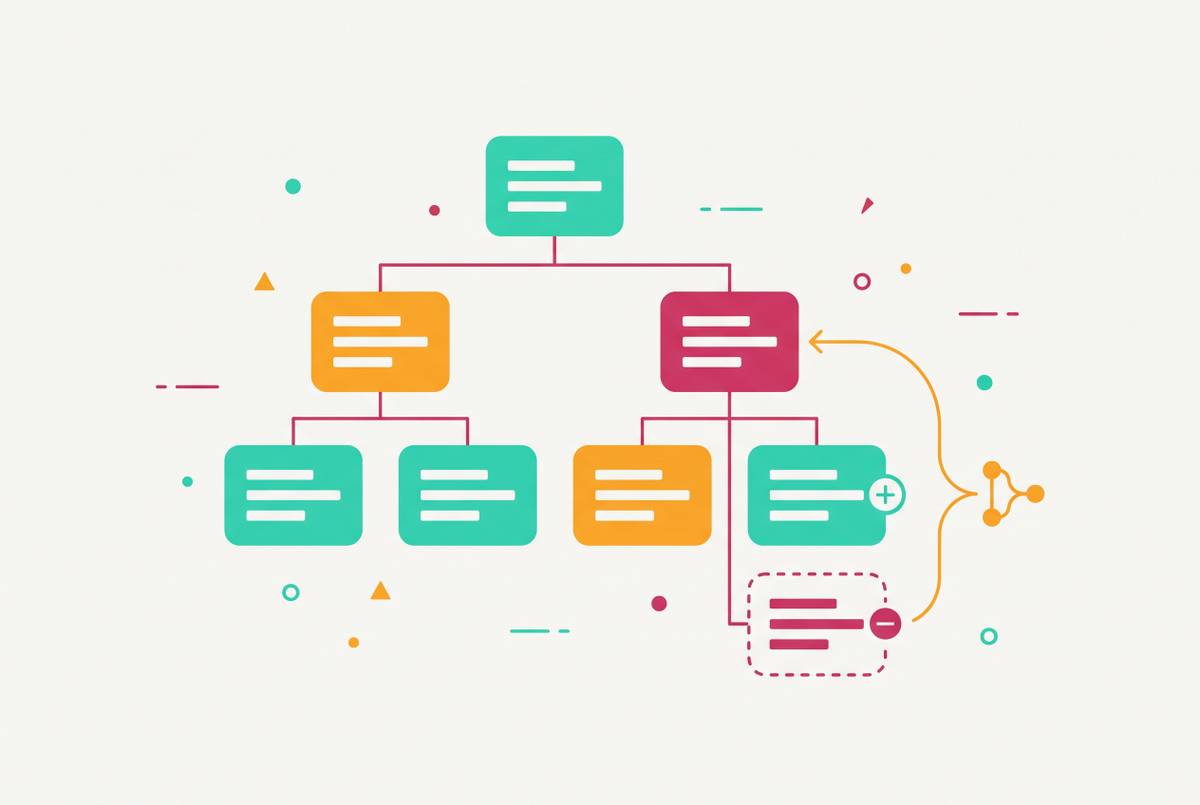
Outbound as a managed service vs outbound as code: why the signal-to-message loop should be something you can instrument
Owning the loop from trigger to deal shows which signals actually create pipeline.
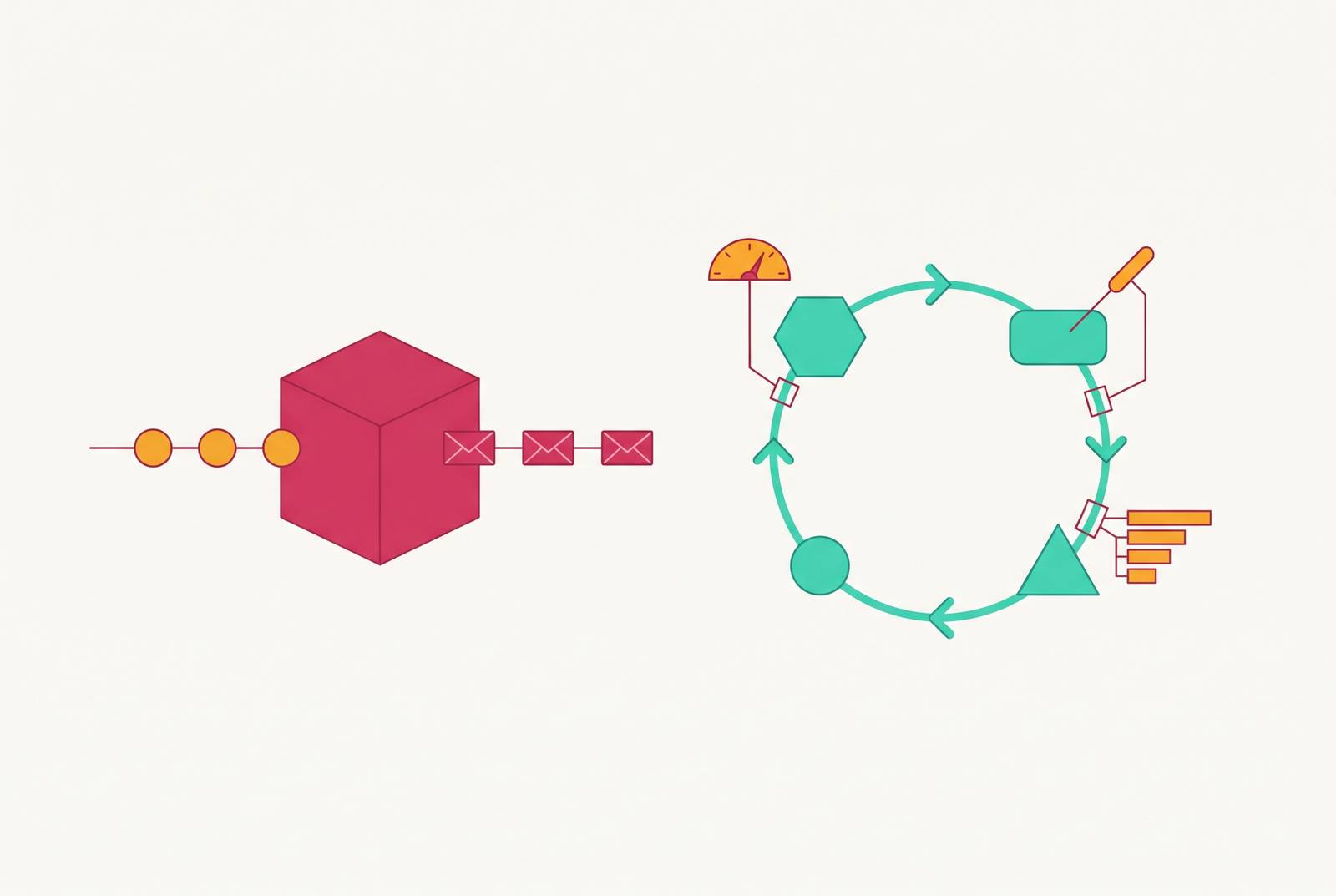
Outbound as a managed service and outbound as code differ in who owns the signal-to-message loop. A service can deliver meetings while hiding the decisions that produced them. An owned, instrumented system makes those decisions readable, measurable, and changeable. As outbound shifts from volume toward timely signals, owning that loop lets a team learn from its results.
Why the managed-service model for outbound is structurally different from a tool you can inspect
A managed outbound service takes responsibility for the whole proactive process, including ICP sharpening, list-building, multi-channel sequences, reply handling, and pipeline reporting. It is more than outsourced labor. The provider decides which signals count, how accounts are ranked, what messages go out, and what gets reported. In the black-box version of this model, the customer receives a meetings-booked report that omits the record of what fired and why.
An inspectable tool has a different boundary. With outbound as code, the signal source, trigger queue, sequence generator, and per-action log are parts of a system the team owns and can change. The customer’s ability to inspect and adjust the decisions between an event and an outbound action distinguishes an inspectable tool from a managed service. That makes this an architecture question before it becomes a procurement question.
What the signal-to-message loop actually contains and why each step is a variable worth owning
The loop starts by deciding which events count. A leadership change, intent spike, technographic shift, or funding event becomes useful only when a source detects it and the system treats it as a signal. Weighting then ranks that signal against account fit, recency, and ICP match to produce a queue. Timing is the next variable, because reply rates decline as days pass after the trigger.
The message generator turns that ranked event into a draft, choosing a template, personalization fields, channel, and sequence length. A human review gate then makes the action reviewable and reversible before it ships. The final step makes later attribution possible. Each action needs a record of signal type, signal date, account, message variant, and outcome. CRM fields such as “signal source” and “signal date” must remain attached through close, so the team can connect a won deal to its originating event as well as its sending sequence.
Why volume-based outbound stopped working and what replaced it as the operating model
The old outbound model linked growth to more SDRs, more emails, and more meetings. That worked better when inboxes were less crowded. Once generic outreach was the norm, teams could no longer count on more of it to drive growth. The failure was not outbound as a channel, but outbound organized as a volume game. A meetings report could show what happened under that model without saying much about why an account replied.
Signal-based outbound changes the daily queue from “my accounts” to in-ICP accounts that triggered something recently, ranked by signal strength × account fit × recency. AI absorbs much of the research, list-building, drafting, and follow-up scheduling, while people supply judgment at the trigger point and handle live conversations. This changes the central measurement question. Which signals lead to pipeline beyond replies or booked meetings? To answer, the team needs to trace the event through the message to the deal outcome, which a report of total activity cannot show.
Why managed services cannot honor the signal decay curve at scale
Managed services often plan work around list review, sequence sign-off, and weekly or bi-weekly calls. Those steps help people get through the work, but signals lose value on a different schedule. If a trigger fires on Tuesday and approval happens on Friday, the window is already closing. An overnight event may wait until the following business day before a batch process catches it.
In an instrumented system, detection, drafting, and approval sit inside the same process, with the signal and draft visible together. That allows a reviewer to act within the decay window, bypassing a separate planning cycle. Faster, AI-first managed services can reduce this delay, so speed alone is not a sufficient distinction. The customer needs to be able to observe and tune latency, including where time is spent between the trigger and the approved message.
The knowledge ownership problem and what a managed service cannot transfer when it ends
Managed services offer a legitimate advantage in speed to ramp without adding headcount. For a team testing outbound, that can be valuable. The lasting output includes a calendar of meetings and knowledge of which signals, messages, and timing produce high-value pipeline in a particular market. When the provider owns the logs and optimization process, that knowledge accumulates inside the provider’s organization.
What happens when the contract ends? A messaging summary cannot take the place of reply history, including negative replies that show why an approach failed. Nor does it preserve the weighting logic or the record of message variants tested. If the vendor owns the sending domains, the sending reputation does not transfer either. Reversibility is much higher when the customer owns the target list and criteria, holds the replies, and controls the domains. When deciding whether to outsource, a team needs to weigh cost alongside its need to own what it learns from the work.
What “outbound as code” requires at minimum to be genuinely instrumented
One signal source is enough to start, provided it produces timestamped events that can be queried, with three or more sources in production. Those events feed a trigger queue that stays up to date and ranks them by signal strength, account fit, and recency. A per-signal sequence generator then drafts messages by signal category. The human review gate puts the trigger, account context, and draft in one interface.
The per-action log ties these components together. It records what fired, when it fired, which message was sent, and what happened, with CRM fields that persist through deal close. Enough closed deals then make it possible to compare which signal types produce the highest-value pipeline in that market. Governance needs the same traceability as messaging. Every triggered action should be logged against an automation registry so a person can audit what the system did and why. The minimum architecture is defined by that trace.
The human-in-the-loop is not optional, but it is a gate, not a bottleneck
The “fully autonomous AI SDR” framing overstates what works in sophisticated B2B outreach. Contextual judgment and accurate personalization cannot simply be assumed. A signal may be a false positive, and a fluent draft may misread it. A pipeline watches for the event, assembles the context, and presents a draft to a person. The action must be reviewable and reversible before it ships.
At that gate, the reviewer asks whether the account is genuinely in-market and whether the message reflects the trigger accurately and without risk. The resulting choice is to approve, edit, or suppress the action. With the context already assembled, that judgment can take seconds, saving hours of research and coordination. A managed service also uses human judgment, but in the black-box model the reviewer applies the vendor’s criteria without leaving a record the customer can inspect.
Stacked signals and why the measurement gap widens over time
A team can start learning from single signals. A leadership change combined with an intent spike and a technographic trigger offers a tighter basis for action than any one event alone. Multi-signal outreach can produce materially higher reply rates, but that does not identify which combinations work for a particular market. To find those combinations, the team needs a log that links inputs to outcomes over time.
Each closed deal adds evidence about the signal combination, contact latency, and message variant that preceded the win. Over months, that record grows beyond a set of campaign impressions into an attribution model the team owns. A team running an instrumented system for a year can retain that model, while a team receiving only monthly reports cannot reconstruct the same decision history from summaries. The provider may also be learning, but the customer does not own that accumulation. As tested combinations and outcomes build up, the measurement gap can itself become a competitive moat.
When the managed-service model is the right starting point and what the transition looks like
Managed services can be a good place to start for teams still sharpening their ICP or message. They provide a ramp without requiring an in-house operation immediately. That does not remove the prerequisite of product-market fit and a clear vertical. Outbound amplifies a working offer rather than inventing one, and an unvalidated offer risks reach and domain reputation under either model. The useful role for a service is to refine and test targeting and messaging around sound fundamentals.
Once the service validates that a signal category produces pipeline, the lesson is to bring that signal into an owned, instrumented system. That path is especially appropriate for a company building a permanent RevOps/GTM team and treating outbound as a core competency. The transition starts before the contract ends. It requires negotiating ownership of reply history and contact data, controlling sending domains from the start, and establishing CRM logging of signal source from day one. These choices let learning accumulate on the customer’s side while the vendor still runs execution. Waiting because switching feels expensive leaves more of what the team learns in the vendor’s hands.
Applying the same instrumentation logic to AI visibility and GEO’s measurement problem
A content retainer can produce pages without showing whether ChatGPT, Claude, Gemini, and Perplexity name or cite the business. With Generative Engine Optimization, or GEO, teams first need to work out what to measure before they work out what to produce. Its success is measured by a citation inside a synthesized answer, which keyword rankings and organic click-through rates cannot show. Publishing more content without connecting AI citation to content revision and re-citation repeats the outbound mistake of sending more without signal attribution.
An instrumented GEO program starts with a set of buyer-intent prompts that the team runs regularly across the core answer engines. Automated parsing extracts brand mentions, citation sources, sentiment, and position, while a per-query log connects content changes to citation outcomes over time. Human review remains a gate before publication. There are observable inputs too, including server-log activity from OAI-SearchBot, ChatGPT-User, PerplexityBot, Googlebot, and Claude-SearchBot. Googlebot is a crawler for Google Search as a whole, including AI Overviews and AI Mode.
In 2026, teams need to know their cite rate on revenue queries and their share of voice against the competitors they face. That requires a feedback loop. As with outbound, the useful question is whether the team can inspect the evidence, change the next action, and retain what it learns. A service can help execute the work, but a report of output is no substitute for an owned record of cause and outcome.