Why treating your site's theme as code — not content — is the only way to keep it machine-readable at scale
Treating Hugo themes as code ensures machine-readable output at scale.
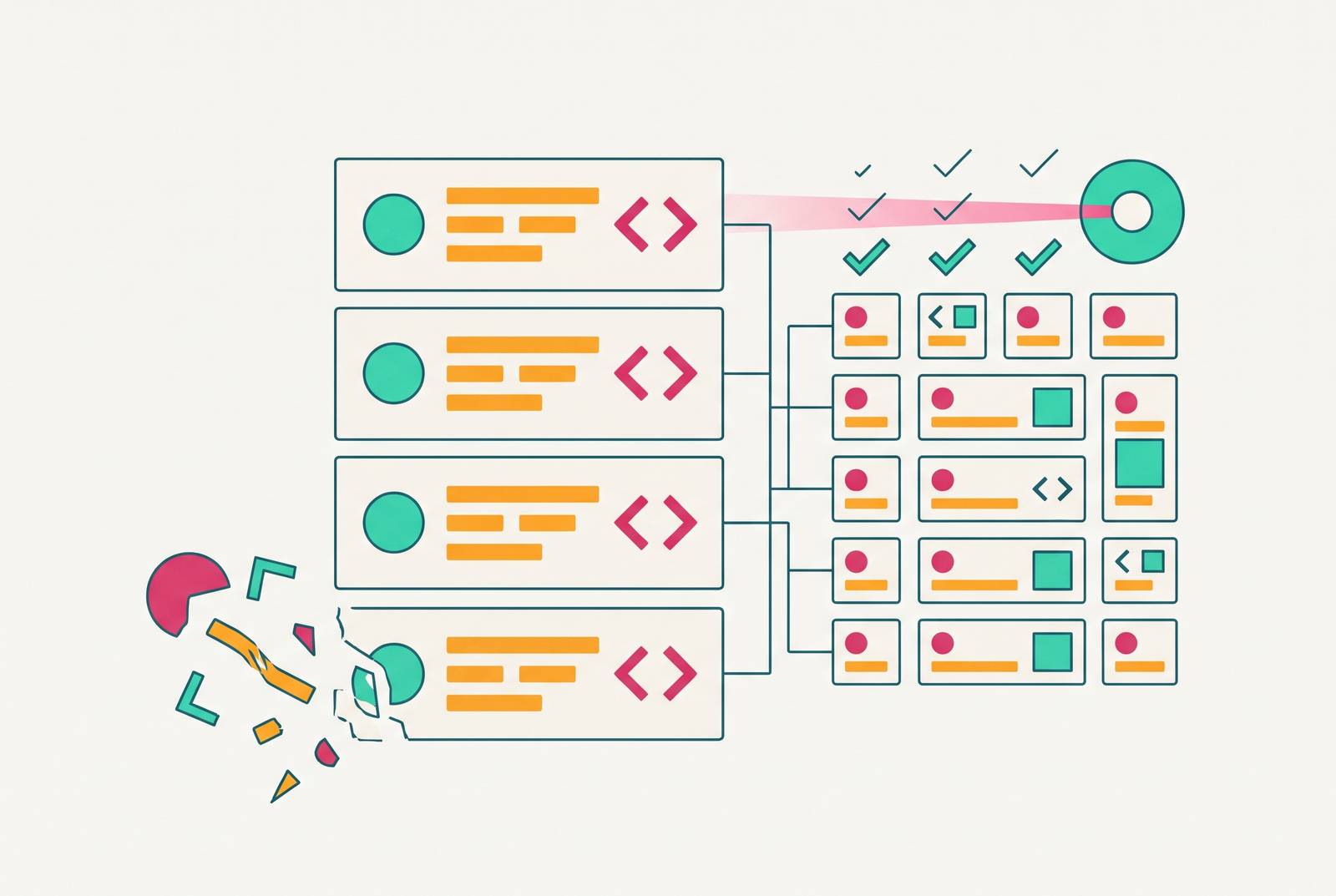
A Hugo theme shapes both machine understanding of a site and people’s response to its appearance. Its templates set the semantic HTML, structured data, links, and asset delivery for every page the site publishes. Keeping that output readable at scale requires treating the theme as code, with explicit requirements and tests, rather than as a design choice that ends when the site looks finished.
What a Hugo theme actually controls beneath the visual surface
“Pick a template, apply colors, ship” sounds like a reasonable way to finish a site. But choosing a Hugo theme also chooses the code that shapes every page at build time. That code sets the layout in the DOM, the semantic elements around the text, and the way assets are processed and delivered. Beneath the visual result sits a structure that crawlers and other machines must interpret without relying on the page’s appearance.
The distinction becomes clearer as a site grows. A shared partial added once can change thousands of pages, while an omitted partial can leave all those pages structurally incomplete. Fixing them page by page would leave authors responsible for decisions that belong in the templates. The theme is therefore an engineering layer whose reach expands with the publishing system it supports.
How the theme's template decisions propagate structured data at scale
A schema partial makes that reach concrete. It reads fields from front matter, assigns their values to template variables, and emits JSON-LD into the page’s <head> at build time. A datePublished, author, or headline field thus becomes a schema property rather than remaining information that a machine must infer from prose. The base layout includes the partial. Every page that uses that layout then uses the same code to turn its own content fields into machine-readable output.
Older layouts place a schema.html partial in layouts/partials/, while Hugo’s migration documentation renames that directory to layouts/_partials. The organizing principle remains the same. The schema belongs in shared template code that fills in its values dynamically, so authors do not have to copy it into each document. This separates the author’s responsibility to supply the right information from the theme’s responsibility to emit it correctly.
Schema.org markup describes what the content means. In JSON-LD form, it can support rich search results such as star ratings, FAQ dropdowns, and event dates. Semantic HTML supplies a parallel layer of meaning through heading hierarchy and elements such as <article>, <main>, and <nav>. A page built from generic <div> wrappers has none of those structural signals. Structured data and semantic containers answer different questions, so the presence of one does not make the other unnecessary.
Internal linking patterns, canonical tags, and breadcrumb schema can all originate in templates. The Third Hemisphere theme illustrates this approach by emitting a self-referencing canonical link, article JSON-LD, and robots meta tags on content pages. Hugo generates a sitemap by default, but exclusions, bot permissions, and the sitemap location still require explicit theme or site configuration.
Why deferred theme engineering compounds over time rather than staying contained
A missing or malformed schema partial affects every published page that uses it and every new page built with it before the fault is fixed. The defect multiplies with each publishing cycle. Correcting it requires a theme change, a rebuild, and re-indexing. Even if the code needs only a small fix, more pages keep joining those waiting to be read again.
Semantic omissions accumulate in the same way. A layout without meaningful containers or heading hierarchy produces a collection of pages whose visual organization is not expressed clearly in their markup. Asset decisions create another site-wide dependency. Image processing and CSS minification through Hugo’s resource pipeline change page performance metrics for all the pages that use them. Leaving those steps out makes performance a recurring property of the output rather than a problem confined to one unusually heavy page.
This is engineering debt. Its defining feature is that continued publishing increases the reach of an unresolved decision, while a later correction does not immediately regain crawl attention for every affected page. A Hugo project that is ready to go live uses CI/CD to run automated builds and checks that catch template errors, invalid schema, and asset pipeline failures before pages are published. Those checks put responsibility where the defect originates, in the system producing the pages.
How AI answer engines read a site differently from traditional search crawlers
In traditional search, ranking is a familiar way to measure how visible a page is. A page appears among results, and the reader decides which result to open. AI answers introduce a different selection step. An engine may choose content to cite or a brand to mention in its answer, shaping the buyer’s shortlist before the buyer reaches a conventional results page. A site can therefore need more than discoverable pages to participate in product discovery.
Generative engine optimization, or GEO, deals with that shift. Ranking and citation are not interchangeable outcomes. The question moves from where a page appears to whether the answer uses it at all. That makes the theme’s role in expressing identity and structure more consequential.
Access is the first structural requirement. A site’s robots.txt configuration must not accidentally block the AI crawlers it intends to admit. This is a site-config or theme-level decision in Hugo. Better prose cannot substitute for that permission.
Entity signals provide the next part of the structure. Authorship and brand-identity schema identify who is speaking and which brand the page represents, while datePublished gives an explicit publication date. These fields reduce the need to guess from prose. Brand mentions also have a stronger reported relationship with AI visibility than backlinks, though that relationship does not establish that schema alone causes citations. The theme’s job is to express the associations clearly.
Why different AI platforms read different structural signals, and what that means for theme architecture
The major AI answer engines do not all cite the same sources. Machine readability is therefore a set of overlapping requirements rather than a single target that a theme can satisfy once and forget. Platform awareness changes which signals deserve attention. It also helps keep success on one engine from being taken as proof that the same structure works just as well on others.
Perplexity, for example, gives weight to content that was published recently. Date fields in Hugo front matter can feed datePublished through a schema partial so the output states when the page was published. Visible year signals in titles and headings can also improve citation rates. Those are related but distinct decisions. The template exposes the date consistently, while the page’s title and heading structure determine how visible timing appears in the content.
A theme can provide fields and layouts, but it cannot make every content type equally useful to every platform. Product pages, comparison pages, and reference docs have different structural needs. Choosing which schema types to prioritize means choosing how those needs will be represented in code. No single architecture settles the question for all platforms, so the aim is a theme that can support the relevant content types without treating every page as the same document.
What a theme engineered for machine legibility looks like in practice
A machine-legible theme has separately auditable layers. Its structured-data layer begins with a base-layout partial that injects JSON-LD into each page’s <head>, using front matter fields such as datePublished, author, headline, and @type. Distinct content types receive distinct schema partials. The page type sets the output, freeing each author from having to build schema by hand.
Organization schema in the base template names the brand consistently, while breadcrumb schema belongs in the list and taxonomy layouts that express those relationships. These are separate audit targets. A valid Article block does not establish that the organization is named consistently or that breadcrumbs describe the page’s position. Keeping the concerns distinct makes it possible to correct one without mistaking it for a complete structural fix.
The semantic layer expresses the document’s hierarchy. It includes one <h1> per page, <h2> and <h3> for subsections, and containers such as <article>, <main>, <aside>, and <nav> throughout. Layout rules set that structure, so authors do not have to make all those choices themselves. A layout that puts the main point first adds another deliberate choice. Its typography and spacing make the first sentence of a section prominent, reflecting the role that opening claim plays for AI extractors.
The crawl layer is independently inspectable too. Hugo has a built-in tool that generates robots.txt when the site configuration includes enableRobotsTXT = true, with allow rules for the AI crawlers the site wants to admit so broad deny patterns do not block them by mistake. The sitemap excludes private pages and includes lastmod dates so crawlers can prioritize recently updated content. Canonical links come from the base template. That includes self-referencing canonicals on index pages, so the shared code handles URL identity without an addition to each page.
The performance layer governs how assets reach the reader. Hugo’s resource pipeline has tools for stylesheet and script minification and image processing, including resources.Get and .Resize, with an option to use an image format suited to the web. Those choices support consistent site-wide performance. The head partial also emits social-sharing metadata, using Hugo’s internal templates where appropriate. A custom partial adds control over default share images, making another output explicit and testable rather than dependent on whatever each page happens to supply.
How to verify machine legibility after the theme is built or changed
A successful build establishes that the build completed, and the structural output still needs testing against the signals search and AI systems use. After every theme change, validating JSON-LD on a post, product page, and comparison page can expose malformed output before a crawler encounters it. Testing different content types is important because their schema comes from different template paths.
The rendered DOM needs inspection as well. Semantic containers and heading hierarchy must be in the page a machine receives, even when they look right in a template source file. JavaScript that renders a flat DOM does not preserve structure just because the source looked correct. Crawl access deserves a separate check.
Structural tests establish what the theme emits. Visibility measurement then asks whether the brand and its pages appear in actual answers. It reports AI share of voice and shows the cited pages behind answers. That connects the engineering output to an observable result without assuming that technically valid markup guarantees selection.
The audit records whether the brand appears and which pages are cited. One measurement is not a verdict. Citations fluctuate as models update and freshness signals shift, so the useful signal is the trend across a query cluster over multiple months.