How to do SEO on a young B2B site is a build order with exit criteria: what to instrument in the first month, and what each check has to return before you write another page
A month-one SEO plan where each check gates the next page.

SEO on a young B2B site works best as a build order. The first month should establish what Google can see, map what buyers need, and admit each new page only when the previous checks pass. A coding agent can run much of that work, but a person must define the gates and interpret the results.
Why month one is a build sequence, not a content sprint
A developer left the staging noindex tag active on a production Webflow site, and the site recorded zero impressions for days. The fix took ten minutes. Finding the problem, however, depended on someone watching the right instrument rather than treating publication as proof that a page was available to search.
Google describes its search process as crawling, indexing, and serving results. Those steps have an order. A page cannot rank before it is indexed, or be indexed before it is crawled. A new domain has no crawl history, backlinks, or trust signals, so publishing more pages does not bypass those dependencies.
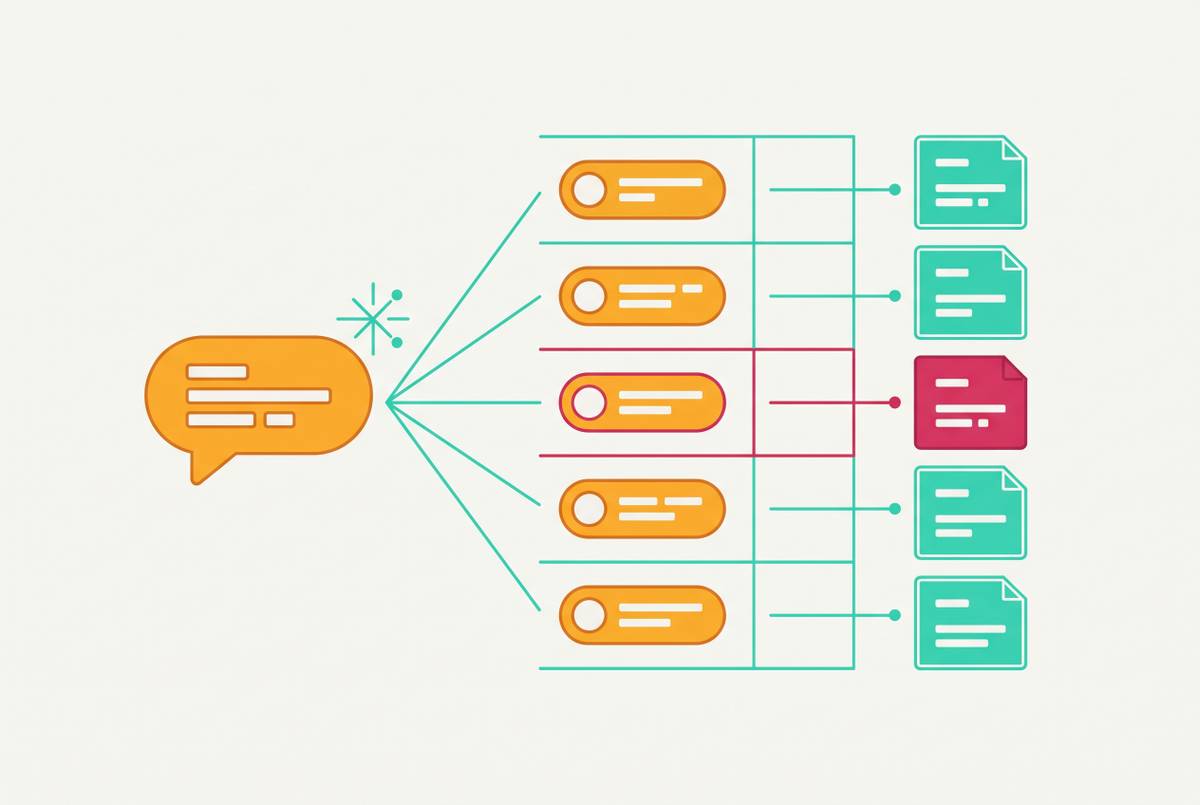
The practical response is a gated sequence with an exit criterion for each step. Each criterion says what must be true before the next step can start. The day ranges below are working windows, with advancement dependent on passing each check. That distinction turns “SEO is underway” into something the team can actually test.
What to instrument before you write a single page
Set up Google Search Console, verify who owns the site, and submit the XML sitemap before publishing content. This is the primary instrument for the gates that follow. Set up Bing Webmaster Tools at the same time, because its independent crawl data cannot be recovered later if collection never began. Bing is also the primary documented backend for ChatGPT’s web search, with Google’s index and OpenAI’s own crawler playing a role.
Implement the IndexNow API with the XML sitemap so that new URLs can be pushed to crawler queues. Submission is only the start of the process. Add Organization and WebSite structured data in JSON-LD to the homepage, linking social profiles, Crunchbase, and registered details through the sameAs property. This gives search systems signals that connect the website to a real-world brand.
Before launch, measure the Core Web Vitals baseline, including LCP, INP, and CLS. Also verify that Googlebot receives the text a human sees, since JavaScript-rendered content can be invisible to the crawler. Server-side rendering or static generation avoids that class of problem.
Week 1 exit criterion: every revenue page visible, linked, and unblocked
The Week 1 exit criterion is explicit. Every lead and revenue page must be crawlable, internally linked, and free of duplicate-URL confusion. The Search Console page indexing report must show no blocked revenue pages, redirect loops, or accidental noindex exclusions. If any of those remain, fix them before keyword work begins.
Use URL Inspection to check each revenue page one at a time. Look for staging noindex tags, robots.txt rules blocking important paths, canonical tags pointing to the wrong URL, and text missing from the HTML Googlebot receives. Robots.txt must also leave CSS and JavaScript assets accessible so that Google can render pages correctly. A reachable URL alone is not enough.
Internal links are part of this gate. A page without an inbound internal link is orphaned, leaving Google with less help finding and understanding it. Parameter strings, trailing slashes, and HTTP versus HTTPS variants can also create several versions of the same page that compete for attention. Check that each key page points to its own correct canonical URL. Passing this gate means Google can access and process the pages, with impressions, rankings, and traffic still to be established.
Days 4–14: mapping buyer language before touching a keyword tool
Once access is clear, the next question is whose language will shape the site. Start with sales call notes and recordings, where prospects describe their problems without translating them into the marketing team’s preferred terms. Their phrasing supplies the seeds for keyword research. Starting with a tool instead risks measuring demand for the words the business already uses.
Reddit threads are the next source, especially for complaints and the reasons people consider switching products. Google has a licensing arrangement that feeds Reddit content into its AI, so this language also recurs in AI-generated answers. Support tickets and prospect emails add another useful perspective. They often capture how buyers describe a problem before they know the product category that could solve it.
Only then should keyword tools add volume and difficulty data. Low volume is not a reason to dismiss a B2B query, because a search can represent a potential large-value deal. Map the terms to awareness, consideration, and decision stages, distinguishing problem recognition from solution evaluation and vendor selection. With limited resources, prioritize consideration and decision terms because they are closer to revenue.
Days 4–14 exit criterion: a keyword map, not a keyword list
The keyword gate closes when every cluster has a named intent, a business-value score, and exactly one assigned URL. For planned new content, that URL does not yet exist on the domain. If a cluster still has competing pages planned, collapse them before proceeding.
Clustering groups terms that share the same dominant search intent. Someone typing five versions of a question still wants the same answer, so one strong page can answer them all without spreading the answer across thin pages. The score then weights commercial intent and proximity to revenue. A low-volume comparison cluster may deserve priority over a much larger awareness cluster.
The URL assignments also need an internal structure. Organize broad, high-intent topics into pillar pages, with supporting nodes for specific sub-questions. Each node links back to its pillar with descriptive anchor text, and the cluster’s links help spread crawl authority. This architecture determines which questions deserve separate URLs and which belong together. The deliverable is therefore a map of distinct answers and their relationships.
Days 11–21: publishing one page per search intent and checking for cannibalization before the next
For each published page, apply the same exit criterion before writing another. The page must be confirmed indexed in Search Console, have one clear primary keyword with no other page on the domain competing for the same query, and receive at least one inbound internal link from an existing page. If any condition is unmet, stop and fix it. Page count does not override this gate.
A how-to guide does not answer a request for a vendor comparison merely because it includes the right words. For B2B sites, commercially useful formats include head-to-head comparisons, named-alternative pages, integration pages, and use-case pages. These formats support narrow, checkable claims that search and AI systems can process.
First-hand experience, trade-offs from real work, and original data make it worth more than a rehashed summary. That depth is especially important when several pages address nearby questions, because superficial differences do not establish distinct purposes. The map prevents overlap in the plan, but the publishing gate checks the page that actually went live.
Days 22–30: reading the indexing report and what each exclusion reason tells you to do
Read the Search Console page indexing report as an action queue. “Crawled — currently not indexed” means Google accessed the page but did not store it. Thin content, similarity to another page, weak internal links, and insufficient original value are common explanations, though low site authority, intent mismatch, or other quality signals can also contribute. The status is not a complete diagnosis. Add first-hand depth or merge the page with its nearest competitor, according to what the content needs.
“Discovered — currently not indexed” names a different stage. Google knows the URL but has not crawled it yet, which usually points to problems with crawl budget or internal linking. More inbound internal links typically help accelerate crawling. By contrast, “Excluded by noindex” identifies an explicit instruction in a tag or header. Fix that instruction, then ask for re-indexing through URL Inspection.
“Duplicate — Google chose a different canonical” means Google selected a different URL from the nominated one for indexing. It concerns similar or identical content. Do not write another page while technical blockers in the report remain unresolved.
The month-one exit criterion is a steady staircase of indexed pages and rising impressions in the Performance report. Impressions arrive before clicks. Rising impressions in month one or two show that the sequence is working, while clicks, rankings, and leads belong to the month-two and month-three assessment. Their absence in the first month is not, by itself, a reason to change strategy.
What a coding agent can run, and where a human must set the thresholds
A coding agent can handle much of the instrumentation and checking, including Search Console setup, sitemap submission, IndexNow calls, and structured data validation. It can compare a Googlebot fetch with the human-visible page, parse crawl reports, classify exclusion reasons, and detect internal link gaps. These are repeatable checks with reviewable outputs. Automating them leaves more room for judgment, but does not remove the need for it.
Someone technical must define which pages count as revenue pages and what the rendering checks need to return. A person must also set the keyword map’s business-value scoring rubric. An agent cannot decide how close a topic is to revenue for a particular business merely by finding search demand. Nor can an exclusion label tell the team whether to add more depth to a page or merge it.
The same boundary applies to measurement. Rising impressions need to be read against what was published and when. Each automated stage should therefore leave something that a person can check before the next gate opens. The agent can test whether a threshold has been met. Letting it choose that threshold as well removes the human decision that makes course correction possible.
Running AI citation tracking on the same cadence as the SEO build order
AI citation tracking starts in parallel with the SEO build, because the same pages also form the brand’s AI corpus. Being indexed in search does not mean a page is visible across AI engines. Each draws on a different mix of sources, so checking only one can make a brand look widely visible when it is absent elsewhere. This track needs its own checkpoints from day one.
Gemini leans heavily on brand-owned websites, while ChatGPT draws significantly from third-party directories and authoritative encyclopedic sources. Perplexity emphasizes freshness, domain credibility, and community sources such as Reddit and Wikipedia. Those differences shape which pages come first when the goal is citation. For engines that favor recent content, year signals in titles and headings provide a concrete freshness tactic.
Keep brand information consistent across Wikidata, LinkedIn, Crunchbase, and homepage schema, with Wikipedia included where notability allows. The same sameAs data used for Google helps show that these references all describe one entity. Off-page support is also needed, because AI systems look for corroboration in review sites, forums, and publisher coverage. Listings on major review platforms in the category therefore belong on a parallel track.
Track citation frequency on the same fixed cadence as Search Console reviews. Record how often ChatGPT, Google AI Overviews, and Perplexity mention the brand or cite a specific URL in relevant answers.