Finding backlinks to a website is an export-and-diff job, not a checker tab: script the Search Console export, turn unlinked mentions into a tracked outreach queue, and measure which new links get your pages cited by AI answers
Script the GSC export, diff link sources, and track AI citations.
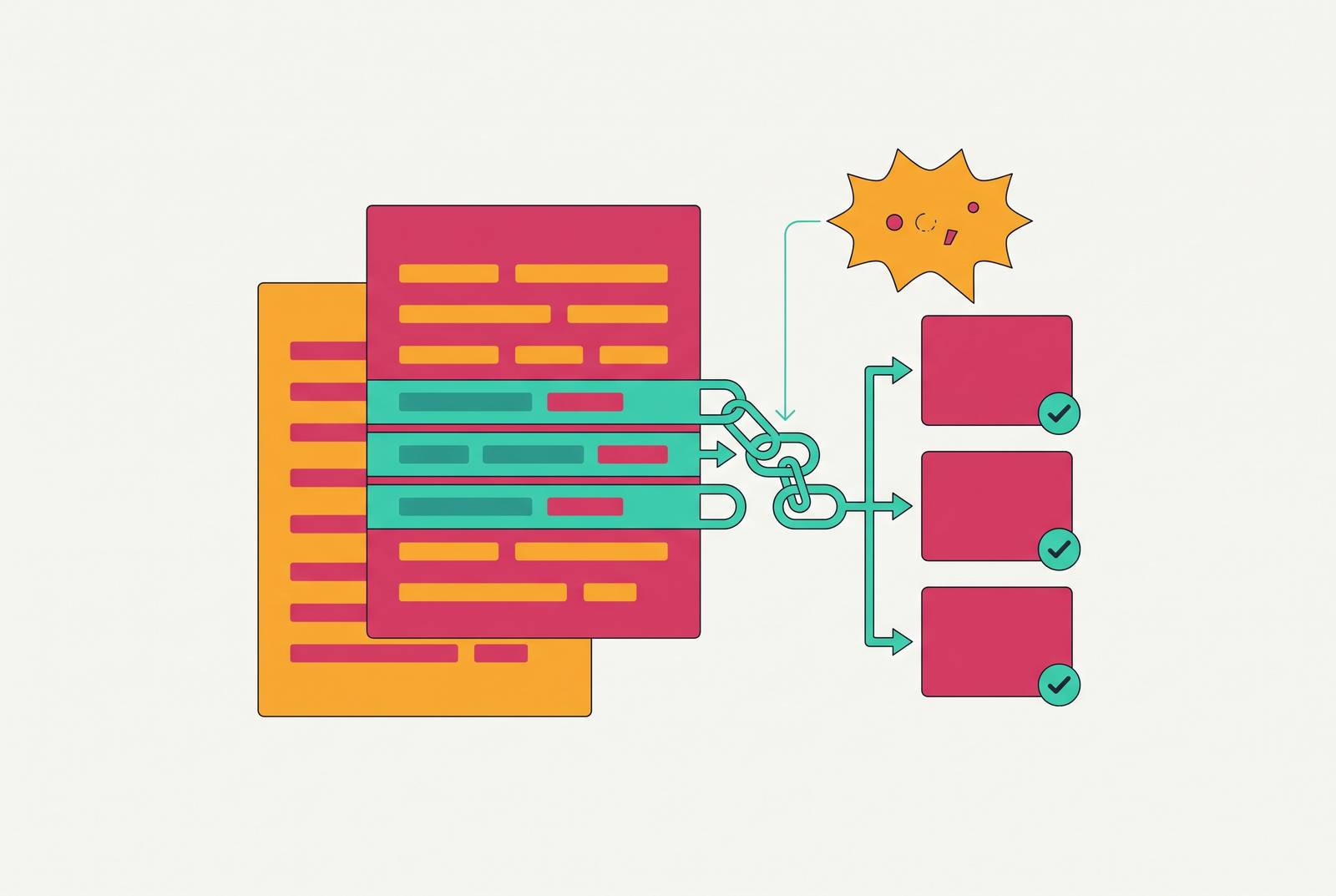
Finding backlinks to a website is an export-and-diff job. A useful pipeline separates Search Console performance data from link data, compares stored exports, and turns the gaps into a tracked outreach queue. Its value comes from closing the loop, measuring which new links, mentions, and content changes are followed by more citations in AI answers.
Why the Links report never appears in the GSC API, and what that forces you to build
Google Search Console has no API endpoint for its Links report. Google’s API reference omits link reports entirely, so this is a structural constraint. The Search Analytics API returns search performance data, including queries, pages, impressions, and clicks. None of those records is a backlink record.
The interface also needs careful handling because different reports have different limits. Links report sub-tables are capped at 1,000 rows, while the standard Performance report export truncates dimensions at 1,000 rows ranked by performance clicks. A truncated export cannot stand in for a complete inventory, and the missing tail does not announce itself.
The practical response is to build around versioned exports. Saving each dataset in turn makes it possible to compare checks that would otherwise stay in separate browser tabs. Search Console link exports can contribute to that record, but they cannot become an API-driven link feed. Automated discovery of new links, lost links, and competitor gaps needs another source.
What the GSC API does expose, and how to script a full performance export that feeds the pipeline
The Search Analytics API supplies the performance side of the pipeline without the interface’s 1,000-row restriction. That gives the link work a record of which queries and pages attract search visibility. It is not a live feed. Recent data typically arrives a few days later, so a scheduled export must account for that lag rather than treating an incomplete recent day as a decline.
To set up the automated feed, create a Cloud Console project, enable the API, and create a service account. Then add its email as a user on every Search Console property it needs to read. That permission step is essential. A service account works well for server automation because it does not need a person to complete an OAuth flow or maintain refresh tokens.
The export script should request the historical performance data, paginate through results using startRow, and store each run as a versioned dataset. Page and query exports should be requested separately. Pagination removes the interface bottleneck, but it does not recover anonymized queries. “Full export” therefore means the available API data.
For longer-term storage, enable the BigQuery API, open Search Console Settings and Bulk data export, enter the GCP project ID, and give the system service account BigQuery Data Editor access. Search Console charges nothing for the export, but BigQuery charges for storage and queries. The resulting tables are searchdata_site_impression, searchdata_url_impression, and ExportLog. Export starts when it is turned on and has no historical backfill, so an API or CSV export provides the earlier baseline. Performance is now covered, but link data still needs a separate path.
Layering a third-party backlink index to cover what GSC cannot see
A third-party backlink index fills that gap by crawling the open web independently and exposing link records through an API. Search Console is a webmaster tool. It does not show competitors’ links. For a pipeline that needs programmatic inbound-link data and competitor comparisons, this crawler layer is a required component.
The useful extract goes beyond a referring-domain total. It includes the referring domains, the specific competitor pages that earned links, anchor text, and link context. Those fields preserve the reason a link might be relevant. A summary count can show that a competitor has more referring domains, but it cannot explain what those sites found worth citing.
For example, a competitor’s statistics page might draw links from many referring domains while the owned site has no page like it. That is a content gap. Page-level records make the distinction visible before a team spends time asking for links it has not yet given publishers a reason to add.
Coverage also differs between crawler indexes. Combining two crawlers can reveal more unique referring domains than either alone, so an index should be understood as a partial view of the web. Comparable exports are what allow the next stage to separate useful opportunities from noise.
Running the competitor diff to produce a filtered, scored outreach queue
A competitor diff asks which referring domains appear in competitors’ exports but not in the owned site’s export. That produces candidates for filtering into an outreach queue. A typical gap analysis can contain hundreds to thousands of domains, including directories, spam sites, and irrelevant foreign domains with little realistic outreach upside.
The filtering pass should favor domains that have linked to competitors recently and sites that link to several competitors. Domain authority, traffic, and topical relevance then help rank the sites left on the list by how likely outreach is to earn links. A strong-looking domain is not automatically a useful prospect for the subject at hand.
Suppose an industry publication links to competitors but not to the owned site. The domain diff identifies a potential outreach target, while the page diff may reveal that those links consistently point to original research or tools. If the site has no resource like those, a cold request leaves that gap unfilled.
That second output belongs in the content calendar. It shows which topics and formats have earned citations, while the domain output identifies publishers that might find comparable work useful. The queue can then distinguish opportunities ready for outreach from those that depend on new content. Before either becomes a cold request, though, the team should check for existing brand mentions.
Routing the diff output through unlinked mention reclamation before cold outreach
Unlinked mentions should be the first outreach queue worked because the publisher has already judged the brand relevant enough to include. The remaining request is narrower than a cold pitch. Instead of asking an editor to introduce a new company or resource, reclamation asks for a useful destination behind a reference already on the page. These requests convert at meaningfully higher rates than cold link requests.
Timing changes the opportunity. Outreach works better soon after an article is published, while older articles lose editorial context and are harder to change. Mention monitoring should therefore start drafts quickly. A meaningful share of digital PR placements also appears without a link at first, making reclamation a standing part of the PR workflow.
The request should make the editor’s action specific and easy. A well-framed ask might say, “In paragraph three, could you link the company name to its website so readers can find the company described there.” The draft itself should include the exact anchor text and destination URL. A poorly framed ask might say, “Please add a backlink to improve the company’s SEO value and domain authority.”
The requests differ in purpose. References to ranking or link juice turn an editorial improvement into a favor for the requester. Keeping the ask tied to the reader preserves the relevance the publisher already recognized. Yet a mention that remains unlinked should not disappear from the measurement record.
Why brand mentions — including unlinked ones — now carry independent weight in AI answer engines
Backlink work in 2026 serves two distinct outcomes, traditional search ranking and visibility in AI answers. Those systems do not appear to weight their inputs alike. Web mentions correlate more strongly with AI Overview visibility than backlinks do, nearly reversing the emphasis familiar from traditional SEO. An unlinked mention can therefore have significance beyond its potential conversion into a link.
That changes how the queue should be interpreted. An unsuccessful reclamation request is not necessarily a placement with no value for generative engine optimization or answer engine optimization. The reference is still part of the brand’s presence on the web. Securing the link adds a traditional ranking input without erasing the mention’s separate role in AI visibility.
The causal claim needs restraint, however. Brands with many mentions also tend to have high domain authority, so a shared underlying factor may explain part of the association with AI citations. The evidence does not establish that adding any particular mention will cause an answer engine to cite a page. Nor does it explain how the observed relationship works.
The operational implication is narrower and still useful. Mentions should be tracked in their own right, and reclamation is still worth doing for the link it can add. Being recognized on other sites cannot take the place of evidence on the destination page.
What the ground-site content needs to look like for AI crawlers to cite it
The ground site, which is the owned site that gets links and mentions, needs pages built around clear claims and original evidence. AI citations concentrate heavily in the first portion of a page. Leading with the answer is therefore more useful than withholding it until the conclusion. The opening should establish the claim, with the supporting evidence close enough to make its basis clear.
Original statistics, proprietary case studies, and data from named experts are more likely to earn citations than general prose. This connects the page-level competitor diff directly to content development. If competitors earn links through research, producing more generic articles does not fill the same gap. AI-generated volume can supply a baseline, but it cannot stand in for original evidence.
Freshness is another structural input. Pages older than roughly one year see citation rates fall sharply, which gives publishing cadence a role beyond adding more pages. The content program needs to account for recency as well as topic coverage. Otherwise, a resource that once filled the right gap can become less competitive for citations over time.
The relevant access configuration includes OAI-SearchBot, ChatGPT-User, PerplexityBot, Claude-SearchBot, and Googlebot. GPTBot and ClaudeBot are training-only crawlers, while Google-Extended is a Gemini training opt-out token. For JSON-LD, the practical types are Organization with sameAs and knowsAbout, Article with author and dates, and FAQPage for FAQ sections.
The owned site is not the only surface involved. Reddit, LinkedIn, industry publications, and YouTube also contribute to AI-generated answers. Publishing original evidence across owned and third-party domains therefore connects content work to the same presence that feeds mention monitoring. The two programs overlap operationally, even though one measures earned references and the other measures AI visibility.
Measuring which new links and mentions actually move AI citation rates
Measuring AI citations takes repeated checks because answers differ across surfaces and change over time. A single check is too noisy. Perplexity tends to retain more cited URLs between runs, while Claude and Gemini retain materially fewer, though retention findings vary widely by study. A weekly look at one engine can therefore miss both gains and losses.
The measurement program should use prompt clusters that cover the intent buckets in buyers’ actual questions. Run those prompts against ChatGPT, Perplexity, Claude, Gemini, and Google AI Overviews, record citation share separately for each surface, and track the month-over-month change. That provides a basis for comparing outcomes with the record of new links, mentions, and content changes. It does not make every movement proof of causation.
Mention rate and citation rate also need separate records. A brand can appear in an answer without its page receiving a citation. If the brand rarely gets mentioned, it may be hard to discover, while frequent mentions without links suggest a problem with getting citations. Claim-first structure, schema, and recency help close that second gap more directly than just adding more links.
GA4 attribution runs in parallel because it measures a different stage. A custom channel group that covers chatgpt.com, perplexity.ai, gemini.google.com, and claude.ai records sessions that come from those platforms. It cannot count citations that produce no click, and missing referrers mean it understates AI-sourced sessions on its own. Prompt audits track whether the brand appears in answers, while GA4 tracks the visits that follow.
The feedback loop determines what happens next. Export and diff produce the outreach queue, reclamation and content work expand the link and mention base, and repeated measurement shows which interventions coincide with gains in citation share. The pipeline is unfinished until its results change the next round of work.