How to measure and act on LLM referral traffic — an engineering-first take for technical marketing teams
Build instrumentation to capture AI referral traffic that standard analytics misses.

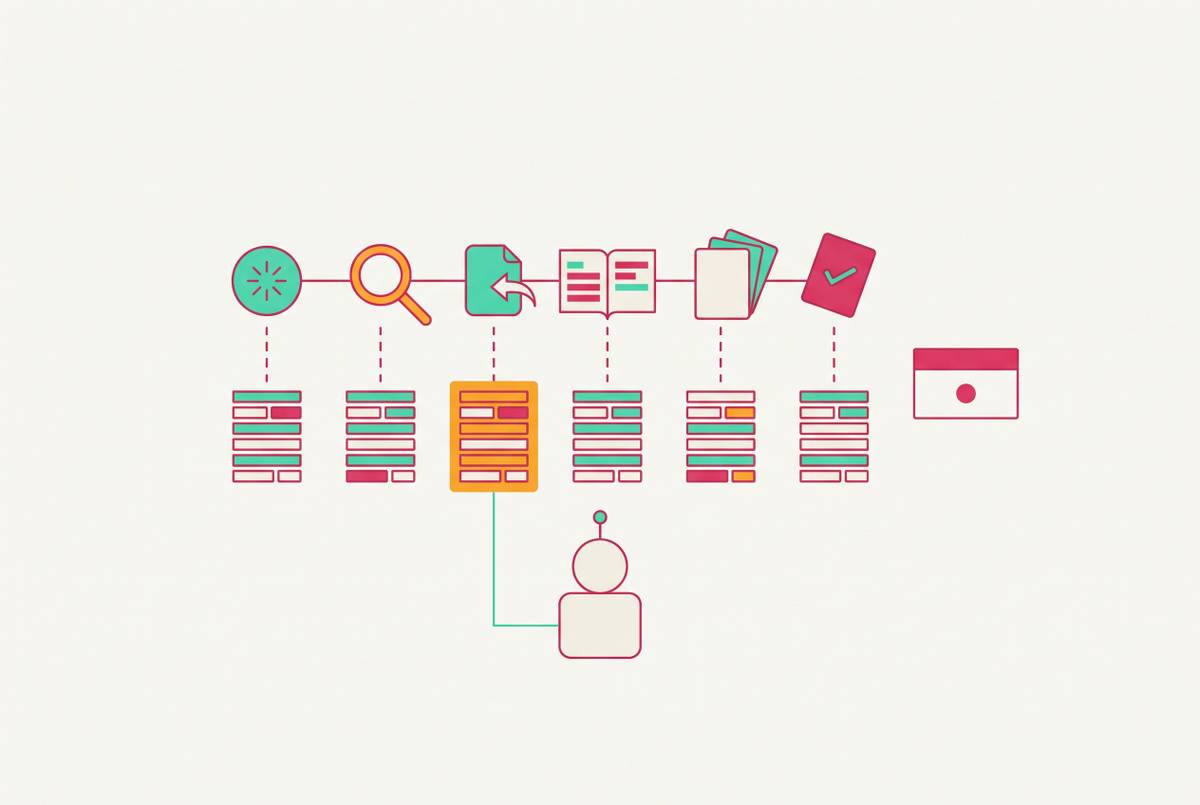
Measuring LLM referral traffic means building more than an AI channel in GA4. Technical marketing teams need a stack they own, from referrer rules to dark-traffic estimates and warehouse attribution, because no single signal captures the whole journey. The engineering task is to connect those layers without making inferred visits look measured or correlated revenue look certain.
Why standard analytics stacks miscount LLM referral traffic
Referrer stripping removes the data that standard analytics uses to tell where a visitor came from. A person can click a link in an AI answer and reach a site with no usable HTTP referrer header. GA4 then has no source signal to recover. A 2026 analysis found that 70.6% of AI referral traffic appears as Direct because of referrer header stripping.
This is not simply a missing GA4 setting. Claude’s desktop browser sessions pass referrer data only some of the time, while its mobile app traffic strips it entirely. Consent leaves more traffic unmeasured on EU sites that have consent banners and run GA4, where only a small share of AI traffic gets the right source. Cookieless analytics configurations recover substantially more, but a reporting rule cannot restore a header that never reached the server.
What gets lost when those visits disappear into aggregates? Yotpo’s 2026 guide says AI-referred visitors have more intent than standard organic visitors because the AI system has already qualified them. Default GA4 configurations scatter AI-related sessions across Direct, Referral, and Organic, hiding that distinction. Engineering-level instrumentation is therefore needed to separate the observed channel from the traffic that only leaves indirect evidence.
The two distinct traffic populations hidden inside "Direct"
Dark AI traffic contains two different populations. In Population 1, a human clicked a link inside an AI answer, but the platform removed the referrer before the request arrived. The visit happened through a referral link. Its source evidence did not survive, so behavioral proxies inside analytics are needed to estimate the missing sessions.
Population 2 follows a different path entirely. A person receives an AI recommendation, closes the chat, and later searches for the brand. There is no AI referral header to preserve because the eventual visit did not come through an AI link. Although this journey is hidden from AI attribution, it can appear as branded organic search. It needs a branded-search lift model tied to citation monitoring.
Crawling is a third, separate activity. GPTBot and ClaudeBot scraping pages are not human visitors referred by AI platforms. Decisions about blocking or allowing those crawlers serve different purposes from measuring referrals, and their activity belongs in server logs independently of session analytics. A GA4 regex rule addresses neither crawling nor delayed brand searches. It catches only human sessions that still have their source string.
Platform referral behavior by source, and why volume share misleads
The surviving signal depends on the platform. Perplexity is built to cite sources in nearly every response, except in its Writing focus mode. ChatGPT often answers from trained knowledge without clickable source links, though its web search mode produces inline links. Claude can strip referrer data when people click outbound links, and it does this differently in desktop browser and mobile app sessions. These differences change what an analytics report can see before any comparison of visitor intent begins.
Referral volume also changes over time. Claude overtook Perplexity in March 2026 after growing fast over 19 months, while Perplexity’s referral sessions had fallen well below their March 2025 peak. Those movements describe observed referral traffic. They do not establish which source delivers the most valuable leads, especially when source evidence survives unevenly.
Preserve per-source segments from the start rather than report a single undifferentiated AI total. The report can then show conversion rates for each platform alongside its session counts. The source-matching rule also needs the domains and subdomains used by each platform, rather than an assumption that its display name is the incoming source string. No domain inventory or platform-specific conversion figures are supplied here, so neither a ready-made lookup nor a universal conversion ranking can be established from these facts.
Building the GA4 channel group that catches visible AI referrals
For implementation, begin by auditing GA4’s default “AI Assistant” channel to see what it already captures. Then create a custom channel group in GA4 Admin with a name such as “AI Search” that distinguishes it from the default groupings. Its source-matching rule needs a regex that covers the AI platform domains and subdomains and is kept up to date. The exact expression is an implementation dependency. The supplied material does not include the promised regex, so there is no verbatim rule to reproduce without inventing it.
Place AI Search above the generic Referral channel. GA4 evaluates rules from top to bottom and assigns the first match, so Referral can absorb AI sessions before the custom rule gets a chance to match them. The custom grouping should complement what the default assistant channel already captures.
Build the baseline report with session source/medium, full referrer string, landing page path, engaged sessions, conversion events, and new-versus-returning user status. These fields let the team compare where visible AI visitors land and what they do afterward. For PDF assets, hard-code UTM strings into every hyperlink. When an AI reads a PDF and surfaces its link, the full URL, including those parameters, often survives into the referral session.
Proxying the dark traffic that referrer rules cannot reach
This layer tracks clicked referrals that have lost their source. In GA4 Explorations, build a custom segment for new users arriving through Session Source = “(direct)” on deep content pages rather than the homepage, with above-average time-on-page. These landing pages include blog posts, product detail pages, and documentation. This pattern looks like AI-referred behavior and leaves out most bookmark and type-in traffic. It is a filter for an estimate.
Apply the segment to the same date range as the visible AI referral report. That makes the two views comparable in time. Present the proxy beside the measured count as a dark-traffic estimate, with its assumptions documented and its uncertainty explicit. It is intended as a lower-bound estimate. Any dark-traffic range depends on those assumptions and cannot prove that every session in the segment came from AI.
Server logs are another way to track activity that the client-side analytics tag misses. Log the User-Agent strings of GPTBot, ClaudeBot, and PerplexityBot separately from session analytics to identify which pages are being scraped. That evidence answers a different question from the behavioral segment. Crawler activity does not establish that a human followed a recommendation, so crawler counts must not be added to referral sessions or treated as a substitute for them.
Measuring the AI-influenced branded search lift that bypasses referral entirely
A dark-traffic segment cannot recover a journey that never included a referral click. Similarweb research tracked real user journeys across finance, travel, and beauty and found that people who received an AI recommendation were substantially more likely to visit the brand within seven days. More than half of those later visits came through branded search queries. That finding belongs to those observed journeys. The finding shows why branded search needs its own measurement layer, but it does not give a share that holds for every business.
For this layer, run a controlled prompt-testing cadence across ChatGPT, Perplexity, Claude, and Gemini to establish a baseline brand citation rate. Then compare week-over-week changes in that rate with changes in branded search impressions in Google Search Console. Timing is central to the inference. A citation increase that precedes a branded search increase is a stronger signal than two rising totals with no clear sequence, but it still does not prove causality without a controlled experiment.
What can connect that pattern to individual pipeline entries? Responses in sales conversations and demo-request forms asking “how did you hear about us” can identify AI answers as a source. Code those responses consistently in the CRM. Self-reported evidence can then connect AI visibility to leads that GA4 and Search Console cannot attribute, while remaining distinct from both measured referral traffic and the aggregate search-lift correlation.
Connecting AI sessions to revenue in a warehouse-joined attribution model
The revenue layer needs more than a session report. GA4’s BigQuery export has traffic-source fields for each session, including session source, session medium, and session campaign. Those fields preserve the attribution context, but they do not by themselves identify a CRM contact. To match sessions to contact records, the join also needs GA4 client ID or user pseudo-ID, session timestamp, and landing page.
Within a set attribution window, tag leads or opportunities that came into the pipeline after an AI-referred or dark-traffic-proxied session. The window needs to be explicit in the model. Visible referrals, behavioral estimates, branded-search lift, and CRM self-reports should remain distinguishable rather than collapse into one apparently certain source label. In particular, dark-traffic and branded-search revenue attribution require probabilistic tags. Finance should not receive those pipeline totals as exact measurements of AI-caused revenue.
The board-level view can stay focused on five metrics. Put citation rate first, defined as the share of monitored buyer-intent prompts where the brand appears with a source link. It is upstream of the traffic and revenue signals because it records whether the citation exists at all. The next measures are visible AI referral conversion rate segmented by platform and the dark-traffic proxy session count with its conversion rate against the Direct baseline. The remaining measures are week-over-week branded search lift correlated with citation-rate change and CRM-tagged AI-influenced pipeline value, clearly labeled probabilistic.
Citation rate describes visibility, the session metrics describe observed or inferred visits, and the CRM layer connects evidence to commercial outcomes. The distinction prevents a strong correlation from quietly becoming a deterministic revenue claim. It also gives a data engineer a clear specification for preserving evidence quality through the join, rather than merely producing a larger AI-attributed total.
Operationalizing the stack: review cadence, alerting, and ownership
Once the stack is built, operating it requires a different discipline from implementing it. Review the GA4 channel regex weekly for new platform domains and subdomains. A new interface or platform rebrand can silently send sessions into the wrong bucket until the rule changes. Recalibrate the behavioral proxy quarterly by comparing its session count with visible AI referrals. A dramatic ratio shift calls for an audit of the proxy assumptions and possible changes in platform referrer behavior.
Citation monitoring needs at least a weekly cadence. Run buyer-intent prompt tests across ChatGPT, Perplexity, Claude, and Gemini, since citation presence can shift within days of a content update, a competitor publication, or a model update. Keep the branded-search comparison tied to that cadence so changes can be examined in sequence. Otherwise, the leading indicator and the downstream response become difficult to interpret together.
Split ownership between two roles rather than leaving the whole system to one. An analytics engineer is in charge of the GA4 layer and warehouse join, while a content or SEO engineer is in charge of citation monitoring and branded-search-lift correlation. Each side has a distinct maintenance task. Set a GA4 Intelligence alert for a week-over-week drop beyond a defined threshold in the AI Search channel group. A sudden drop should prompt investigation of domain or referrer changes before it is read as a genuine fall in traffic.
The operating goal is a maintained chain of evidence in which the team can explain what was observed, what was inferred, and how either reached a pipeline record. That is what makes the stack useful for decisions without handing its assumptions to someone else’s dashboard.