Technical writing services vs. a marketing stack you own: why the comparison-shopping era is ending
Marketing output is becoming easier to produce; owning how you produce it isn't.

As content production becomes token-metered, agent-operated, and scriptable, the choice is between renting a program and owning the system behind it. In 2026, agencies still offer valuable expertise, but a marketing team’s pipeline, measurement, and citation architecture belong on its side of the relationship.
Why the "which agency should I hire?" question is already the wrong frame
Comparing agencies is a natural place to start. The market has clear specialties, recognizable service models, and enough detail to make a shortlist feel like progress. A buyer can distinguish documentation support from developer content and search-focused production before speaking to a vendor. But knowing what to buy comes before the team has decided what it should own.
What should remain when the contract ends? If the answer is only a collection of articles, the team is procuring marketing output without developing a system of its own. An easily compared market can signal that its production layer is becoming commoditized. The next step is not necessarily to shop harder, but to examine what the purchase actually builds.
What the agency tier system actually looks like before arguing past it
TechDocs Studio offers fractional technical writers who work in Markdown, Git, and CI/CD documentation pipelines, with pull requests used for review. It publishes documentation when releases go out and shares its package prices. That model works for API references and developer guides that need to keep up with the codebase to stay accurate.
Tech Writing Boutique offers a documentation subscription at a flat monthly price, with a single-request queue that includes work on diagrams and documentation site development. The queue is the important distinction here. It suits continuous but unpredictable documentation needs better than hard deadlines requiring several deliverables at once. Sonicar specializes in software and business documentation, including developer portals, API references, knowledge bases, help guides, and requirements documentation. It works on a sprint cadence with weekly reporting and advertises a first draft within a week.
A docs-as-code service addresses a different problem from a retainer producing developer tutorials for marketing acquisition. Having technical writers on both teams does not make one service a stand-in for the other. The shared question comes after service fit, when the buyer asks which capabilities the relationship will leave under the team’s control.
The structural assumption every agency retainer shares, regardless of which one you pick
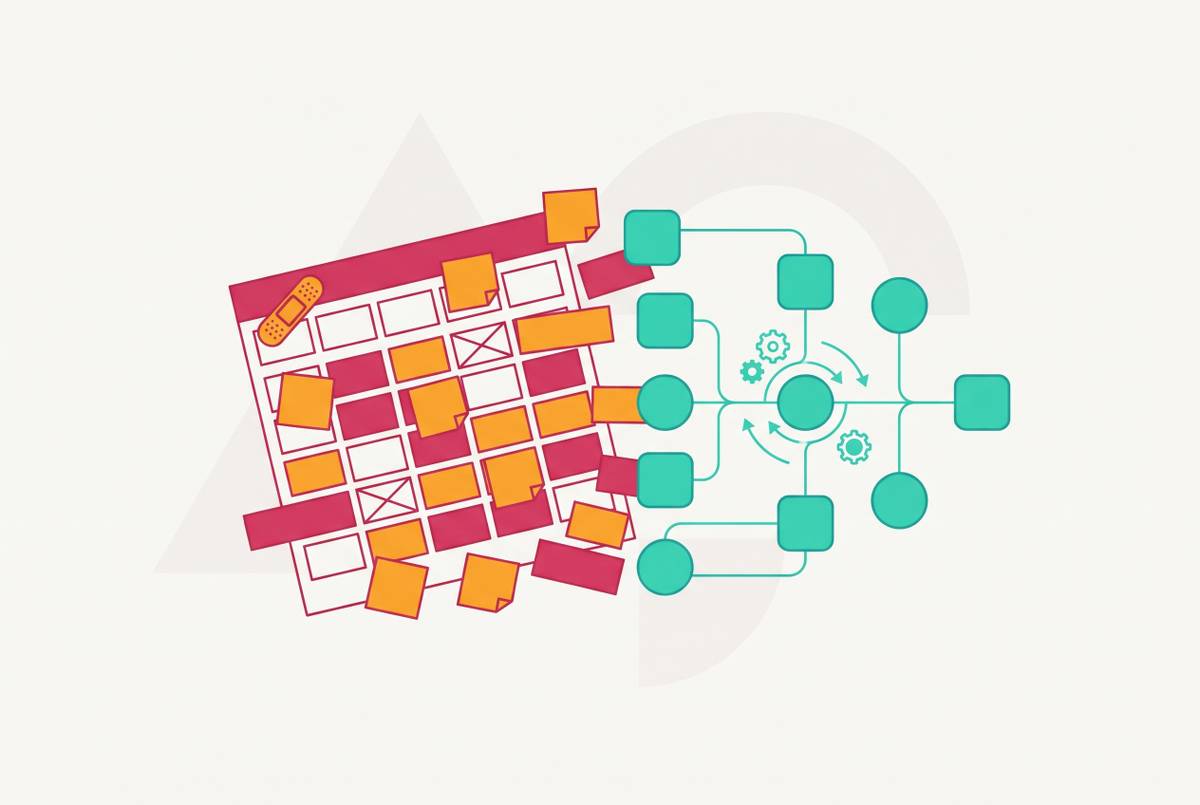
An agency retainer rents access to production capacity. The buyer receives the outputs, but the vendor runs the system that produces them. When the contract ends, that capacity leaves with the vendor. A company may retain its published developer guides without retaining the process that researched, drafted, reviewed, and delivered them.
That was often a defensible trade. Technical content took skills that were hard to find, time to produce, and repeated access to subject-matter experts, so building the same capacity in-house cost a lot. A vendor could supply a working process without requiring the buyer to assemble one. The bargain made sense when producing credible material was itself the dominant constraint.
The economics change when drafting becomes easier to automate. Judgment, measurement, and distribution then account for more of the difficult work, while production volume becomes less scarce. Control of the system matters more because the team can now retain more of it without reproducing an agency’s entire workforce.
How content became token-metered, agent-operated, and scriptable — and what that changes
Research, drafting, optimization, and publishing can now run through multi-stage AI workflows. With token-metered production, teams pay for ongoing drafting work in a different way than when they buy a block of people’s time. Scriptable stages also make the process something a team can operate and change.
Automation does not remove the need for people. A reliable workflow assigns tasks according to what people and systems can do safely, while preserving the chain from each claim back to its source. Its stages include source collection, keyword research, briefs, AI-assisted drafting, human enrichment, quality review, optimization, publishing, and performance-based rewrites. Teams that omit review and revision risk producing “AI slop,” a liability where volume substitutes for accuracy.
The human role therefore shifts toward designing the system, defining rules, training brand memory, reviewing output, and making strategic calls. More advanced workflows in 2026 are moving toward agentic systems that watch competitors, find gaps, research topics, and bring drafts forward for approval without having to be prompted all the time. These evolving systems require continued oversight. They do, however, weaken the case for a four- or five-figure monthly retainer whose main value is recurring production work.
Why the deliverable of a content program is no longer a published article
Making content easier to produce would change less if the goal were still just to publish articles that rank. But the destination is changing as well. A potential buyer can ask ChatGPT, Perplexity, Gemini, or Claude a category question and receive an answer that cites a brand. In that setting, the useful output is not merely a page but an entity signal that the answer engine can recognize and use.
Generative engine optimization, or GEO, works to get brands seen in AI-generated answers as traditional organic clicks fall. Answer engine optimization, or AEO, structures content to answer questions directly so systems can extract and cite it. Neither is satisfied by publication alone. The same brand can be cited far more on one platform than another, so doing well on one says little about how often it appears elsewhere.
What does a completed article prove about that outcome? Without Share of Model tracking, it proves little about whether the brand shows up in AI answers to questions in its category. EveryDeveloper’s LLM Reach report, delivered in one week, is an example of an agency offering AI-visibility measurement as a distinct product. Its separate scope is revealing. Buyers are starting to pay for measurement on its own, and can no longer assume that a standard content retainer takes care of it.
Citation architecture — the layer no agency retainer can own on your behalf
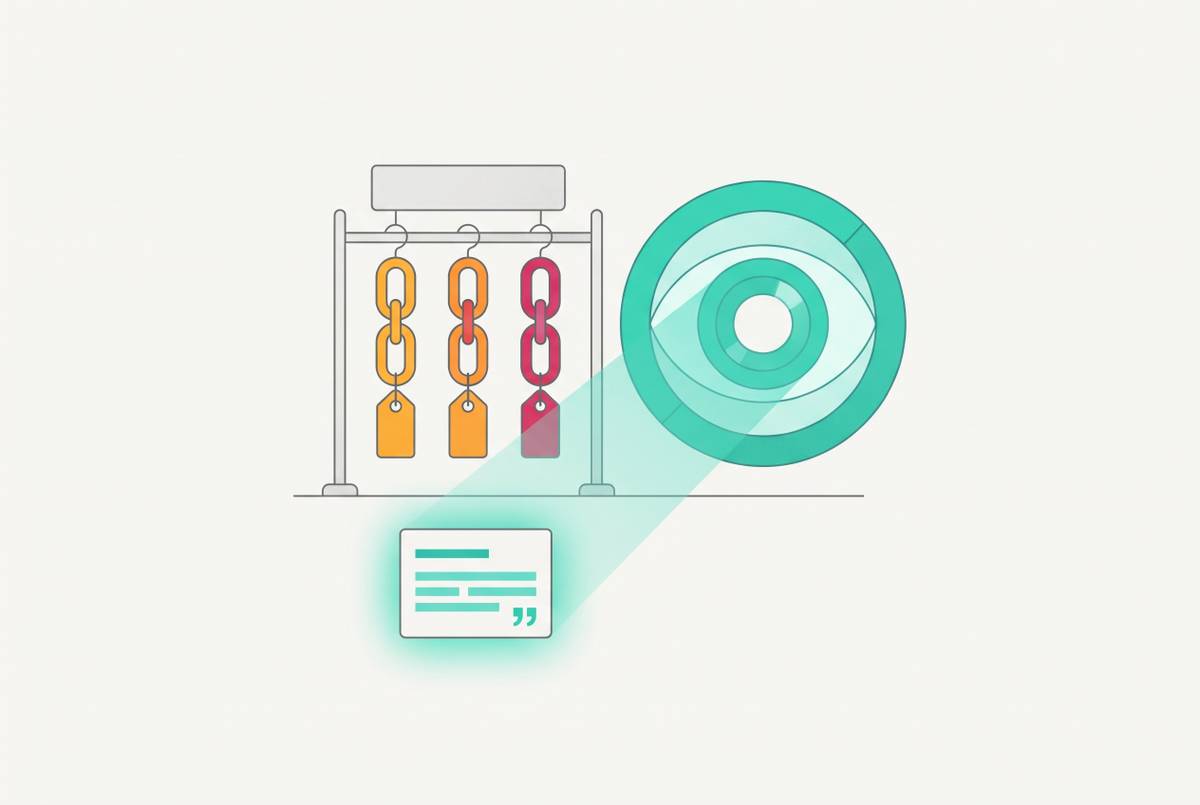
AI answer engines synthesize answers from a composite of a brand’s own pages and other sources. How often the brand is seen therefore depends on how it appears across that wider set of sources. A technically accurate article can contribute without being sufficient. Citation architecture names the underlying structure that makes the brand retrievable, identifiable, and consistently attributable.
The ground site is the primary owned domain. It needs extractable, structured content that describes the entity consistently, while factual, encyclopedic grounding pages establish the brand’s identity. Those pages serve a different purpose from a persuasive marketing article. They give systems a clear account of what the brand is, rather than leaving identity to be inferred from promotional language.
That identity also needs a distributed presence across documentation, blog articles, forum threads, review sites, technical papers, and structured data files. Entity consistency ties those appearances together. The name, description, founding details, and services should match across the website, LinkedIn, industry directories, and, where applicable, Wikipedia and Wikidata. Cross-source drift gives systems sources that disagree to draw on when they build an answer.
Authority adds another dimension to that consistency. Seed-domain presence means identifying publications that AI systems treat as authoritative within a field and securing mentions there. An unlinked mention on a highly authoritative site can be more valuable than a followed link on a low-authority one. An agency can help write and place that material, but the brand must retain responsibility for the grounding infrastructure and identity across sources. A missing Wikidata entry can leave a brand disadvantaged in the entity-recognition and knowledge-graph systems that influence identification and citation.
The measurement infrastructure that turns a content program into something you can instrument
Ownership becomes practical when the team can measure change. Share of Model tracking connects the content program to whether the brand appears in AI answers. A manual baseline is to run top commercial prompts monthly across ChatGPT, Perplexity, Gemini, and Google AI Overviews, then log whether the brand appears. That is a repeatable starting point without a vendor.
Microsoft’s Bing AI Performance Dashboard has provided first-party data on citations and grounding queries since February 10, 2026. Microsoft explicitly notes that it shows only a sample of actual citation activity. The limitation belongs in the interpretation of the data. First-party visibility is useful evidence, but a sample is not a complete account of the brand’s presence.
A team should own the measures that connect visibility to competition and commercial results. Those include Brand Mention Rate in AI outputs, Citation Share of Voice versus competitors, and AI referral traffic conversion rate. Tracking the correlation between citation frequency and changes in branded search volume adds another view, without establishing causation on its own. Advanced teams also track Revenue Visibility Gap, an estimate of revenue at risk from absent AI citations, as a quarterly metric.
The strongest objection — most marketing teams lack the engineering literacy to run this themselves
Most marketing teams need time to learn how to be technical publishers. Commissioning credible developer content requires enough engineering literacy to judge the brief, verify the work, and distribute it to the right audience. Running a publishing pipeline does not supply that knowledge. Developer readers can detect writing by people who have never run the code, and publishing weak technical material can be worse than publishing nothing.
That objection identifies a genuine limit to automation. A system can generate a draft without being qualified to verify a benchmark or decide whether a technical claim is true. Human review is not interchangeable with technical judgment. If the internal team cannot make those calls, owning the workflow does not remove the need to pay someone who can.
The refinement is to separate expertise from throughput. Technical judgment is scarce and worth buying, while drafting volume and publishing cadence increasingly belong to the automatable layer. Agencies are adopting agentic pipelines too, but a sophisticated production process does not necessarily include measurement of the buyer’s Share of Model. The ownership gap can persist even as the vendor becomes more efficient. A team that cannot bring everything in-house can still retain the pipeline and measurement while buying the expert judgment it lacks.
What owning the stack actually means for a marketing team making this decision in 2026
A marketing team should own Share of Model tracking, cross-platform AI citation monitoring, its ground site, entity consistency, grounding pages, and the publishing pipeline with its cadence. Owning these means that a vendor relationship contributes to a program the team can continue to operate.
A team may pay for outside technical judgment when it needs deep product expertise, while help with distribution can be worth buying when a vendor can reach the right community. One-time strategic audits offer another bounded input. The LLM Reach report illustrates that model, producing a durable artifact without requiring a rolling retainer. The distinction is between buying a defined contribution and outsourcing the whole operating system.
The site itself must also become legible to machines. Answer engines read across it, and agents read it before deciding whether to act, so content built only for people and search crawlers is incomplete for this environment. Each capability in the stack should be reachable by an agent through an API as well as by a person through a user interface. Composable primitives fit that requirement better than a monolithic suite that demands a new operating model.
The final test is what the team can change on evidence. If citation monitoring reveals a gap, control of the pipeline and citation architecture gives the team the means to respond. A specialist can still help diagnose or address the problem. But the ability to instrument, measure, and alter the program should not expire with the retainer.