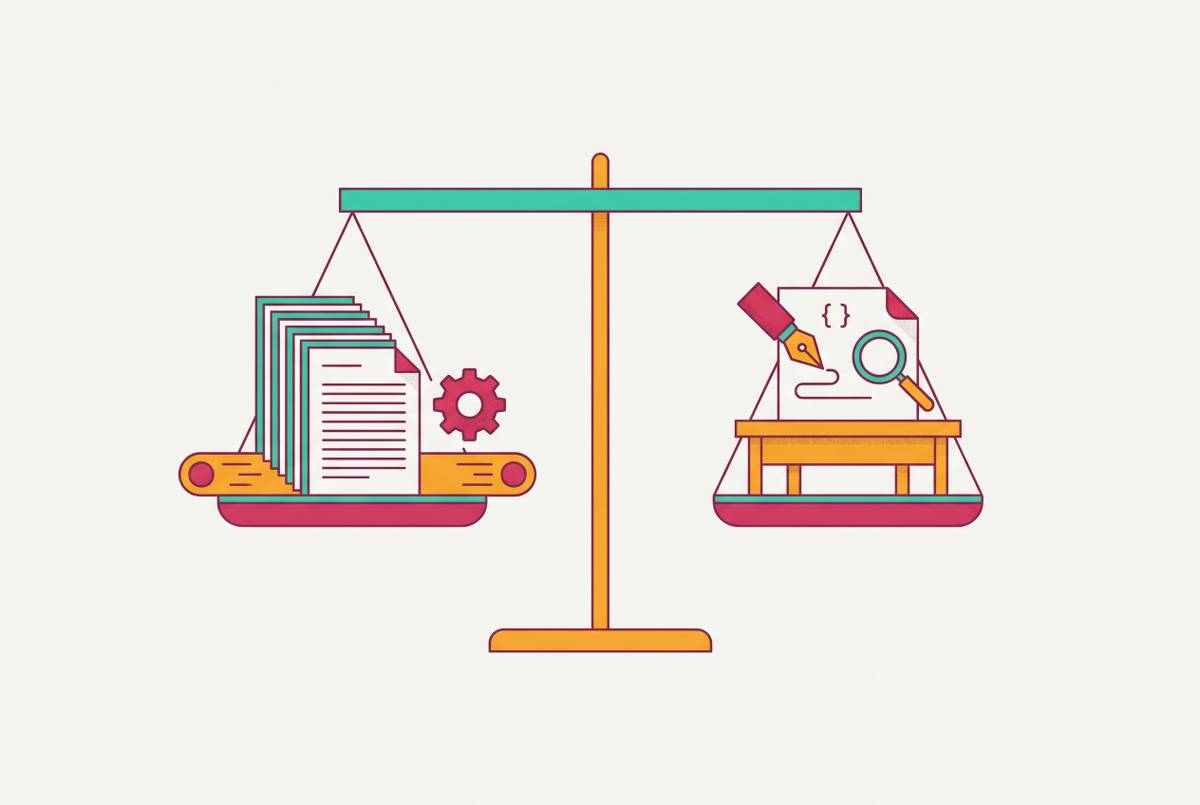
Trade Marketing vs Digital Marketing for CPG Brands
Trade marketing secures shelf space; digital builds the desire to buy from it.
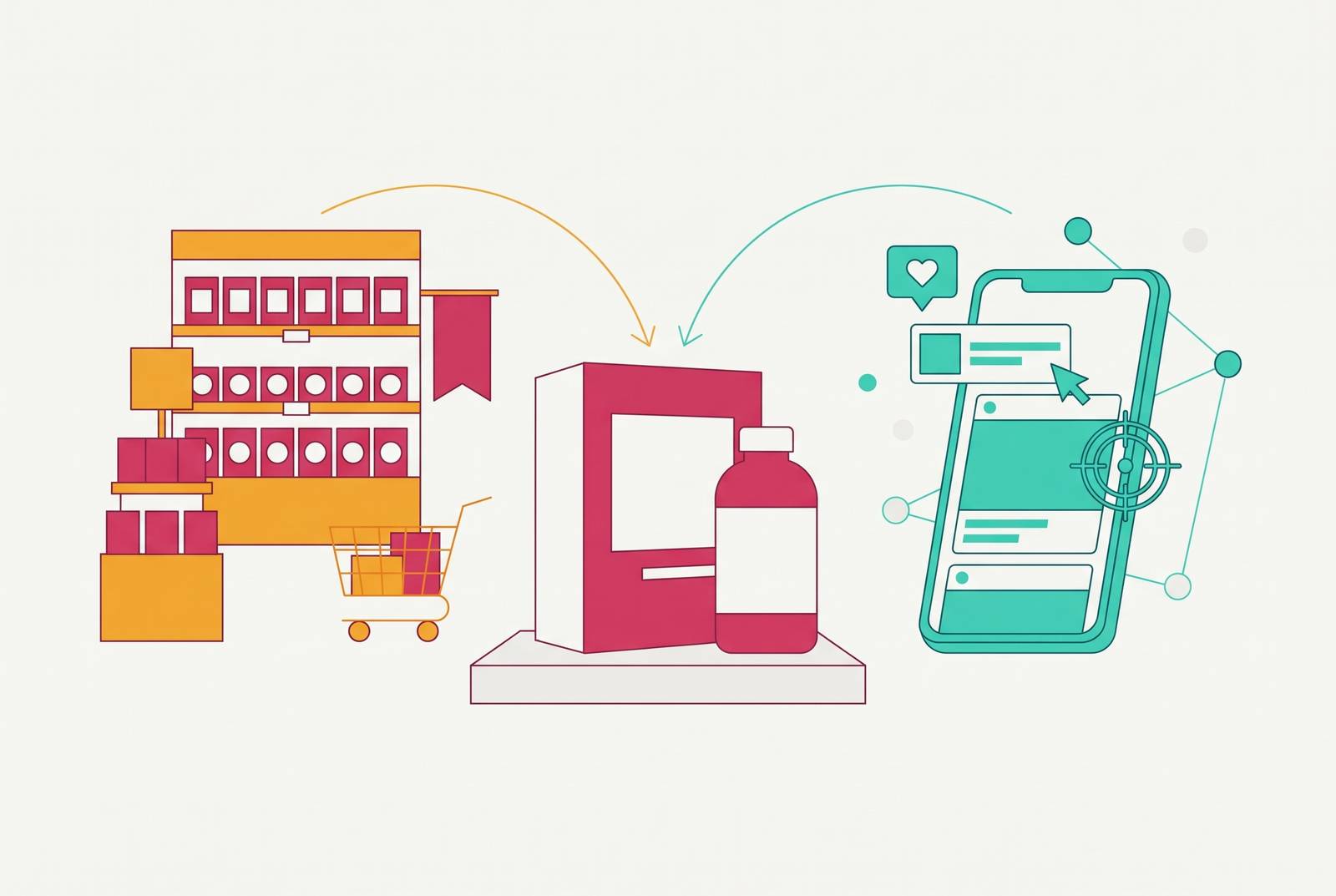
Trade marketing and digital marketing do different jobs for CPG brands. One gets products onto retail shelves, while the other makes consumers want to buy them. Treating them as interchangeable budget lines leaves gaps between availability, preference, and purchase. Intelligent allocation starts with understanding which job needs doing, then connecting the disciplines without expecting either to replace the other.
Why trade marketing and digital marketing are not the same job
Trade marketing addresses the businesses that stand between a brand and its buyers, including distributors, wholesalers, and retail partners. Its immediate goal is to secure distribution and shelf space. The retail buyer is the decision-maker here. That buyer needs a reason to believe the product will support category growth, offer attractive margins, and add something distinct to the range.
Digital marketing addresses individual consumers through owned and paid channels. Its message concerns product value, convenience, and relevance to everyday life. The question changes from whether a retailer should make room for a brand to whether a consumer should want it.
Timing makes the distinction more than a naming convention. For consumer campaigns intended to drive retail purchases, distribution has to come first. A consumer cannot buy a product from a shelf where it does not exist.
Where shopper marketing fits between the two and why confusing the three creates real gaps
Shopper marketing targets the person deciding what to buy at or near the point of sale. That person may not be the end user. Jetfuel's 2026 CPG playbook illustrates the distinction with a parent buying cereal for a child. The parent is the shopper, so a purchase trigger must speak to that parent's decision rather than assume the eater and buyer want the same thing.
The playbook distinguishes shopper marketing, customer marketing, trade marketing, and retail marketing through their targets, goals, tactics, ownership, and measurement. For this comparison, the key is preserving those distinctions when assigning work. Trade seeks retail buy-in through commercial terms and sales programs, while shopper marketing uses endcaps, digital coupons, retailer-app placements, and checkout triggers to influence selection. Consumer digital marketing helps people know and prefer a product before they make that choice. Responsibility follows the decision being influenced.
The metrics reveal why the categories cannot collapse into one another. Distribution points and shelf share show what trade achieves, while incremental sales lift, coupon redemption, and basket size show what shopper marketing achieves. Consumer digital measures include impressions, engagement, and lifetime value. Confusion leaves a practical gap when consumer benefits reach a retail buyer who needs a commercial case, or margin arguments reach a shopper who needs a reason to choose.
What trade marketing actually controls and what it cannot do alone
Trade marketing shapes the retail conditions around a product. It helps secure and expand distribution, negotiate shelf placement and planogram position, and win retailer cooperation on promotions, displays, and in-store features. Volume incentives can help get retailers to buy in when a product launches or reaches more stores. These are concrete gains in access and visibility.
That visibility is not the same as preference. A product can be stocked widely and remain unknown to consumers, because the retailer's decision to list it does not establish a reason for shoppers to want it. Better placement makes the product easier to encounter. It does not, by itself, create purchase intent.
This limit also explains why sequencing is important. Awareness advertising that runs before a product reaches the stores meant to sell it sends consumers looking for something they cannot find. Yet securing the shelf and stopping there leaves the opposite problem, which is availability without demand. Trade creates the conditions for a purchase, but consumer-facing marketing has to build the interest that makes those conditions useful.
What digital marketing actually controls and where it runs out of leverage
Digital marketing reaches consumers before they enter a store or visit a retailer site. Social, search, influencer content, email, and recipe or usage content can introduce a product and explain why someone might choose it. Behavioral and interest-based targeting make that communication more selective than trade activity can be.
Direct-to-consumer channels add a different kind of control. They give a brand direct relationships, first-party data, and opportunities to develop subscriptions and repeat purchases that retail partnerships do not provide. The playbook's journey map places Meta, TikTok, YouTube, and Google prominently in awareness and consideration. Their role is to help consumers discover and evaluate as well as to deliver a final transaction.
But where does that preference become a purchase? Most CPG spending still happens in physical stores, where digital reach does not automatically become shelf conversion. Strong click-through rates or return on ad spend cannot show what happens when a shopper finds poor placement, an out-of-stock product, or no promotional trigger. Spending more on digital can build demand while leaving the barriers to buying in place. Trade and shopper execution still have to capture that demand.
How the shopper journey now runs through channels that neither trade nor traditional digital was built for
The consideration stage now includes AI answer engines as well as search, retailer sites, and apps. Consumers comparing ingredients, prices, and reviews may ask an assistant for help before they reach any place where they can buy. The playbook's channel table explicitly lists LLMs such as ChatGPT and Gemini with Google, Amazon, and retailer apps at this stage. That places AI discovery within the purchase journey, rather than outside it as a separate technology topic.
This creates a distinct gap in coverage. An AI assistant may leave a brand unnamed despite strong shelf placement, and effective Meta or Google campaigns do not automatically produce an AI citation. Trade negotiates with retail partners. Paid search presence and inclusion in an AI-generated answer are also different events.
The journey may start days or weeks before someone enters a store, through social feeds, recipe content, and AI queries. Digital marketing has long helped people discover products at this early stage. What changes with AI is the route through which a consumer receives and compares product information. A brand can perform well in established channels yet remain absent from that comparison, without either its shelf position or its advertising results making the absence obvious.
How retail media sits at the intersection of trade and digital and why it is being elevated
Retail media addresses a different part of this widening gap, linking targeted advertising more closely to the opportunity to buy. It uses retailer first-party data to reach shoppers already in purchase mode. The mechanism is digital, but the relationship is retail.
P&G and Diageo have redirected substantial advertising budgets toward retail media networks as traditional channels fragment. P&G's CEO described a “fragmented new media reality,” in which maintaining a consistent brand narrative becomes harder across multiplying platforms. Retail media gives shoppers a way to discover and buy a product within the same ecosystem. Diageo has elevated it from a tactical performance channel to a core part of its marketing mix.
That elevation does not make allocation straightforward. Retail media joins targeting and purchase access, but it does not automatically solve AI discovery or establish that every attributed sale is new. Inconsistent measurement standards across networks also make retailer-to-retailer comparisons difficult. Whether a campaign creates additional sales or receives credit for purchases that would have happened anyway remains unresolved. Greater proximity to checkout makes attribution attractive without settling incrementality.
How allocation between trade and digital shifts as a brand scales
The balance between trade and digital depends on the constraint holding a brand back. For an early-stage brand without a retail footprint, that constraint is distribution. Trade investment comes first to secure partnerships, after which shopper marketing helps the product stand out on crowded physical and digital shelves.
As distribution matures, the problem can change from availability to preference. The product is present, but consumers choose something else. Digital demand generation then has a different role than it did before distribution existed, because it can activate an established opportunity to buy. A fixed allocation misses that change in purpose.
Enterprise-scale brands face both tasks across a large, fragmented retail footprint. They have to keep their shelf position and stay relevant to consumers, which helps explain why retail media plays a bigger role at that stage. Allocation should follow the constraint, allowing the ratio to vary. When awareness and engagement are strong but in-store velocity is flat or declining, the notes point toward a trade or shopper gap rather than an automatic need for more digital spending.
What integrated execution looks like when trade and digital reinforce each other
Kroger provides a concrete example of how retail relationships can make digital targeting more useful. Its household purchase histories allow personalized digital coupons to be timed to a shopper's actual repurchase cycle. A competing brand's coupon can reach the shopper when another purchase is due.
The trade relationship gives the campaign access to that purchase data, and digital delivery uses it to prompt the shopper when another purchase is due. Each discipline contributes something the other lacks. Distribution is not the constraint in this example, because the product already has a route to the shopper. Relevance and preference are the decisions the coupon is designed to influence.
Bringing trade and digital together takes more than lining up campaign dates or putting both under the same budget heading. The connection is the flow of data from retail access into targeting and then into the purchase decision. Attribution must be able to show whether the digital campaign increased in-store velocity, rather than stopping at online clicks or coupon delivery.
How to measure whether trade and digital are doing their respective jobs
Trade measurement begins with access and retail performance. Distribution points show how many retail doors stock the product, while shelf share describes its physical or digital position within the category. Retail velocity, measured in units sold per store per week, helps the retailer decide whether to reorder and keep the product's placement. Trade promotion ROI asks whether incentives and co-op spending produce incremental distribution or merely subsidize existing orders.
Digital requires a different set of signals. Awareness and share of voice track how well consumers know a brand, while product page views, add-to-list rates, and review sentiment help show whether people are considering it. Conversion and return on ad spend capture paid-channel performance, but they do not establish total incremental sales. For DTC, repeat purchase rate, lifetime value, and subscription conversion show whether direct relationships deepen over time. The distinction prevents a useful channel metric from becoming an unsupported claim about the whole business.
Incrementality remains the shared test across both disciplines. Did the spending generate an outcome that would not otherwise have occurred, or did it capture credit for an existing purchase? Retail media brings that question to the fore, but it also needs to be asked of trade promotions and consumer campaigns. Different operating metrics are necessary without being sufficient to answer it.
AI visibility adds another measurement requirement at consideration. Being cited in an AI answer and appearing in a paid search result are separate events, tracked by different systems. Intelligent allocation depends on identifying the missing outcome, whether that is distribution, preference, discovery, or shelf conversion, rather than asking every discipline to prove its value with the same ruler.