B2B Demand Generation Is a Managed-Service Trap — and Computational Marketing Is the Exit

B2B demand generation becomes a managed-service trap when handing off the work leaves the team unable to understand or change how it runs. The exit is computational marketing, which treats demand generation as an engineering system with owned data, inspectable workflows, and measurable outcomes. The choice is between renting execution and building capability.
Why B2B demand generation defaults to managed services, and what that actually costs
Platform administration, briefing cycles, list pulls, and approval chains can consume the people who should be testing new ways to reach buyers. Outsourcing promises to give those people their time back. That is a reasonable response to operational overload. The problem begins when the handoff transfers not just work, but the knowledge and infrastructure needed to direct it.
What does the team retain after that transfer? If knowledge of the audience, the test history, and the logic behind execution stay outside the business, a change of course needs another brief or a new statement of work. The team may still approve campaigns without having control over how they run. That distinction explains why an arrangement that initially saves time can later make experimentation slower.
The label “demand generation” can obscure a second surrender. Many programs optimize for lead generation, especially the form fills an ad platform can see, which differs from the pipeline a CRM can prove. A service can do the agreed work while leaving the business unsure whether the demand it created led to revenue. The structural diagnosis is therefore not that agencies cannot execute, but that execution can become detached from both business learning and business results.
How the managed-service billing model structurally misaligns incentives
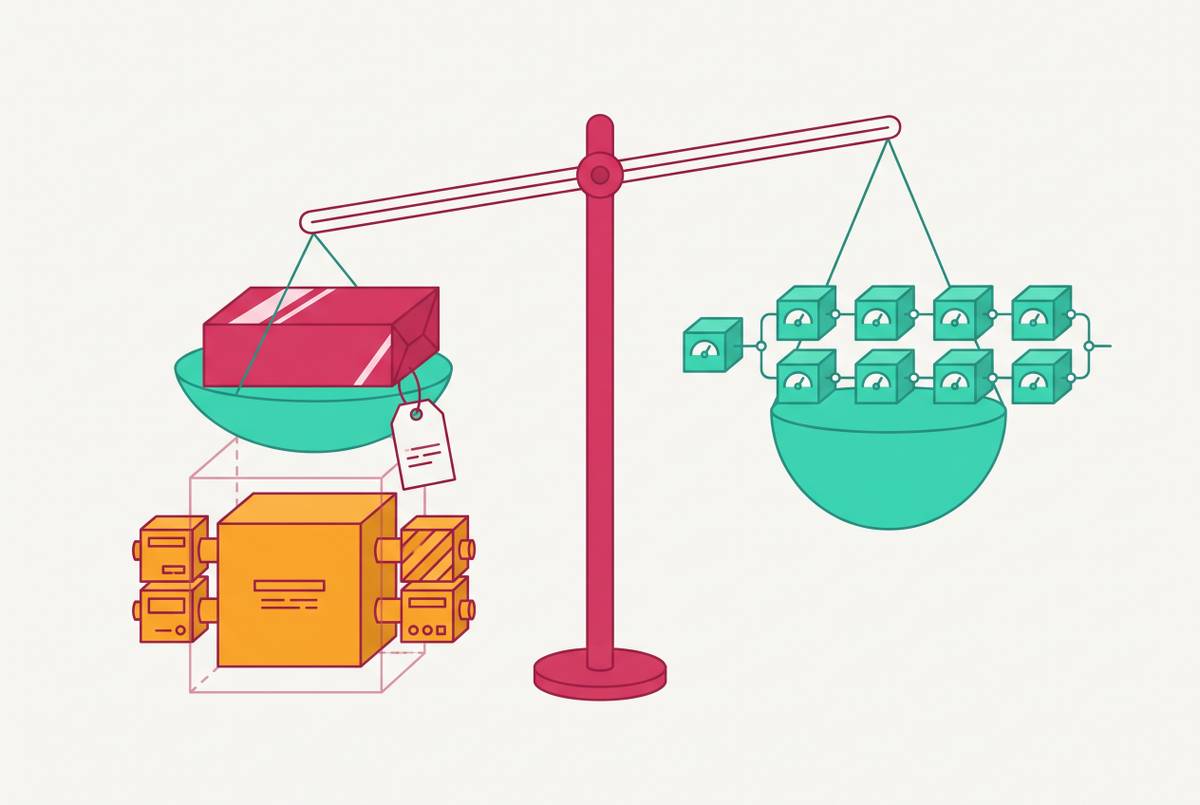
A retainer pays for time and activity. Its commercial reward is renewal, while making the client self-sufficient could reduce the need for the service. An agency can work diligently within that model and still have no financial reason to make itself unnecessary. The problem sits in the contract’s design.
Percentage-of-spend pricing adds another mismatch because the fee grows when the media budget grows. Better pipeline does not automatically do the same. The client pays agency margin on top of platform cost while the compensation structure rewards more spending. What happens if the best decision is to spend less? The model does not naturally reward that answer, even when the people operating it might recommend it.
Reporting can reinforce the same separation between activity and value. Marketing-qualified lead volume, cost per lead, and channel activity describe what the campaign produced, but they do not establish which demand led to closed-won revenue. When the agency also keeps the history of audiences, segments, and tests, the client can be unsure of the results and find it hard to leave. Renewal can then reflect the cost of starting over.
Why the standard managed-service playbook was not built for how B2B buyers now discover vendors
That dependence becomes more consequential as discovery moves earlier in the buying process. B2B buyers complete most of their research before contacting a vendor, and the majority of buying groups have already ranked their preferred vendors before first outreach. Influence begins before a form fill appears. A program organized around capturing that form fill may therefore measure the point at which a preference becomes visible.
AI-powered answer engines give buyers another way to do research that is hard to see. Traffic to generative AI platforms has grown sharply year over year, giving buyers more chances to find brands in generated answers. Presence in generated answers is a separate outcome from traditional search rankings, while traditional demand generation can still work and AI discovery can still change. It means paid media, sales development sequences, and lead counts do not, by themselves, constitute a method for earning AI citations.
Even the answer engines differ from one another. BrightEdge’s study of identical prompts found that Google AI Overviews surfaced brands far more often than ChatGPT, while ChatGPT stayed silent about brands much more often. Visibility therefore needs to be measured for each engine. Most AI citations also come from earned third-party editorial coverage, with fewer coming from brand-owned pages or paid placements. A managed-service operation built around buying distribution has no built-in answer to that different task, which depends on becoming a source that an answer engine selects.
What computational marketing means in concrete operational terms
Computational marketing treats demand generation as a system the team can inspect and change. Its inputs are measurable, its infrastructure is owned, and its automated workflows connect to outcomes in the CRM. Ownership includes the data, the operating logic, and the measurement layer. The team can intervene before the monthly explanation arrives. This changes the role of internal marketers from approving outsourced activity to directing a system whose workings they understand.
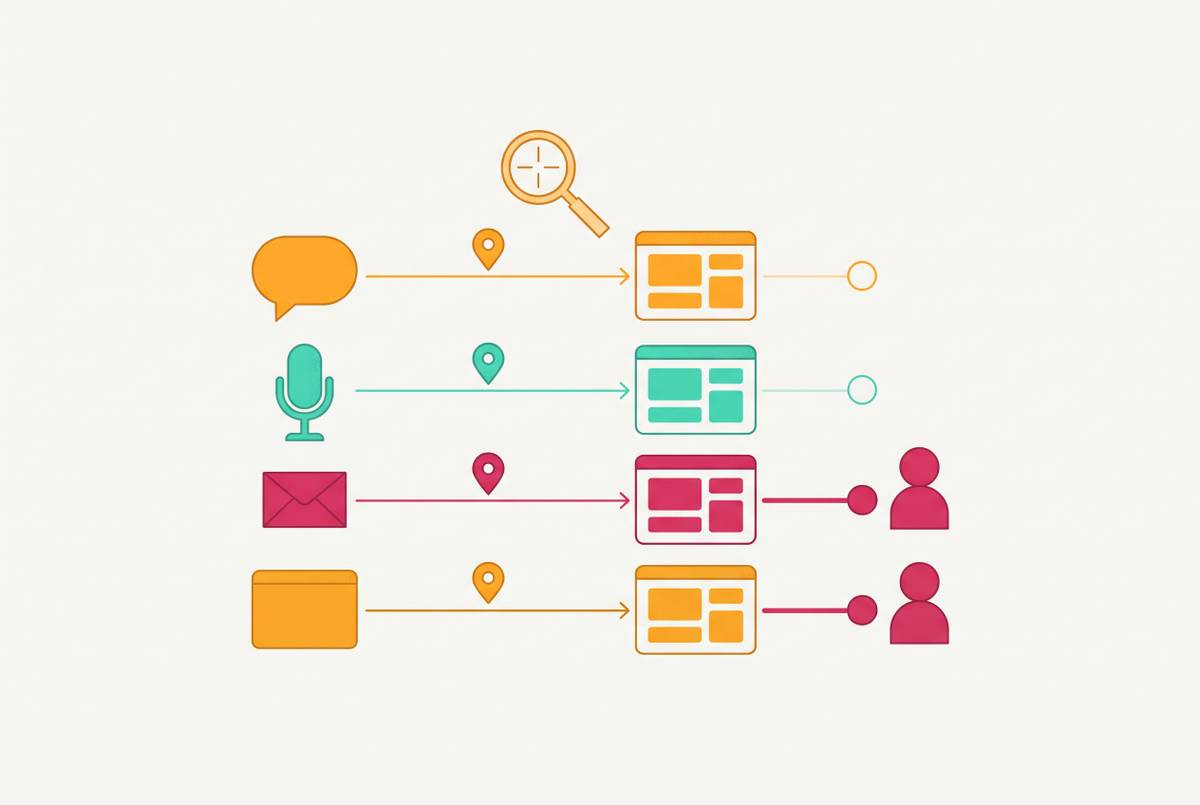
ZoomInfo names four things a modern demand generation system can do. Continuous account targeting and enrichment replace static list imports, while low-latency signals help prioritize accounts as conditions change. AI workflow integration moves from a signal to outreach without a manual handoff. Attribution then links what a campaign does to the revenue it brings in. Together, these capabilities describe an operating model.
Signal latency makes the difference concrete. A buying signal that takes two weeks to surface may arrive after the useful window has closed, whereas a computational system can act the same day a threshold is crossed. The briefing cycle is no longer the clock. More importantly, the team owns the logic connecting that signal to the response and can change it. A platform-led approach earns its value through that control.
How multi-stage AI content pipelines replace the agency content function without losing editorial control
Content production follows the same principle through a staged pipeline in which research leads to an outline, drafting follows approval, and automated quality gates precede human review and publication. Each stage has a distinct job. This setup can produce as much content as an agency while keeping the team responsible for what it publishes.
Where should human judgment enter that sequence? Human judgment matters most at the outline, before the system spends time writing thousands of words built on a weak premise. Later review and approval remain necessary because approving a direction is not the same as approving the finished text.
The EU AI Act gives that distinction a legal dimension. Its transparency rules applicable from August 2026 include an exemption for AI-generated text published to inform the public on matters of public interest where substantive human review or editorial control occurs and a natural or legal person holds editorial responsibility. The scope is specific, not a blanket exemption for AI content. Outline review and publication approval support that posture, but a nominal sign-off is not substantive review. Operationally, the same design replaces repeated briefing and handoffs with a process the team can inspect, without outsourcing responsibility for what it publishes.
Building the content infrastructure that AI answer engines actually cite
Even a pipeline that works well needs a plan for where to publish. AI answer engines synthesize material from documentation, editorial coverage, forum threads, review sites, structured data, and technical papers. A brand’s own website supplies only part of that picture. The task is therefore broader than writing stronger pages for a single domain. It involves making the brand legible across the source types from which answers are assembled.
That architecture has two distinct layers. Ground-site content consists of owned pages that establish the brand as an understandable entity, while off-site seeding seeks earned editorial mentions in publications the engine treats as authoritative within a field. The layers serve different purposes. Owned content establishes what the brand is, while independent coverage gives the synthesis other sources from which to recognize it. Neither function can simply be replaced by buying more distribution.
Consistency over time is another engineering constraint. Only a minority of brands remain visible from one AI answer to the next, and very few appear across consecutive runs of the same query. A single citation proves very little about durable presence. Continuous publishing and a distributed footprint, including client blog networks, can supply more sources than one owned domain alone. But distribution is not the same as independence, and an owned network does not become earned editorial coverage merely by spanning several sites. The architecture has to distinguish source diversity from domain count, because better copywriting alone cannot solve that structural problem.
Measuring AI answer-engine visibility so the system is actually accountable
The publishing architecture needs a measurement loop because presence varies by model, query, and run. A team that asks an engine one question and sees its brand has observed a single instance. The reverse is just as true. One omission cannot show that the entire content effort has failed.
Specialized monitoring tools address this by sampling the same prompt across multiple models and repeated runs. With enough sampling, the results can support statistically meaningful visibility analysis. Sampling still has limits. Microsoft says its Bing AI citation data is a sample of all citation activity. That limitation belongs in the interpretation of the measurement because a partial view should be presented as such.
Measurement identifies which topics, source types, and publications contribute citations, allowing the content pipeline to respond to evidence. This is a different job from counting leads. AI visibility shows whether the discovery infrastructure is helping the brand appear more often, while CRM-linked attribution shows what it does for the business. Keeping those questions distinct prevents a new citation dashboard from becoming the same old activity report with a different metric at the top.
Why owning the system is the only durable position in a market that keeps changing
Rep-free research, AI answer engines, and dark-funnel influence all expose the weakness of relying on a fixed outsourced playbook. Each puts some influence beyond what a standard campaign dashboard can easily track. The next shift need not look like AI search to create the same problem. A team unable to inspect its own system must depend on someone else to explain the change and implement a response. Ownership makes adaptation an internal capability.
That capability accumulates through repeated use. A team with its own data infrastructure, content pipeline, and measurement layer retains what it learns about audiences, sources, and outcomes. A team whose knowledge lives with its agency risks losing that foundation when the contract ends. Meanwhile, a large majority of B2B marketing teams are still trying out AI workflows and have yet to make them part of how they produce content day to day. The opening is not simply to publish faster, but to build a learning process while others are still experimenting with disconnected tasks.
In practice, the black box should be replaced with a system in which every automated step is human-walkable and every output is reviewable before publication. Begin with instrumentation. Find which brands and content are now cited in AI answers to buyers’ questions, trace those citations to their sources, and measure a baseline across engines and repeated runs. Then build the content operation around that evidence, so the first engineering decision is grounded in what the team can actually observe.