ChatGPT Business Hub: what a Search Console for brands inside ChatGPT means for teams who measure AI visibility
OpenAI's reported brand dashboard shows clicks, but not why.

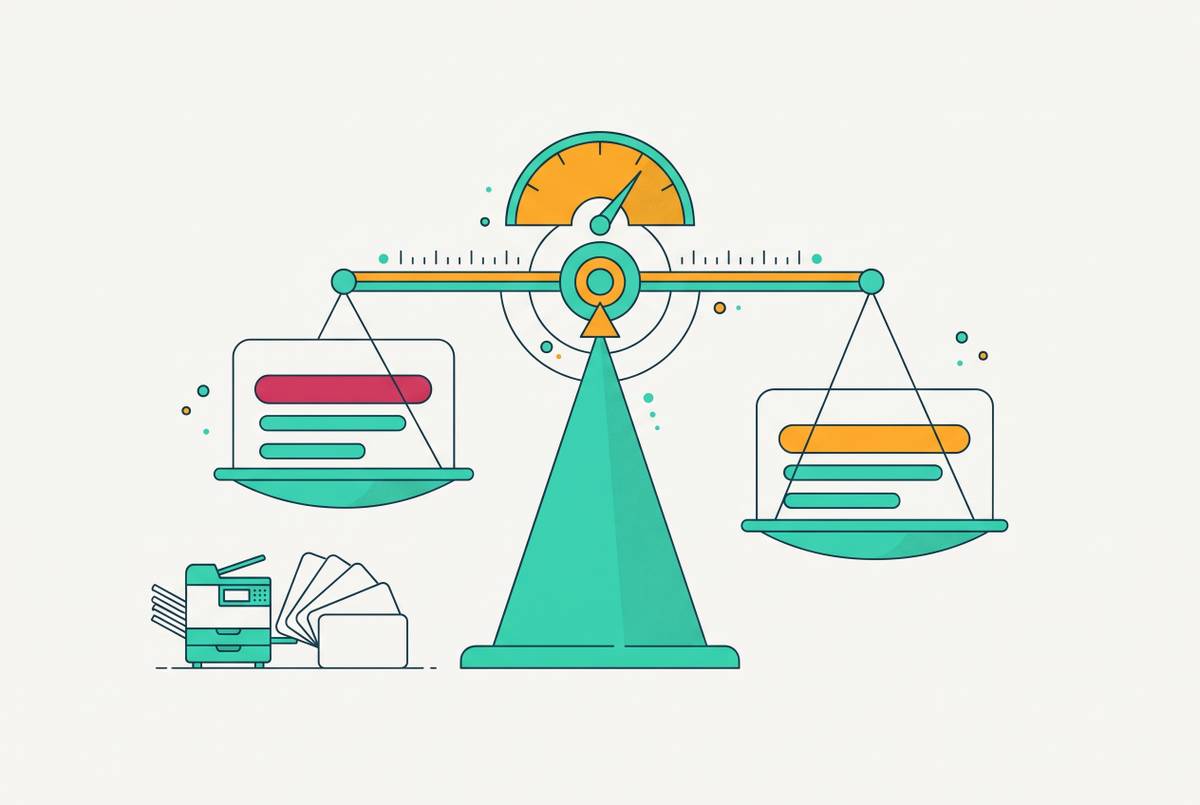
The reported ChatGPT Business Hub would give brands a native view of impressions and clicks inside ChatGPT. That would be a real advance, but not a replacement for independent AI visibility measurement. Teams would still need their own way to test queries, compare competitors, cover other engines, and probe results through an API. Understanding that division is the key to using a “Search Console for brands” well.
What the reported ChatGPT Business Hub is and what it reportedly does
The ChatGPT Business Hub is the subject of reports. Its availability and features should therefore be treated as provisional. The reported “Claim your business in ChatGPT” banner describes a place where businesses could see how they appear, supply information about their offers, and help answer buyer questions. The reported analytics view would chart impressions and clicks daily. Impressions would count appearances in ChatGPT responses, while clicks would count links followed to the business’s website.
“See how your business shows up” describes the analytics layer. “Show customers what you offer” describes a product and business-info feed. “Help customers make decisions” describes a business agent that would answer buyer questions using context the business controls. Together, those reported functions form a three-part structure of reporting, supplying information, and supporting decisions.
Why OpenAI is building this now, and what the commercial sequence reveals
OpenAI began showing ads to free and Go users in the US on February 9, 2026. On May 5, 2026, it opened a self-serve Ads Manager to any US business, with no minimum spend and cost-per-click bidding. The reported Hub fits that commercial sequence. Free organic reporting gives businesses a reason to join the platform and shows them how often they appear, which can make paid visibility look attractive. Google’s Search Console and Google Ads work in much the same way.
Verification would deepen the relationship beyond advertising alone. Businesses connecting a Shopify store would supply a product catalog, prices, and business details. That structured first-party data could make shopping answers more accurate while giving OpenAI a closer commercial relationship with verified brands. Businesses would gain a way to describe their offers, while the platform would gain information useful to its answers. Neither benefit makes the exchange neutral.
The reported click metric is especially revealing here. Google’s generative AI report shows impressions but no clicks, while Bing’s AI Performance report shows citations but no clicks. OpenAI has a business reason to show that ChatGPT sends real traffic as well as showing business names. A dashboard built partly to get businesses to buy ads will tend to highlight results that look like they could improve. That incentive belongs in the interpretation of its numbers.
What the two reported metrics can and cannot tell a team
Impressions and clicks could show whether visibility work coincides with a change in appearances or traffic. They cannot, by themselves, explain the cause. Even the impression unit is undocumented. Does naming a business twice count once or twice, does a product card count like a name in body text, and does a citation without a name count at all? Until those rules are known, teams cannot confidently distinguish different kinds of exposure within the total.
Someone asking directly about a known brand is not the same prospect as someone receiving that brand as an unprompted recommendation. A combined impressions line conceals that distinction. A rise could therefore leave a team unable to tell whether it is reaching new buyers or simply answering more questions from people who already know it.
ChatGPT appends utm_source=chatgpt.com to referral links, so GA4 already captures some traffic. OpenAI’s reported server-side count would differ because consent banners, blocked scripts, and bounces before page load cause website analytics to miss some clicks. Since GPT-6 rolled out, some ChatGPT clicks have also reached sites without a referrer or UTM tag and been filed as Direct. A native count could illuminate traffic that attribution misses.
That still leaves the central diagnostic problem unresolved. The reported tool has no prompts, competitor comparisons, recommendation positions, or individual user data. If impressions fall, did the brand lose a product category, a comparison query, or a branded question? Each kind of loss needs a different response, but the dashboard reportedly has nothing like Google Search Console’s query report.
Where the Business Hub sits among the first-party reporting tools that now exist
Google announced its generative AI performance report in Search Console on June 3, 2026, and rolled it out to all sites on August 31, 2026. It shows impressions by page, country, device, and date, combining AI Overviews and AI Mode. Those breakdowns show which pages appear and who sees them. They do not explain the questions behind it. The report has no clicks, click-through rate, queries, or competitor data, and its impressions are already included in Web search totals.
Bing’s AI Performance report became available in public preview on February 10, 2026. It added grounding queries mapped to pages on March 23, 2026, offering a connection between retrieval and cited content. Those grounding queries are not the full user prompts. The report also blends Copilot, Bing’s AI summaries, and unnamed partner integrations, without reporting clicks. The reported Hub would add a different signal, becoming the only tool in this set with clicks, but without competitor or position data.
These panels also sit within a shifting market. ChatGPT’s share of worldwide visits to generative AI websites moved from roughly three-quarters in mid-2025 to roughly half by mid-2026, while Gemini and Claude grew. So the platform with fuller reports could be getting a smaller share of visits as platforms with less reporting grow. Website visits do not establish dashboard coverage, but the trend exposes the planning risk. Even accurate reports, read together, cover only part of the landscape and do not reveal the prompts behind appearances.
Why query-level context is structurally unavailable from first-party tools — not just unreleased
Why not wait for a prompt report? Because an AI prompt can include details about someone’s relationships, money, and personal life that a short keyword query never held. Handing those conversations to businesses would create substantial privacy and legal exposure. Google already hides a material share of short search queries for privacy reasons. Reporting on conversations has much tighter privacy limits to work within, along with the lack of an interface.
Aggregation does not solve the problem neatly either. Keyword reporting worked because many people typed the same string, so the totals could show how often people searched for it. Real prompts have near-zero repetition. A report showing “this prompt had 2 impressions” would offer little strategic value while potentially exposing personal detail. Topic categories are a more plausible platform output than verbatim queries, but they would not restore the precise question that produced a recommendation.
This leaves a gap between measurement’s two bookends. Prompt tracking observes answers at one end, while GA4 records attributable visits at the other. Between them, an AI mention may lead to a later branded search or a direct visit that cannot be tied back cleanly. First-party impressions establish that exposure happened. Independent prompt testing is therefore not a temporary substitute for an unreleased feature, but a different architecture for answering questions that native reporting cannot safely answer.
What independent, machine-checkable measurement closes that first-party tools leave open
Independent measurement starts with a defined query set. It asks which tested questions produce a brand mention, how competitors perform on the same ground, and whether the result holds across engines. An API gives the team control over running those tests and using their outputs. That is a different kind of evidence. Native reporting observes platform activity, while independent testing examines answers to questions the team deliberately chooses.
Share of Model, or SoM, makes that distinction concrete. It is the percentage of AI-generated responses, across a defined query set relevant to a category, that include the brand. Using that measure for competitors lets teams compare brands on the same terms, which an impressions total for one brand cannot do. Strong performance on one set does not establish visibility across every buyer question.
Cross-engine testing extends that scope beyond ChatGPT. Gemini and Claude provide no equivalent first-party reporting, so programmatic questioning supplies evidence their dashboards do not. Perplexity’s Publisher Program does provide participating publishers with citation analytics, but that is not a general brand-visibility report. Independent tests can measure what appears on all these platforms in the same way. They make query context, competitive comparison, and cross-engine coverage machine-checkable.
What content teams should publish and optimize to move those measurements
For content teams, the practical response has two tracks. Owned content needs to make the brand’s facts easy to extract, while earned presence gets those facts into third-party sources that AI engines already trust. The reported Hub changes neither requirement. When a brand rarely appears for a priority query set, the team should use that signal to guide what goes into its publishing brief. The aim is to supply useful evidence for the questions where the brand lacks a presence.
The Ahrefs study found that branded web mentions correlate with AI visibility substantially more strongly than backlinks. That supports investment in mentions as well as links, without proving that any individual mention causes a citation. The distinction is important for planning. A content program focused only on links could overlook the wider body of references through which a brand becomes visible.
Pages that present studies, data, or interviews first-hand can become primary sources themselves, giving an engine a direct reason to cite them. A page that repeats another publication’s account has less claim to be a primary source. Human review should therefore examine where the evidence originates.
How a multi-stage content pipeline turns measurement signals into published ground
Measurement becomes operational when its outputs can feed publishing. Standing watchers can detect a competitor appearing in a new answer category or a brand’s SoM falling on a priority query set, then turn that change into a brief without waiting for someone to notice it manually. A relevant change still needs interpretation. Otherwise, automation risks turning every fluctuation into content and diverting effort from a useful gap.
In a multi-stage pipeline, draft generation is the only fully automated step. The brief, research, and source hierarchy require human decisions before drafting, while fact-checking, strategic alignment, and source verification require them afterward. Review effort should follow content risk. Social posts need a check of the brand voice, blog content needs fact-checking and a review of its strategic alignment, and thought leadership and regulated content need a review by a subject matter expert and legal sign-off. The source-hierarchy check connects this quality control directly to citation potential.
A defined publishing cadence then builds the evidence set over time. AI answer engines read a brand’s whole site and weigh the volume and freshness of its ground, so isolated pieces cannot reproduce that cumulative effect. Yet measurement remains stochastic and only partly observable. The same query can yield different answers by platform, date, location, wording, and user state. Gains after a content change do not automatically prove durable organic retrieval. Scheduled checks must therefore span engines and query types.
The reported Business Hub would supply a valuable native signal from inside ChatGPT, while the independent layer would diagnose tested query gaps, compare brands, and send evidence into reviewed publishing work. Query context, competitor share, cross-engine coverage, and API-reachable probing require infrastructure beyond a platform’s own dashboard. Teams building that layer are not waiting for OpenAI to catch up.