Link building services in the answer-engine era: what to buy when being cited matters more than being linked
Buy the earned coverage and entity fixes that links alone can't deliver.
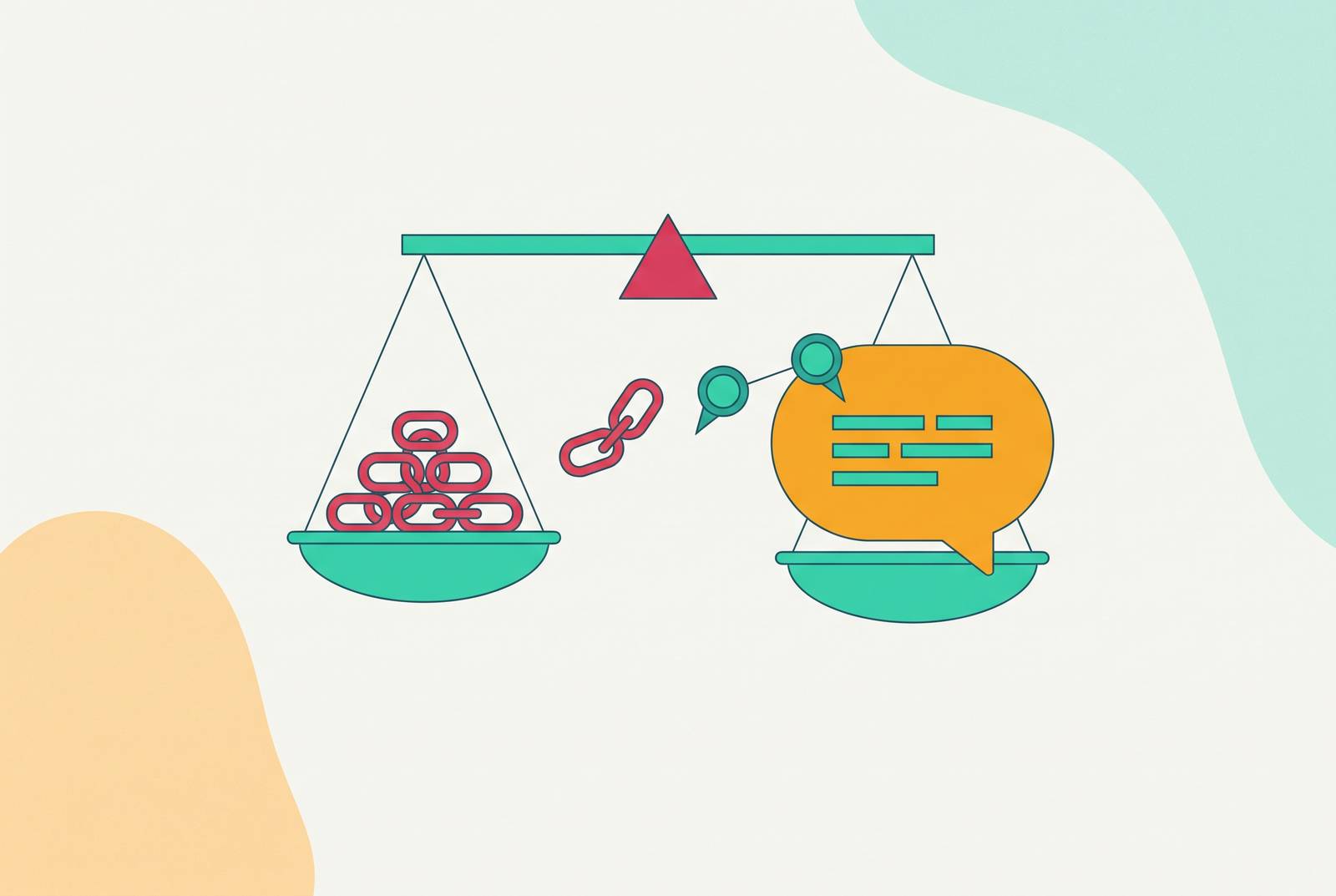
Link building services still help buyers discover a brand, but a backlink is not the same asset as an AI citation. When buyers first encounter a category through an AI answer, marketing teams need to buy against the gaps that keep them out of that answer, recognizing that more links alone may leave those gaps open.
How AI answer engines actually decide what to cite
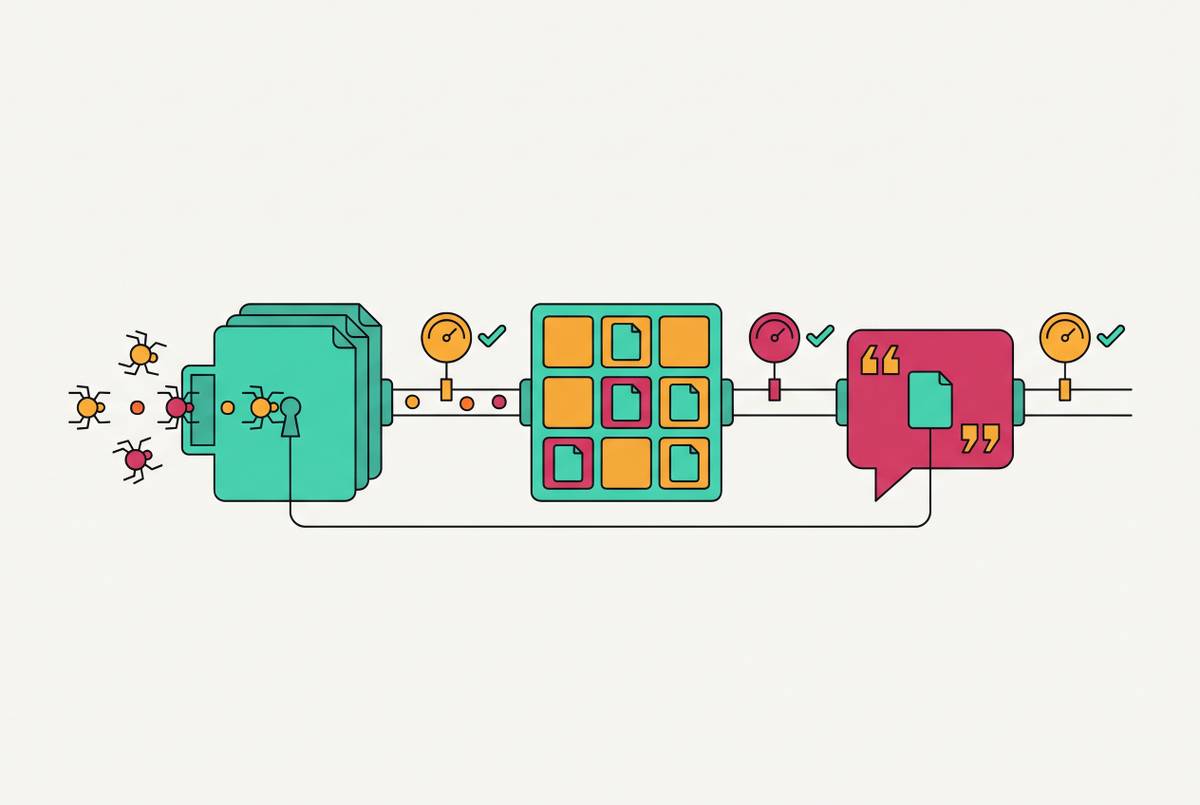
A useful way to understand an AI answer engine is to follow the path from crawling to retrieval, synthesis, and citation. Retrieval-augmented generation, or RAG, brings retrieved material into the process of generating an answer. Citation then links that answer to sources that support it. These references ground the answer in source material. The system needs material it can extract and use to support an answer.
That distinction changes what makes a source useful. Clear answers, consistent information about the organization behind them, and verifiable credibility help a system ground its response. Link popularity alone cannot supply those qualities. A page may be easy to find but offer little support for the claim the engine is making.
The retrieval path also differs by platform. ChatGPT draws from Bing’s search index, Perplexity uses hybrid retrieval with lexical and vector indexing, and Google AI Overviews draws from Google’s own index. Platform exposure therefore depends on architecture as well as content quality. Ranking first in Google does not guarantee inclusion in a synthesized answer elsewhere, or even in Google’s own answer. A traditional link building service touches part of this pipeline, but it does not control the whole passage from discovery to citation.
What backlinks still do in this pipeline, and where they stop contributing
Backlinks help search systems discover pages and provide signals of topical authority. Those are useful upstream contributions. A source cannot support a retrieved answer if the retrieval system cannot find it, and traditional search visibility remains a base layer for AI discovery. For a domain with weak authority or poor discoverability, dismissing links would mean neglecting that foundation.
URL accessibility and traditional search rank are near the top of citation-factor rankings, and most URLs cited in AI Overviews also appear in Google’s top results. Classic SEO has not become irrelevant. A generative engine optimization, or GEO, pitch that dismisses it is overselling the separation between search and answers.
But what does that overlap actually prove? High-ranking pages often combine authority, useful structure, freshness, and earned mentions, all of which can also support citation. Buying more links adds one input to that bundle. A backlink can help rankings while adding little AI visibility if its source or surrounding context is weak.
The boundary becomes clearer when considering what links leave untouched. They do not resolve inconsistent organizational information, make a page machine-readable for retrieval, or necessarily produce independent editorial validation. They also do not address differences between platforms’ citation preferences. Link authority and citation authority are related, but treating them as interchangeable gives a link service responsibility for outcomes its deliverable cannot achieve alone.
The citation gap most brands have not measured yet
Strong backlink metrics and organic rankings do not establish that a brand appears in AI answers. A large-scale audit of AI platform checks found that more than half of audited brands were cited on none of ChatGPT, Perplexity, Claude, and Gemini. That finding is limited to the audited brands, but it challenges the assumption that an established search presence automatically transfers.
Platform fragmentation helps explain the gap. Perplexity cites sources in the vast majority of responses, Google AI Overviews in roughly a third, and ChatGPT in a small minority. Success on one does not transfer automatically to another. Different retrieval systems and citation behavior make a single visibility score an incomplete picture.
Even an appearance has a different lifespan depending on the platform. Perplexity has the highest brand mention rate but the shortest citation half-life, roughly 18 days, while Claude has the most persistent citations, with a roughly 67-day median half-life. ChatGPT brings in the most direct referral sessions.
AI citations correlate with branded search lift and high-intent traffic with strong conversion rates, although correlation does not establish that every citation produces those outcomes. Buyers arriving through an AI answer have already received context about their question. Missing from that answer can mean missing an early encounter with a category, even while conventional SEO reports look healthy.
Why you cannot manage what you have never instrumented
The practical response begins with measurement. Buying citation services without knowing where the brand appears is like buying link building without knowing where it ranks. Activity can increase without showing whether discovery improved. Before purchasing, a team needs a baseline of the prompts its buyers use, the platforms that cite its brand or competitors, and whether those citations also produce brand mentions in the answer text.
The tools now make that baseline practical. Ahrefs Brand Radar, launched March 2025, tracks brand mentions across six AI indexes, including Google AI Overviews, Google AI Mode, ChatGPT, Perplexity, Gemini, and Microsoft Copilot. It derives prompts from real search behavior. Semrush’s AI Visibility Toolkit draws on a database of more than 261 million prompts and responses across the same major platforms.
Being listed as a source is different from being named in the answer a buyer reads. Measurement needs to tell both apart from appearing nowhere and track how much brand exposure each source attribution gives. Otherwise, the purchasing decision starts with an inflated definition of success.
Persistence adds another dimension to that baseline. A team that wants exposure to last should give Claude a different weight from a team that wants referral volume or conversion. The purpose of instrumentation is to reveal which platform, prompt, and content gaps deserve investment before a provider’s preferred deliverable sets the strategy.
What actually drives AI citations — the authority stack that link building alone cannot build
Earned media supplies the first layer of an authority stack that extends beyond backlinks. Independent coverage gives an engine evidence about a brand that the brand did not publish itself. Muck Rack’s research found that most AI citations come from earned media. That makes editorial placement valuable for more than the link it may contain. The surrounding account of a brand can provide independent validation.
Yet that is not an argument to replace content with PR. Yext’s data shows that first-party websites also account for a substantial share of AI citations. A brand can earn coverage and still need its own pages to answer questions clearly, so these investments serve complementary roles.
Entity consistency connects those sources to a recognizable organization. AI systems register unlinked brand mentions as credibility indicators, while consistent information across Google Business, LinkedIn, Crunchbase, and author profiles helps establish entity authority. Can the system clearly resolve who the brand is across the sources it encounters? More links do not, by themselves, repair conflicting information about that identity.
Content structure then determines how readily a page can supply an answer. Direct answer formatting, schema markup, and comprehensive topic coverage make content easier to extract and cite. Topical depth gives that structure substance. A page built for a featured snippet is closer to this goal than one built around keyword density, but deliberate RAG-readiness work remains a distinct task.
The Princeton GEO study at KDD 2024 gives this layer an empirical anchor. The study tested nine content techniques and found that pages were cited much more when they cited sources, added quotations, and added statistics. Those findings support specific structural interventions rather than a vague instruction to publish better content. They do not mean that any quotation or statistic guarantees selection.
Freshness is the final, ongoing layer. AI-cited content is meaningfully fresher than traditional organic results, with the strongest recency bias on ChatGPT. Timing still depends on the retrieval mode. Freshness changes can produce results in days to weeks for Perplexity and Google AI Overviews, while effects that depend on the ChatGPT base model follow training cycles and compound over months. A service addressing this stack needs an ongoing publishing cadence.
What to actually evaluate when buying a link building or GEO service today
For buyers, the authority stack shifts the focus from “How many links?” to “Which missing inputs will this service supply? Its work needs to fill the gap the team has found. A backlink count or domain authority score cannot answer that question alone.
Citation gap analysis should therefore precede a placement campaign. It finds the sources engines already cite for target prompts and the pages that mention competitors but not the buyer’s brand, then steers outreach toward those sources. This is a different prospect list from a backlink gap analysis. A service that treats the two as equivalent still needs to establish how its work goes beyond conventional link acquisition to provide answer-engine optimization.
Listicle and comparison placements can bridge both jobs. A page that already ranks in Google and already receives AI citations for a commercial prompt offers a placement that can support search and answer visibility together. Existing citation use is the useful distinction. Buyers should assess whether the provider targets those pages or selects pages solely for high domain authority.
Digital PR needs a similarly specific standard. Major news outlets, industry publications, and Wikipedia have disproportionate weight in citation selection, so outlet relevance within AI trust hierarchies deserves attention beyond raw domain authority or monthly traffic. The source needs to fit the prompts and category the buyer wants to appear in.
Finally, the proposed deliverables should reflect the ongoing work. Entity signals, retrieval-ready content, and a publication schedule are distinct from placement volume. For real-time retrieval platforms, a one-time content package leaves freshness unaddressed. A buyer can accept that limited scope, but should not mistake it for a service that addresses every requirement for earning citations.
How to allocate budget when links and citations serve different jobs
Teams should split the budget based on what is missing, with both links and citations in mind. Teams should keep paying for link building where its gains in crawlability, topical authority depth, and base-layer domain signals cover its cost. This is particularly relevant for new domains or those with thin referring-domain profiles, where the relationship between backlink strength and citation rate is most pronounced. Those teams still need the foundation.
An established domain with adequate authority presents a different case. When years of SEO investment have produced strong search signals but little AI exposure, more links may not address the missing input. A share of that budget should move toward earned media placement. This is the clearest reallocation case for an established B2B SaaS brand that remains absent from AI answers.
Measurement should come before scaling either response. Without a baseline showing which prompts, platforms, and content types generate mentions, citations, or neither, allocation remains guesswork. The distinction between a source citation and a named brand also changes the return calculation. Spending against one while reporting the other can obscure whether the program is meeting its discovery goal.
Freshness requires a separate budget decision because recurring publishing is not a one-time project cost. The emerging “Machine Relations” framing treats AI citation as a discipline analogous to PR, with an ongoing relationship between brand content and machine retrieval systems. Its useful implication is sustained funding. For teams constrained by publishing infrastructure, multi-stage AI pipelines with human review are a category to evaluate for maintaining cadence and editorial quality without proportional headcount growth.
The resulting decision model is conditional. A weak authority base calls for continued link investment, missing independent validation calls for earned media, and inadequate content operations call for a publishing system. A service earns its place in the budget by closing the measured gap between being discoverable and becoming part of the answer.