Content Readiness Checklist for AI Training and Retrieval
A layered audit for making pages accessible, extractable, and worth citing.
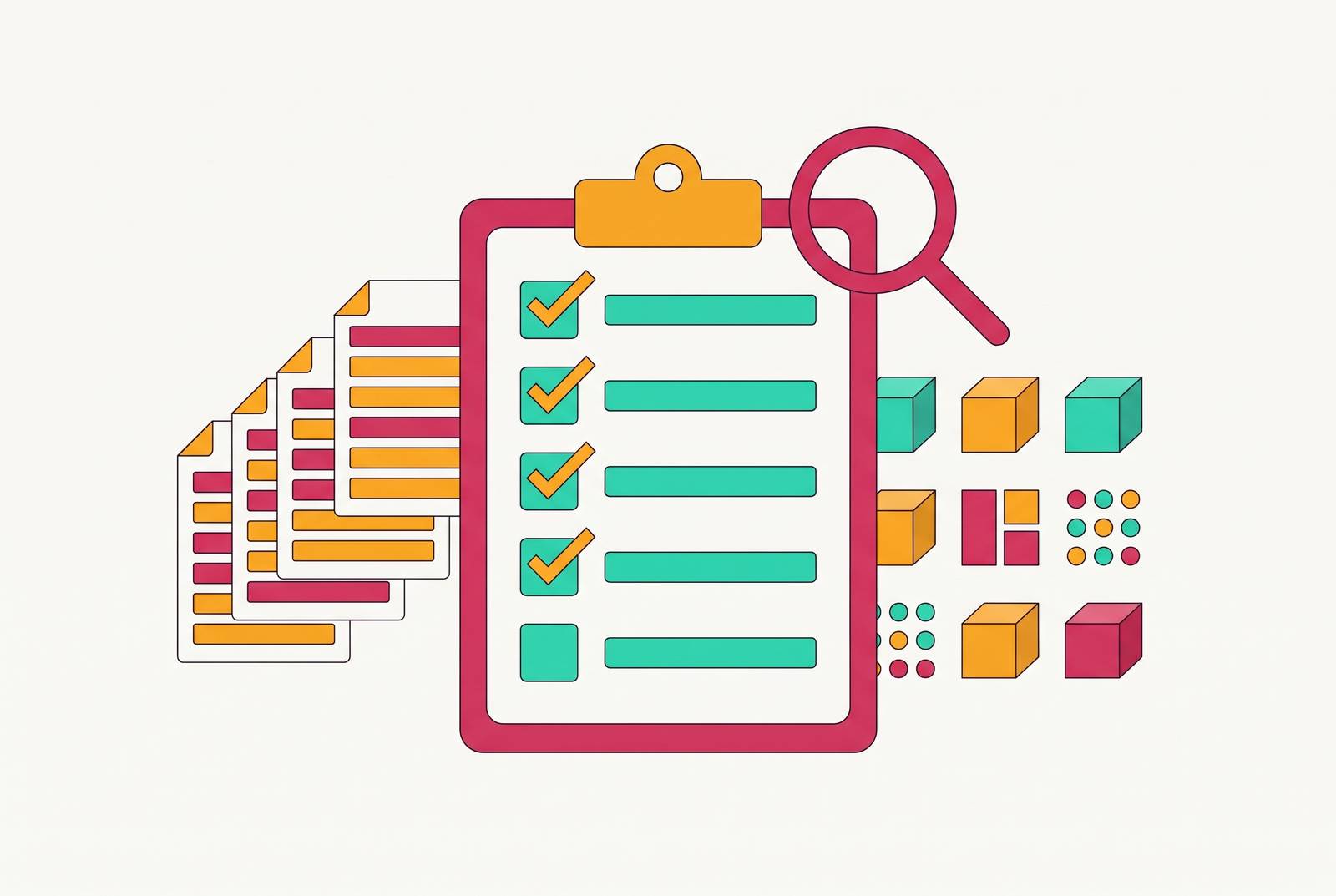
Content readiness for AI training and retrieval is a technical and editorial discipline. A page must be easy to access and extract from, worth citing, and backed by evidence from outside its own domain. A layered checklist makes those conditions testable, while ongoing measurement shows whether they lead to inclusion in AI answers.
Why AI retrieval is a different indexing problem from search ranking
Traditional SEO aims for a ranked position in a list of links. Generative engine optimization, or GEO, aims to get content into a synthesized answer, where the user may never click through. That changes what counts as success. A page can rank well on Google without giving an AI answer engine a passage it can readily extract, trust, and cite.
Retrieval-augmented generation, or RAG, explains the distinction. The engine retrieves candidate documents, then a large language model synthesizes them into a response. Being indexed gets a page into consideration, but does not secure its use in the answer. Structure helps the model read the content, while authority helps it judge whether to use it. The readiness question is therefore not just “Can this page be found?” but “Can it supply an attributable answer?”
The distinction also changes the evidence of progress. Rankings and clicks describe search performance, while citations, brand mentions, share of voice, and sentiment describe presence within AI answers. Those outcomes do not appear in a standard Google Analytics report.
What the brand-stature baseline means for teams starting a readiness audit
Ranqo’s June 2026 arXiv paper looked at responses to prompts for a large sample of brands between March and May 2026 and found a three-tier brand-stature ladder. AI visibility at the start was closely tied to how mature the brand was. Teams do not start from equal positions. For B2B SaaS companies, dev tools, and early-stage companies, engines may begin with near-zero familiarity rather than an established understanding of the brand.
That baseline changes how an audit should be read. An unfamiliar brand cannot rely on ambient recognition to substitute for clear descriptions, evidence, and attribution. Yet being mentioned is only part of the problem. The same paper found that sentiment flipped about 6.7 times more often than whether a brand was mentioned at all. A readiness audit must therefore check what an engine says as well as whether it names the company.
The paper also found that a large majority of brand citations went to corporate websites. Among non-corporate sources, YouTube led, ahead of Reddit, editorial media, and Wikipedia. For a smaller brand, the useful response is to treat explicit readiness signals as the lever it can work on, rather than treating established recognition as a prerequisite it cannot change.
The technical access layer: what must be true before content can be retrieved at all
A page must be discoverable and readable before its evidence can influence an answer. The first audit question concerns robots.txt and crawler permissions, including whether a Content-Signal directive explicitly declares AI search and training permissions. Those purposes deserve separate attention. Permission to consume content is an access condition.
The next check concerns the guidance offered to LLM crawlers. An llms.txt file signals which content is intended for AI consumption and its priority order. Its role is analogous to robots.txt, but aimed at LLM crawlers. That guidance belongs beside discovery checks. An XML sitemap lets crawlers discover relevant pages without depending on how deeply those pages sit within internal links.
Rendering is a separate gate within the access layer. Key pages need server-side rendering because heavy JavaScript that loads content client-side can create a barrier AI crawlers may not pass. Content that appears for a visitor is not, by that fact alone, ready for AI retrieval. An access audit must examine both the delivery of the content and its visible appearance.
Schema then supplies explicit context for what is accessible. Organization schema establishes who the brand is and what it does, while schema for published content identifies publication date, authorship, and subject matter. Data locked behind PDF form walls cannot earn citations through retrieval of that inaccessible material. The checklist implication is to publish the research as crawlable HTML rather than leave its distribution dependent on a gate.
The structural extractability layer: how a page must be organized for an LLM to cite it
A crawlable page still needs a discrete, attributable answer. The structural check asks whether an LLM can extract a useful passage without stitching together scattered paragraphs. A concise direct-answer block at the top of each major section gives it that passage. Placement serves a practical purpose here. It puts the answer where the section begins, rather than making the model infer it from a long introduction.
Headings should then match the questions users actually ask AI engines. H2 and H3 headings work as query-matching cues when they reflect conversational questions. FAQPage schema applied to question-shaped headings adds a machine-readable signal of the intended question and answer. The heading and the passage need to agree. A clear question cannot compensate for a section that never answers it directly.
Below those headings, content should form discrete topic units, including definitions, procedures, and specifications. Each unit needs to make sense by itself. When content has tables, warnings, or step sequences, structured markup spells out how they fit together so the model does not have to work that out from free-form prose. This architecture reduces the interpretive work required to isolate a citable answer.
Named entities give those units their reference points. People, organizations, products, dates, and locations in the opening content help establish topical relevance quickly. A retrieved section also needs its own claim, evidence, and conclusion because it cannot depend on the rest of the page being available as context. The practical test is simple. If the section were separated from the page, would its subject and supporting evidence still be clear?
The editorial signal layer: the content properties that make a page worth citing
A structurally sound passage still has to answer the query and support its claims. The Princeton/Georgia Tech/Allen Institute for AI/IIT Delhi paper published at ACM KDD 2024 found that adding statistics and citing sources from elsewhere each led to clear gains in AI visibility. Expert quotations produced a smaller but measurable gain. These findings support evidence and attribution, but not a formula for decorating weak content.
A 2026 replication makes that qualification essential. Volume-controlled edits adding statistics, quotations, and citations without query relevance produced no positive pooled lift. Topical and query relevance, by contrast, improved the predictive score from ρ = 0.114 to ~0.37. Formatting or schema alone showed no reliable independent effect. The distinction is between making a page usable and making its answer useful to the actual query.
For teams applying the checklist, each factual claim should have a named, linkable source. The source gives the LLM a verifiable anchor, rather than merely making the page resemble a research paper. Does the evidence answer what the engine is trying to find, or does it simply sit near the topic? A statistic that does not help resolve the query cannot substitute for a well-supported answer.
Freshness adds another test of editorial stewardship. About 83% of AI citations for commercial queries come from pages updated within the past year, and a majority come from pages refreshed within six months. A publication date alone is therefore insufficient. A last-reviewed or last-updated date should appear in both the visible body and page schema. Pages meant to be cited should also name the author, link to an author bio, and show the author’s organizational affiliation and subject-matter credentials.
Fluency makes that evidence easier to extract cleanly. The original GEO paper found that improving fluency produced a measurable visibility gain. Dense, poorly constructed prose creates an extraction problem even when the underlying information is useful. The checklist response is to give each paragraph one idea and each sentence one claim. Clear writing serves the passage’s function, rather than acting as a surface signal independent of its substance.
The off-site footprint layer: why owned pages alone are not enough
An audit confined to the company’s domain misses third-party corroboration. This is the point where content readiness extends beyond what a team can directly edit. The Ranqo paper found that ranked “best-of” listicles were the most-cited content format, at about 21% of all citations.
The source hierarchy also differs from a simple count of citations. Verified data sources, including Wikidata and knowledge graphs, sit above high-trust user-generated content, including Reddit, Quora, and verified reviews, with brand-owned assets below them. Frequency and authority are different questions. A brand that relies only on its own pages may be easy to access but lack support from other sources. Earned media matters even more for brands outside the top citation-concentration tier.
The practical audit therefore asks where others describe the brand. Is it accurately represented in relevant “best-of” listicles on high-authority domains, and does it appear on review platforms that AI engines index? Mentions that quote brand-specific data or positions offer more substance than passing references. Where a Wikipedia or Wikidata entry exists, the audit should examine its accuracy, completeness, and consistency with the brand’s own description.
Owned research can connect these two surfaces. Publishing unique research as crawlable HTML makes it available for others to cite, creating a bridge between owned material and earned presence. But the same footprint will not serve every engine equally, because platforms draw on different source mixes. The checklist should therefore include a check for gaps on each platform. Its value is that it forces the audit beyond the pages a team controls, rather than letting on-site improvements stand in for complete readiness.
The measurement layer: how to verify that readiness translates into actual AI citations
Readiness becomes useful only when its results can be measured. A technically accessible, clearly written page may still go uncited, so a completed audit is not evidence of inclusion. Google Analytics cannot settle that question. A brand could appear in every ChatGPT answer about its category and register zero sessions if users never click through. Citation tracking must therefore check the answer itself as well as the traffic that comes afterward.
The measurement set should include citations with source links, brand mentions with or without links, sentiment, and share of voice across relevant prompts. These outcomes answer different questions about presence and representation. Consistency deserves its own check as well. A brand that appears in one run but disappears in another response to the same prompt is not reliably visible. Platform-by-platform measurement preserves those differences.
Bing Webmaster Tools’ AI Performance report provides a direct view into one platform’s retrieval behavior. It became available in public preview on February 10, 2026, and a June 2026 update added citation share per grounding query. The report shows total citations, average cited pages per day, and the grounding queries Copilot used to retrieve content. That makes retrieval behavior more concrete. It gives teams evidence about cited pages and query relationships rather than requiring them to infer visibility from visits.
The resulting signals should feed back into the audit. Pages that pass technical and editorial checks but still go uncited should be first in line for an off-site footprint review, since a lack of third-party corroboration may explain why. When a page that was cited loses citations, teams should check its freshness, schema, direct-answer blocks, and off-site presence again. No single completed check settles readiness permanently. AI visibility needs instruments and a monitoring cadence.