GEO Platforms Are Selling Reports. We're Building the Machine That Runs Them.
Measurement alone won't close the gap between knowing what's missing and actually fixing it.

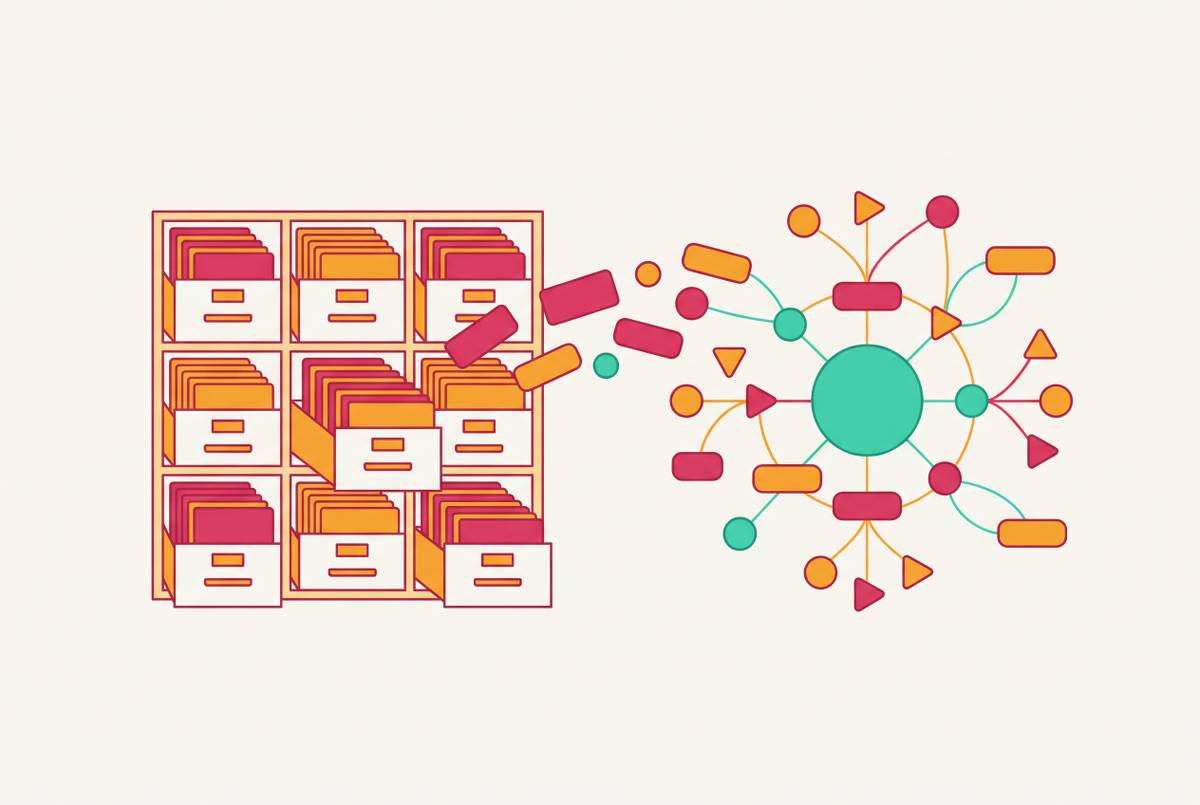
GEO platforms promise to make a brand’s presence in AI answers visible. But visibility reports and the work that earns citations are different products. For marketing and content teams at B2B SaaS and dev-tool companies, the useful distinction is whether measurement ends in a dashboard or feeds a running editorial and distribution system. A score can identify an absence. It cannot publish the content that fills it.
How GEO became a measurement category before it became an execution category
The first deliverable was the easiest to ship. A tool could check whether a brand appeared in AI answers and present the results in a dashboard, without also taking responsibility for creating, publishing, and distributing content. That boundary gave buyers a way to inspect a new source of visibility. It also shaped what they came to expect from the category. The report became the product before buyers began asking whether it could execute the work.
By early 2026, more than forty dedicated AI visibility platforms were on the market, with major SEO platforms adding AI search features as well. The labels varied, including GEO, AEO, and LLMO, but were often interchangeable in practice. Technical infrastructure, content, visibility measurement, and execution were distinct jobs, and a platform serving one did not necessarily serve the others. A broad category name could hide how little of that work a product did.
Buyer readiness helps explain why that boundary persisted. A large majority of marketers planned to optimize for AI search, while a much smaller share were implementing GEO and only a fraction were investing in measurement. For many teams, the immediate need was therefore to establish a baseline. They were buying their first report. A dashboard could answer a question they had never been able to ask systematically before.
That is a reasonable starting point. The problem begins when the starting point becomes the definition of the whole category. Once a team knows where it is absent, its next question changes from “What is happening?” to “What can change it?” The same product may not answer both.
What a monitoring tool actually gives you — and where it stops
Monitoring tools make a previously hard-to-see surface legible. They check whether a brand appears in AI answers, how often it appears, and the sentiment around those appearances. Their metrics include AI Visibility Score, Source Citations, Share of Voice, Sentiment Accuracy, Query Coverage, and Factual Alignment. These measures show more about how a brand appears than how often it is mentioned. A favorable mention, for example, is not the same thing as a factually accurate account.
A team can check whether its brand is missing, appears for too few queries, is described inaccurately, or appears less than a competitor. Those are different gaps and may call for different work. Without measurement, the team lacks a baseline against which to judge that work. A useful report narrows the question before anyone commits resources to answering it.
Identifying an uncovered query does not produce a page that answers it, and identifying an outdated page does not revise or publish it. A recommendation can be precise while leaving the entire execution burden with the buyer. This is where a tool can hand over both a clear gap and a blank page. The usefulness of the gap does not make the page any less blank.
The distinction is easier to see as three levels, which are Watch, Diagnose, and Act. Watching establishes what appears, while diagnosis helps explain where improvement may be possible. Acting changes the content that AI systems may retrieve and cite. Monitoring belongs in this sequence, but it does not automatically span it. A buyer who needs the third level should not mistake greater detail at the first two for execution.
Why the gap between a score and a citation is not a workflow problem but a product category problem
A “next steps” panel cannot bridge this gap by itself. Monitoring products are built around auditability, while an execution system must also support publication cadence. The former needs to make a finding inspectable. The latter needs to turn that finding into approved work and keep that work moving. Better instructions can help a separate team execute, but they do not change which product owns the job.
The timing makes this boundary consequential. AI citation patterns are volatile, and a week is the minimum reliable baseline for tracking progress. While the content pipeline waits for someone to act, the observation can become less representative of the current situation. More recommendations do not shorten that wait.
Answer capsules near the top of a page, section length, citation density, and freshness can be documented for reuse during each audit. That creates a different product opportunity. Instead of flagging the same requirements after publication, a system can apply them throughout the content process. The distinction is between identifying recurring work and taking responsibility for its recurrence.
Even that would be incomplete if the work stopped at the company’s own site. Third-party presence has a stronger relationship with citation probability than on-site signals, so the task includes reaching the sources AI systems read. Publishing more owned pages addresses only part of that problem. Distribution must be part of the operating model.
If sustained content authority is the driver, the machine worth building is an editorial and distribution engine. Technical improvements can support that engine, but a technical overlay is not a substitute for it.
What the research says actually drives AI citations, and why it implies a running system
The clearest content lever is how an answer is presented. A short, self-contained answer capsule near the top of a page gives the page an explicit response to the question it addresses. The research summarized in the brief identifies this structure as a strong predictor of ChatGPT citation. A machine-enforceable format can improve consistency without making every compliant page worth citing.
The rest of the page still has work to do. Sections with a moderate amount of text between headings are associated with more ChatGPT citations than very short sections. Citation density is another documentable structural consideration. Together, these findings make content organization an ongoing editorial discipline.
Pages updated within three months earn far more ChatGPT citations than outdated pages. A page that works well can therefore lose ground even if nobody changes its structure. A static site is a depreciating asset in this respect. The implication is a recurring need to maintain content.
Brand mentions correlate with AI citation probability more strongly than backlinks do, while web search position also remains a strong correlate. Branded web mentions show an even higher measured correlation. These relationships show why a strategy limited to link-building or owned-page fixes misses an important part of the evidence, while leaving the causal effect of any isolated mention on citation unproven.
Traditional search authority is consequently not separate from GEO. LLMs rely on retrieval and grounding systems, so work that builds discoverable, authoritative content can support both search visibility and AI citation. The recurring inputs are content structure, freshness, and presence across relevant sources. None is a permanent configuration switch. Their repeatable nature implies a system that keeps applying them, while measurement tests whether the work is producing the intended result.
What instrumentation-as-inputs-to-a-running-system actually looks like in practice
A closed-loop architecture connects five jobs: auditing a site’s AI readiness, identifying where citations are winnable, generating and publishing content against those gaps, seeding that content across third-party sources AI reads, and measuring what moved. The sequence then repeats. A measurement becomes an input to the next piece of work.
In that architecture, the content queue is the hinge. A finding has to become work that can move toward publication, rather than remain an item someone may eventually copy out of a report. Human review belongs in that flow as a step where people approve the work. It does not have to be bypassed for the system to execute. The relevant distinction is between review that advances a pipeline and a handoff that leaves a separate team to assemble one.
Named products show that parts of this architecture exist. LightSite AI combines an AI-readable website layer with crawler analytics, AI visibility measurement, traffic attribution, and agents that can execute approved improvements. Its stated distinction is a closed-loop execution layer. That description puts approved action within the product boundary. It does not, by itself, establish that every part of an editorial and distribution engine is present.
AthenaHQ publishes a Rootly case study reporting ten-times citation growth and significant incremental equivalent media value. As a vendor-published result, however, it is not proof that every buyer will see the same change. Nor does the result alone show how every part of the system behind it works.
The common thread is a change in what completes the job. The report landing is no longer the endpoint. Measurement guides the work, approved work gets published and distributed, and later measurement tests what changed. A connected system makes that cycle the product.
Why technical buyers need to evaluate the machine, not the report
Does the dashboard show the citation rate, or does the system change it in a way the team can substantiate? Zero-click AI answers generate no referral sessions, and influence over a buyer’s shortlist can happen before any trackable touchpoint. Changes in citations help show what happened, but they alone do not prove a commercial return.
The practical test starts at the handoff from finding to work. Does the system publish on a cadence, or create a backlog that requires a separate team to execute? Does it apply the rules for answer capsules, section density, and freshness when it publishes, or flag problems afterward? These questions locate responsibility. They distinguish a product that helps inspect content from one that participates in producing and maintaining it.
Does the system seed distribution to third-party sources, or measure only what happens on the company’s site? Is human review a gate in the pipeline, or an optional activity outside it? Can an agent reach every capability through an API without requiring a person to return to the UI? For teams that think in systems, these are questions about whether execution can compound or repeatedly stops for manual re-engagement.
That boundary also changes the agency relationship. An agency that installs measurement and operates the content engine takes responsibility for ongoing work, rather than delivering a PDF the client can hand to another vendor. The time horizon supports this model. Well-optimized content on an authoritative domain can start to gain ground within weeks, while steady AI visibility takes months of work. Continuous operation fits that requirement better than a one-off audit.
The final test is concrete and applies to any vendor making this argument. The vendor must trace a measured gap through human approval, publication, third-party distribution, and the next measurement cycle, showing which steps it executes and which remain the buyer’s responsibility. A product that stops at the finding sells instrumentation. A product that connects the finding to that cycle uses instrumentation as an input to a running system.