LLM Citations Are an Engineering Problem, Not a Content Trick
Retrieval, not writing quality, determines whether answer engines find and cite your content.
LLM citations are an engineering problem. Getting cited depends on whether an answer engine can find, interpret, and select a source. Teams that measure those outputs and adjust the inputs have a stronger basis for improving citation than teams that publish good articles and hope.
Why AI citation is not an editorial reward
Consider a brand whose page ranks first on Google but never appears when a buyer asks an AI engine about the same topic. The content team might reasonably ask what the article lacks. But that question assumes the engine judged the article and rejected it. The page may never have reached the candidate pool. Strong search rankings do not establish that an answer engine can retrieve and use the same material.
A team can keep improving prose without changing the condition that excludes its page. Conversely, a page with no search ranking can anchor an AI answer because the selection criteria differ. Answer engines use retrievability, structured markup, entity recognition, and corroboration signals. Writing quality remains useful, but citation is not a verdict on who wrote the best article.
The absence can also remain hidden from the team. Traditional SEO reporting shows where pages rank, while web analytics records visits. Neither shows when an answer named a competitor but sent no one to the brand’s site. A healthy search dashboard can therefore coexist with poor AI visibility.
How the retrieval-then-cite pipeline actually works
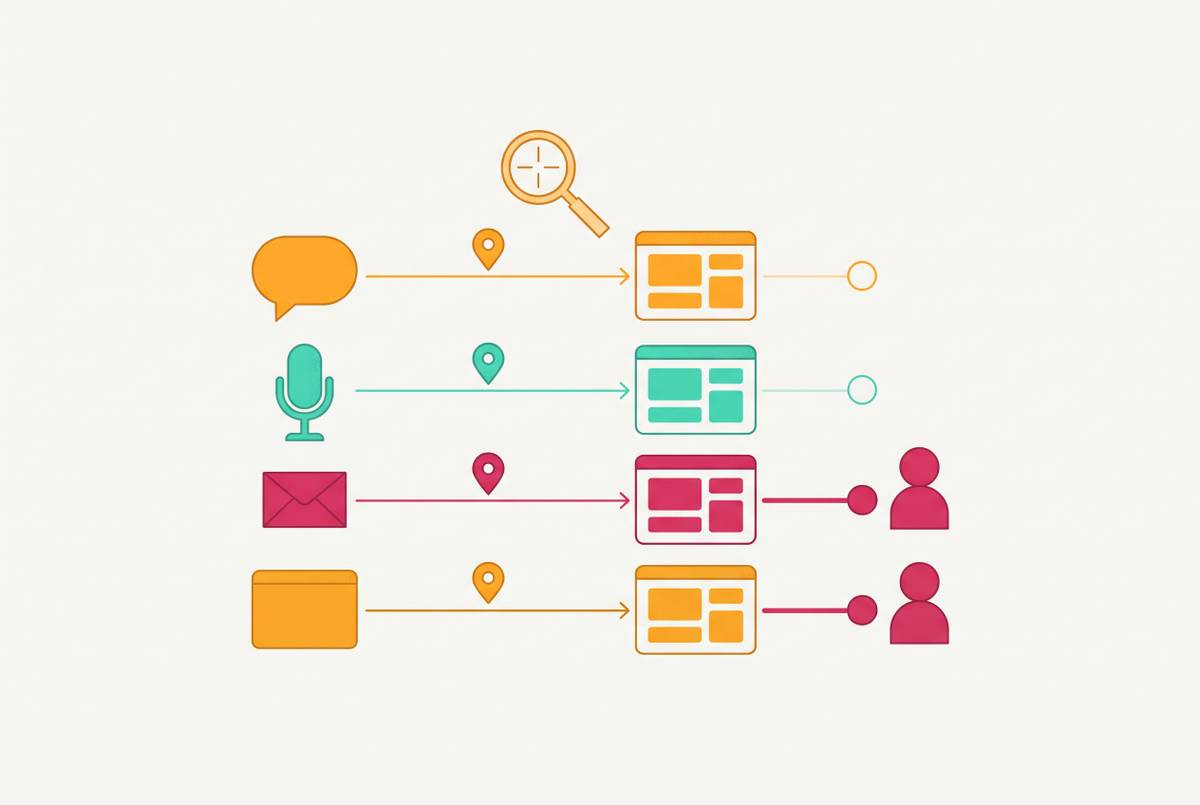
The pipeline has three stages, which are query rewriting, candidate retrieval, and passage selection. First, the engine turns the user’s question into one or more search queries. Those queries determine which pages have a chance to enter the candidate pool. The user’s wording is therefore not necessarily the wording used to find a source. This first transformation already separates answering a question from ranking for its exact terms.
Retrieval then pulls candidates from the engine’s available indexes. ChatGPT can draw on Bing, Google through third-party scrapers, and OpenAI’s own Labrador index, while Perplexity uses real-time web retrieval. Google AI Overviews and Gemini draw on Google’s index. Access comes before selection. A page that is absent from the relevant index, blocked from crawling, or illegible to a bot cannot compete on the strength of its explanation.
Passage selection narrows the pool again by choosing material the engine can extract and use in its answer. A retrieved page can still lose to a source whose relevant passage is easier to identify. Gemini’s developer documentation makes this process more explicit through its grounding tool. The model decides whether to search, writes queries, runs them, and attaches citations to the parts of the answer each source supports. This exposes the central engineering distinction between finding a page and citing it.
Each engine runs a different citation algorithm on the same page
Each engine has its own retrieval infrastructure and selection signals, so the same page can receive very different treatment. Perplexity performs real-time web retrieval by default for most queries and cites substantially more sources per answer than ChatGPT. Its wider source pool changes the competition for inclusion. But web search can be switched off, and its Best model mode may skip live retrieval for questions it treats as general knowledge.
Google AI Overviews takes a different route through query fan-out. It splits the original search into sub-queries, each of which retrieves its own sources, and gives heavy weight to Google-owned properties including YouTube. A page is therefore competing within a different retrieval process. These differences can mean that the number of citations varies by orders of magnitude from one platform to another. A brand well represented on Perplexity can be nearly invisible on Gemini.
Would sufficiently authoritative content eventually make the engines converge? That expectation assumes their differences are temporary. The notes on their retrieval systems provide no basis for that assumption. “AI search” is too broad a unit of analysis because an aggregate can hide absence on one engine behind strength on another.
Citation reliability has its own engineering failure mode: hallucinated and unsupported citations
Selection is not the final test of success. An engine can retrieve a real page, attach its valid URL, and still make a claim that the page does not support. Retrieval-augmented generation cuts down on citation errors, but some still occur. The failure occurs in the connection between source and answer, so checking that a link exists cannot establish that the citation is sound.
The SourceCheckup study tested major LLMs on medical questions and found that a large share of responses contained claims their cited sources did not support or actively contradicted, even with live web access. The Tow Center for Digital Journalism tested another part of the attribution task by giving engines direct article excerpts and asking them to name the headline, publisher, date, and URL. The chatbots were wrong more than half the time. Denny et al.’s audit of computing education literature also found made-up citations that looked real in peer-reviewed venues. The problem extends beyond the search interface.
For a brand, this changes what counts as a useful citation. Being named as support for an inaccurate claim is a liability, even if a visibility report counts it as a gain. Teams therefore need to check the answer against the source as well as count how often the brand appears. People also need to review material before it is published because errors in a source give the retrieval system more errors to repeat.
The inputs that move citation rate are structured and testable
Treat the pipeline’s filters as separate engineering levers. Bot access influences whether retrieval can happen at all. A page that blocks crawlers or renders only through JavaScript that bots cannot execute is excluded before its writing is evaluated. This is a deployment problem. It calls for a different intervention from a page that is retrieved but passed over during passage selection.
Entity grounding addresses another failure, which is whether the system can identify the brand consistently. A machine-readable identity, such as a Wikidata entry with standard properties, helps the system tell which entity the page describes. Without that grounding, entity-recognition systems may not reliably resolve the brand. Structured headings and answer-first page architecture do a different job by making it easier to pull useful passages from the page. Identity and extractability are distinct inputs, even when they appear on the same page.
Aggarwal et al.’s GEO paper at KDD 2024 tested nine rewriting methods and found that Quotation Addition, Statistics Addition, and Cite Sources led to the largest relative gains in position-adjusted word share within a generative engine’s answer. Keyword stuffing performed at or below the unmodified baseline. That is evidence for testing content properties. The study used a language-model-based engine with live-fetched sources from the top-5 Google results. Its setup does not establish how much any particular brand’s citation rate will improve.
Corroboration adds evidence beyond the brand’s own pages. Independent, non-promotional sources that describe the brand consistently strengthen the signal an engine can use when identifying and citing it. Original research offers another route because unique data gives the engine a source it cannot simply substitute when answering questions about that research. This makes proprietary evidence different from a formatting adjustment, though retrieval still has to reach it.
Citation rate changes on the timescale of weeks, which makes continuous measurement mandatory
These inputs operate inside systems that change. An engine update can replace a large share of previously cited domains or alter the number of sources cited in an answer. Changes to indexes and source pools can also disrupt a pattern that appeared dependable. The relevant timescale is weeks. A one-time optimization cannot establish that a page will remain visible under the next retrieval configuration.
Iacono’s 40-record audit of generative-AI evidence distinguishes model age from claim currency. That distinction helps explain why a finding about which sources an engine prefers to cite can soon be out of date even when the research behind it is still useful. A statement about which domains an engine selects describes a changing system. Likewise, a brand’s citation audit from three months ago is not necessarily a current picture. A major retrieval or ranking update can make its conclusions stale.
This instability makes repeated observation part of the work. Citation patterns tied to a particular source category can collapse when that source’s relationship with an engine’s index changes. Retrievability and factual verifiability are more durable targets than a platform’s current preferences, but their performance still needs to be measured. By measuring over time, a team can spot and respond when its pages lose their place in answers, before weaker business results reveal the loss.
What a measurement layer for AI citation actually tracks
Brand Mention Rate measures the share of relevant AI answers that name the brand. Its denominator is answers returned for queries in the brand’s topic area. Measuring it requires actively querying engines because an answer can name a brand without producing a visit. The query set defines the scope of the result. Without that scope, a mention count says little about visibility in the questions buyers actually ask.
Teams need to track Citation Share of Voice for each engine on its own. A brand dominant on Perplexity but absent on Claude faces a different problem from a brand missing from both. Citation rate also needs to be tracked per query and over time so that the team can locate changes. Citation accuracy adds a second dimension to those appearances. It asks whether the engine’s account matches what the cited page actually says.
AI referral traffic conversion rate links how often a brand appears with the business results that follow. It measures what happens after an AI-referred visitor arrives, since a citation on its own brings in no revenue. Citation accuracy monitoring also means checking the generated answer against its source, which a review of the brand’s own pages alone cannot do.
Traditional analytics can provide data on the traffic that follows, but it cannot provide all the data the measurement layer needs. It cannot reveal an answer that ignored the brand or recommended a competitor without generating a visit. Citation instrumentation is therefore a separate observation problem.
Closing the feedback loop: from measurement to content pipeline to re-measurement
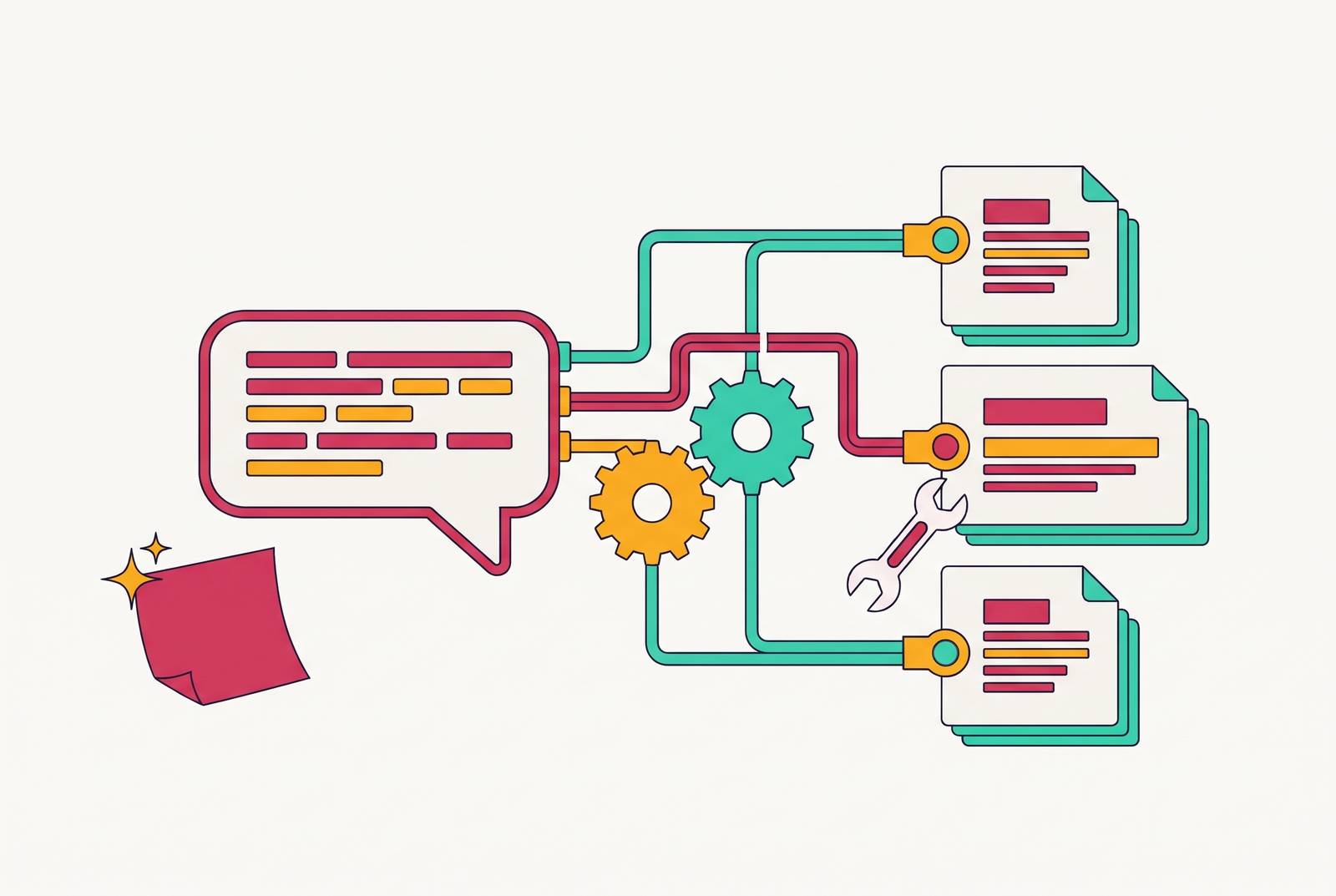
To turn those measurements into improvement, teams need to connect them to production decisions. A closed loop combines a system that publishes structured, entity-grounded material on a cadence, a measurement system that queries engines regularly on the same topic set, and a response protocol that feeds the results back into content work. No component substitutes for the others. When teams publish without measuring, they do not know the results, and when they measure without acting, the inputs stay the same.
Human review belongs inside that production system. A fabricated or imprecise claim can enter the retrieval pool, be repeated in an AI answer, and then appear in another piece that uses the answer as a reference. Reviewing the source claim interrupts that chain before publication. Reviewing the engine’s output addresses the separate risk of misrepresentation after retrieval. Neither control can do the other’s job.
The corroboration layer also needs continuing attention. The notes describe a phantom-site or ground-site layer consisting of independent, non-promotional sites that describe a brand and its category consistently. Maintaining that evidence on a cadence connects it to the same production and measurement loop. A one-time deployment cannot establish that engines will continue retrieving or selecting it.
The strongest objection remains that citation engineering targets an opaque system that can change without warning. That is precisely why the feedback loop is necessary. Optimize for retrievability, factual verifiability, entity grounding, and structured extraction while measuring how each engine responds. Teams operating that loop can detect displacement within days and adjust. Teams waiting for citation to arrive as an editorial reward may not recognize the loss until it reaches the sales pipeline quarters later.
Sources
- The Half-Lives of Generative-AI Evidence: A 40-Record Audit, a Claim-Currency Framework, and a Reflexive Case of Frontier-Model-Assisted Research
- Testing Our Foundations: Citation Trends, Errors, and Emerging Hallucinations in the Computing Education Literature
- What Gets Cited: Competitive GEO in AI Answer Engines