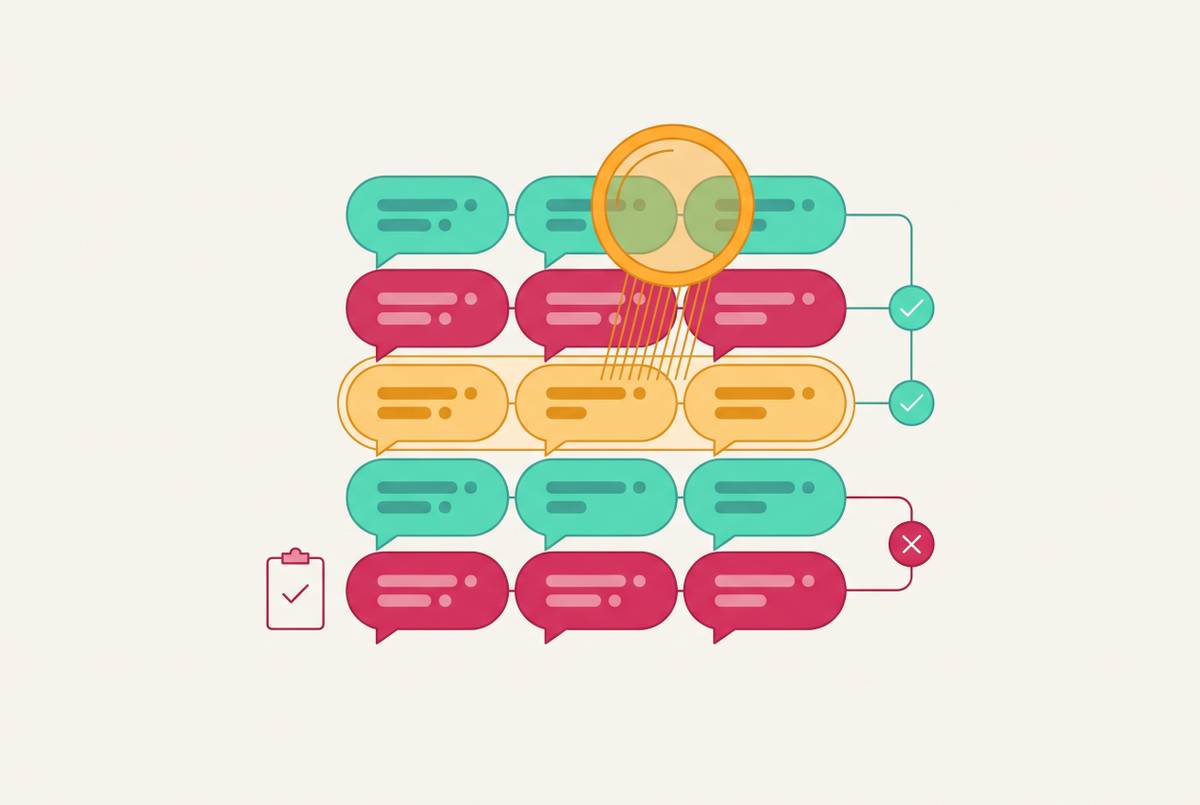
Growth marketing is an experiment loop. Here is what it looks like when the loop is code
Treating each growth experiment as versioned code lets learning run without meetings.

Growth marketing is an experiment loop. That loop can move through meetings and manual handoffs or run through executable code. Treating experiments as versioned, automatable units makes learning part of the system’s design, rather than a consequence of how much time people can spare.
Growth marketing has always been an experiment loop — the question is how that loop runs
Growth marketing is often described as a philosophy, a discipline, or a category of work. In operation, it is a loop with a cadence and a bottleneck. Data leads to a hypothesis, a test produces a result, and an insight shapes the next hypothesis. The value lies in that return journey. A successful campaign can produce a gain, but a closed loop can change what the team knows before it spends again.
That shifts the question from what growth marketing means to what governs its speed and fidelity. How quickly can a result become usable evidence for the next decision? The constraint is not a shortage of ideas or intent, but the instrumentation between cycles. A team may collect results but still need someone to make sense of them, record them, and set up the next step. Each handoff creates a place where learning can wait or lose its meaning.
What the loop actually contains, stage by stage across the funnel
Each experiment in the loop needs a place in the business. AARRR supplies that map through Acquisition, Activation, Retention, Revenue, and Referral. Acquisition concerns traffic quality and CAC efficiency, while activation concerns onboarding completion, time-to-value, and the first “aha moment.” Retention follows D7/D30 cohort curves, session frequency, and churn. Revenue follows LTV, ARPU, free-to-paid conversion, and CAC payback, while referral follows viral coefficient, NPS, and share rate. These are distinct surfaces of growth.
That distinction prevents a traffic gain from standing in for progress elsewhere. A loop confined to acquisition cannot explain what happens when people arrive but fail to activate or return. The hypothesis needs to name its audience, the change it expects, and the mechanism that explains why that change should happen. The mechanism makes failure useful as evidence. Without it, a disappointing result says little about what to try next. A shared experiment log preserves the hypothesis, metric, outcome, and estimated revenue delta, making the result available to inform another test.
Prioritization is where most loops quietly break
Before a team can measure a test, it must decide which test deserves resources. That decision can become the first failure point. When ideas have no common basis for comparison, selection defaults to whoever argues most forcefully. Instrumentation cannot repair that choice after the experiment has already consumed time.
ICE scoring compares Impact, Confidence, and Ease, while RICE compares Reach, Impact, Confidence, and Effort. They put ideas through the same gate and allow those below a threshold to be rejected without reopening the entire debate. They also show what assumptions went into the score. A disagreement about confidence can reveal which evidence is missing and what would justify running the test. In that sense, prioritization is the first gate in an instrumentation system. The team begins defining what it needs to know before the test goes live.
The cadence problem — a loop that runs weekly compounds faster than one that meets monthly
Experiments can stall even when the backlog has been scored. If each next step depends on a standing meeting, the loop inherits the meeting’s schedule and interruptions. Cadence is infrastructure. A weekly loop has more opportunities to feed learning forward than one that meets monthly, provided its decisions rest on valid evidence. Its cycle time comes from how work moves.
The shared log gives that movement a memory. Without a searchable record, each cycle draws on what people recall. But moving fast is risky if results go into the log as insights before they have been checked. Moving faster should not mean accepting weaker evidence. Statistical power and significance thresholds belong before the test runs. Otherwise, false positives contaminate the record that future experiments depend on. A faster cadence must shorten avoidable waiting without shortening the reasoning needed to trust a result.
Why founder-led execution becomes the loop’s bottleneck
The founder may have to approve every test, review every brief, and write every hypothesis. That can look like the founder is keeping a close hand in strategy. In practice, it also makes a single person the passage through which all execution must move. The loop’s pace then depends less on the readiness of an experiment than on whether that person has time.
The founder still has valuable work to do in setting direction, defining the hypothesis backlog, and reviewing results. When every step needs the founder’s attention, that work becomes a queue. As tests wait, experimentation slows, the log grows less often, and decisions increasingly rely on stale data. Strategic fatigue follows because routine approvals compete with the work of choosing direction. The team’s dependence on the person who built it to sustain a weekly cadence is organizational.
What it means for the loop to run as code rather than as a process
Treating the loop as code changes the unit of work. Each experiment becomes a versioned, automatable unit with a machine-readable hypothesis, a defined trigger, a data pipeline that logs its result, and a decision rule that initiates the next step. The rule replaces a routine handoff. The analogy is a software engineering team whose CI pipeline runs checks, records the outcome, and ships or blocks without waiting for a standup.
Agents can watch funnel drop-off data and suggest tests without waiting for a brainstorm. Each experiment can write its hypothesis, metric, outcome, and revenue delta to the shared Growth Log. Winners can trigger changes in CRM flows, ad configurations, or product defaults without waiting for a scale meeting. People still define direction and the rules under which those actions happen. What changes is the dependency between approved steps. Learning velocity becomes something the system can be designed to improve, while the accumulated record becomes knowledge specific to the team rather than a collection of results waiting in spreadsheets.
The loop now has a stage most growth teams have not instrumented — AI answer-engine visibility
An executable loop is still incomplete if it misses where buyers discover the product. AI-generated answers create a discovery surface that does not fit neatly into measurements built around search results pages. Measurement needs to show whether the brand appears in the answers buyers receive and whether that visibility connects to conversion. Without that signal, the loop cannot evaluate experiments intended to influence this part of discovery.
A single visibility reading is not enough. Citation volumes can differ across AI engines, so measurement needs to distinguish platforms. Brand mention rate tracks when the brand appears in outputs, while citation share of voice shows how its visibility compares with named competitors. AI referral traffic conversion rate connects resulting visits to business outcomes. The revenue visibility gap estimates how much revenue is at risk when citations are missing and is tracked quarterly. These measures go in the growth log beside conversion rates and CAC, and each keeps its own meaning. An estimated revenue gap is not booked revenue, and an appearance in an answer is not itself a conversion.
The content architecture the instrumented loop requires — ground sites and distributed signals
Once citation performance is visible, content becomes a surface the loop can test. The architecture has two layers with different jobs. The ground site is the owned domain, built for AI extractability through grounding pages with consistent brand facts, FAQ pages with schema markup, and comparison pages aimed at direct buying-decision prompts. Its benchmark extends beyond expected traffic to whether an AI system can use and cite the material.
The distributed signal layer includes third-party publications, syndicated press, review platforms, and community presence. It places the brand beyond its own domain. Together, these layers give experiments something concrete to change, rather than treating publication volume as the strategy. A comparison page, for example, can test whether addressing a particular buying question raises citation rate for that query class. Citation tracking shows the result, which helps the team choose which content types to make more of. Content is therefore not a separate function that hands finished work to growth. Its hypotheses, outputs, and scaling decisions belong inside the same loop as the funnel experiments.
Publishing at the loop’s cadence without losing editorial quality requires a staged pipeline
Unreviewed AI drafts can put inaccurate claims into public circulation, damaging credibility. Microsoft’s July 2026 preprint, “Phantom References: Hallucinated Citations That Survive Peer Review at Top-Tier Conferences,” found hallucinated citations surviving peer review in a large-scale scan of accepted papers. The study does show how generated claims can pass through a process without anyone catching them.
The response is a staged pipeline with review before publication. AI handles brief expansion, outline generation, draft production, and distribution formatting, while human gates cover sourcing, claims, and voice before publication. Prompt libraries and voice guardrails constrain drafts before reviewers see them. Human review then acts as a decision layer that approves or blocks, rather than a correction layer that rewrites every piece from scratch. Lineage tracking identifies which AI stage produced a section so an error can be traced to the prompt that needs repair. Feedback from editors after publication improves the next prompts and closes the production loop. Speed comes from automating repeatable work while preserving judgment at the points where errors are most costly.
Measuring whether the loop is compounding, not just running
A staged pipeline can keep publishing, just as an experiment system can keep completing tests, without making what happens next any better. Activity is not the same as accumulated learning. The distinguishing measure is learning velocity, defined as validated insights generated per quarter, each with a revenue delta and a next action. That definition asks more of a result than whether it won. It asks what the team learned and how that knowledge changes a subsequent decision.
For AI visibility, citation trajectory serves a similar purpose. The useful signal is not a single appearance, but the direction and rate of citation change across a defined query class relative to named competitors. A centralized experiment log preserves the business evidence, while tracking across ChatGPT, Claude, Gemini, and Perplexity shows whether the content architecture is working. When both layers are instrumented and versioned, results can feed their explanation into the next hypothesis without waiting for a meeting. Ultimately, loop-as-code is a measurement claim. A team should be able to tell whether validated learning is accelerating. If it cannot, it is measuring activities.