How to read a "marketing workflow software" comparison: why a list of integration platforms and per-credit prices doesn't tell a technical team how to run, measure and change its marketing
Integration counts and prices can't show who controls your marketing system.

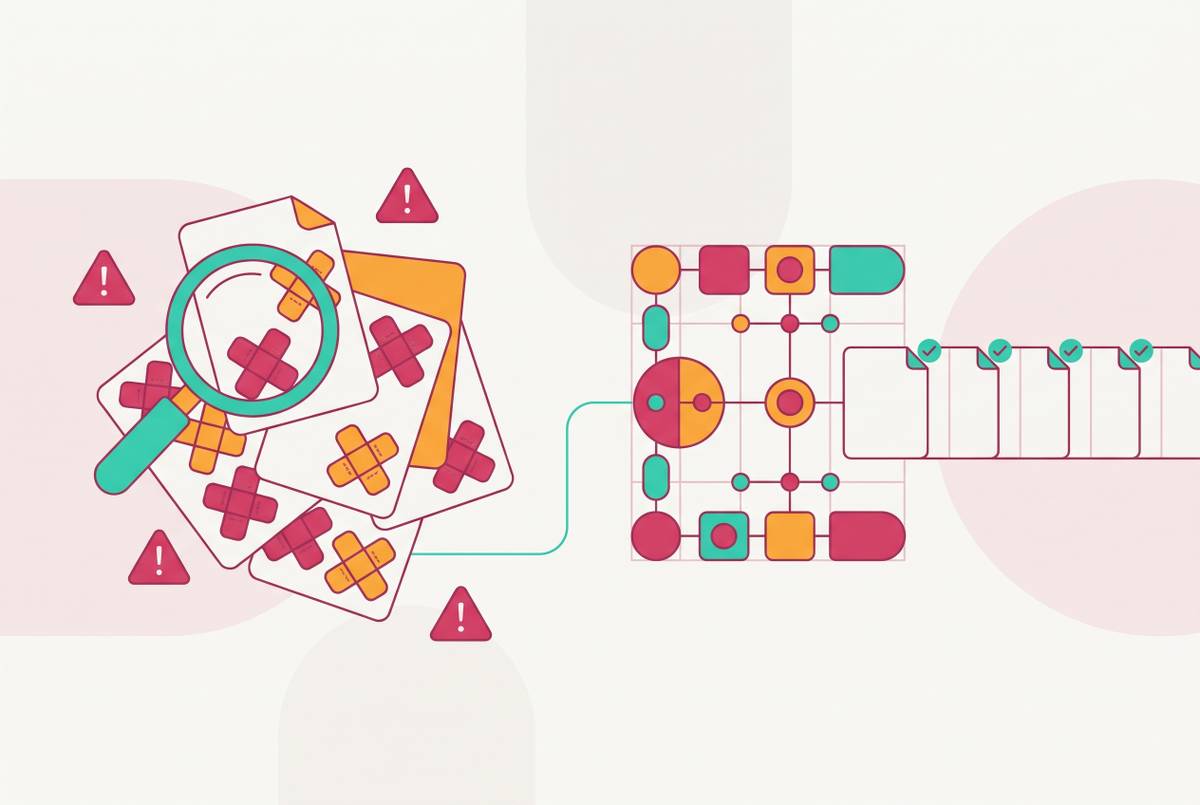
Comparisons of marketing workflow software can help a technical team narrow its choices, but they cannot decide how its marketing system should run. Integration counts and credit prices describe access and volume. The deeper decision is about ownership, observability, and changeability, whether the team can control execution, measure results, and revise the system without depending on the platform to do it for them.
What standard marketing workflow comparisons actually show you
A technical marketer opens a comparison page and finds a familiar arrangement, with a feature matrix above or beside a pricing table. One column counts integrations, another lists workflow features, and another shows what each plan costs. The format makes a broad market easier to scan. It lets a buyer look for tools already in the stack and work out what it would cost to run the planned amount of work through them.
The integration count usually shows which connectors are available, but says little about how much each connection can do. It does not distinguish bidirectional sync from a more limited exchange, or a webhook from a polling interval. Credits per AI action, seats per month, and records processed show how the bill is worked out, but do not explain what happens when a limit is reached mid-campaign.
Why integration counts and credit prices are the wrong unit of analysis for a technical team
The team is choosing how a system will operate as well as which tools it can connect. A connector in a marketplace is not necessarily a connection the team controls. Many integrations are managed inside the vendor’s UI without a programmatic surface, so the team cannot trigger them from a script, test them in a staging environment, or version-control their configuration. Availability and control are different properties.
The connector count also says little about what crosses the connection. Field mappings may be fixed or configurable, and the platform may normalize data before passing it on. When an integration fails, it may report an error or drop records without warning. Those distinctions affect how well the team can understand the exchange and respond when it goes wrong. Yet integrations that work in these very different ways can share the same label.
A price per action helps the team work out what it will spend, but it does not explain who decides when the action starts or when a credit is used. Nor does it establish whether the action can be retried, reversed, or audited. A price-per-action model often keeps the execution loop inside the platform, so the team sends an intent and gets an output without being able to see or stop the steps in between.
The operating-model decision hiding inside a tool selection
Before a feature matrix can guide the choice, the team needs to decide who will own execution, how changes will be made, and how outcomes will be observed. That decision is easy to skip. Comparison pages put capabilities and prices in view while leaving the architecture largely unstated.
Execution ownership begins with the platform’s role. Is it the orchestrator that runs the loop after the team configures it, or a primitive that the team calls from its own orchestration layer? These are different architectures. With the platform as orchestrator, the team accepts its data model, trigger logic, and retry behavior. With the platform as a primitive, the team instruments those parts itself and uses the platform for the capability it needs. Many platforms support only one model, while comparison pages often leave the distinction unstated.
That choice also shapes how the system can evolve. Audience definitions shift, content cadences get restructured, and measurement approaches change, so support for today’s workflow is only part of the requirement. The team also needs to establish whether changing the workflow means editing a reviewable artifact or requesting support, migrating, or rebuilding. Measurement has an equivalent dividing line. Queryable execution logs, failure reasons, latency, and output quality let the team investigate the system, while a fixed dashboard limits investigation to the views the vendor provides. Ownership, observability, and changeability make those architectural choices concrete.
What ownership actually means when a platform runs your content pipeline
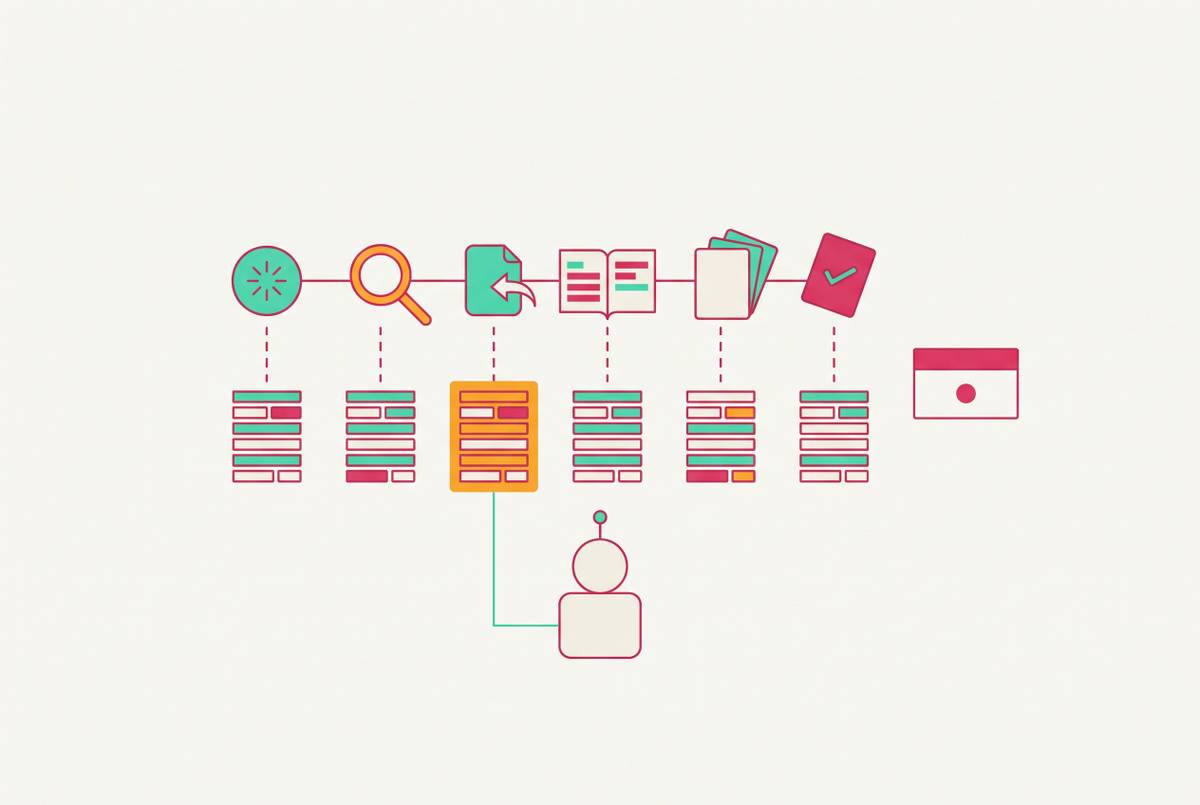
When a platform orchestrates a content pipeline, the team’s ability to intervene is bounded by what the platform exposes. The team may know exactly what needs to happen but lack a way to make it happen inside the execution loop. Three tests reveal whether the team has operational control or only access to configuration.
The first test is what happens when something fails mid-pipeline, specifically whether the team receives a log entry with a cause and a retry option. Failure looks like a status indicator and a support channel in place of the means to diagnose and resume the work.
The second test is whether a human can be inserted at any point to review, approve, or redirect output. Failure looks like human review offered only as an optional step at the end, after the earlier decisions have already been made.
The third test is whether every capability can be reached through an API without a human navigating the UI. Failure looks like an action that requires a click and therefore cannot be composed into a larger automated system the team controls.
These tests do not require every pipeline to be fully automated. Human review is itself part of operational control when the team can place it where it is needed. The distinction is who chooses the intervention and where the system permits it. Platforms that pass the tests treat the team as the operator. Platforms that fail them leave the team using a system whose operator is effectively elsewhere, a consequential constraint when a campaign or content pipeline needs to change quickly.
What observability means in a marketing system and why most platforms don't provide it
Operational control is incomplete without a way to tell whether the system is working. Observability means the team can answer that question from its own instrumentation, rather than accepting successful job completion as the result. The distinction is easy to miss in marketing software. A dashboard can report many completed tasks while leaving the quality and effect of those tasks unexamined. Execution is necessary, but it is not the outcome.
Platform dashboards usually show what the platform did, such as which tasks it completed, which emails it sent, and how many credits it used. They do not show whether published content is driving AI citations, whether the audiences reached are the ones that convert, or whether output quality is stable or degrading. These are different kinds of evidence. A feature matrix obscures the distinction because “analytics” or “reporting” can describe either a record of activity or a means of investigating results. The label alone does not establish what the team can learn.
The relevant boundary is whether events and metrics can leave the platform for the team’s own measurement layer. A data warehouse, a BI tool, or a custom dashboard can serve that role when the platform exposes the necessary information. The team then decides what to measure rather than inheriting the vendor’s reporting choices. For AI-generated or AI-assisted content, that question also asks whether answer engines actually cite the published work and whether the team can trace that signal to choices it made about the content. AI visibility needs to be measured and verifiable independently of publication or successful execution. Without that evidence, the team knows that content moved through the pipeline, but not whether the decisions behind it produced the intended result.
What changeability means and why configuration-as-UI-state makes it expensive
A marketing system that reveals weak results but is expensive to change leaves a gap between learning and improvement. Initial setup does not expose that cost. A flexible workflow builder may support the desired sequence today while making later revisions difficult to review, test, or undo. The way configuration is stored is therefore as important as the range of settings available.
Most platforms store workflow configuration as UI state, which can be a visual canvas, a form-based setup, or a saved sequence. The configuration stays inside the platform, where the team cannot take it away as a portable artifact. Changing it depends on platform access and platform knowledge. Where there is no diff, pull request, or staging environment, the team lacks the means to review a change before it goes live or test it against the production setup.
A rollback can require manual reconstruction of a prior state because a revert command cannot restore it. Meanwhile, the reason a workflow was configured a particular way may live only in someone’s head, leaving the team without a file it can read. That makes the workflow harder to understand as well as harder to edit. Configuration as code, or as exportable, version-controllable artifacts, provides a different basis for change because it can be audited, reviewed, tested, and reverted.
Back on the comparison page, both approaches can appear under “workflow builder.” The matrix records that a buyer can configure a workflow while leaving the team’s ability to manage its history and revision unspecified. That omission reflects the reader it was designed for. Someone choosing a tool to configure needs a different account of flexibility from someone responsible for operating and changing a marketing system.
The questions a technical team should bring to any marketing workflow comparison
A comparison serves as a first filter, after which the team needs to bring a separate set of due-diligence questions to the platforms that remain. These questions establish whether the platform’s assumptions fit the way the team intends to work. A clear answer can show that an operating model fits even if the team first wanted a different one, while a question left unanswered leaves the team with a dependency the feature matrix cannot settle.
On ownership, can every action the platform takes be triggered through an API without a UI step? Can a human review or redirect output at any stage before it ships? What appears when a job fails, a log with a cause, or a status flag? These questions belong together because triggering, intervening, and recovering are parts of the same execution loop. Access to one does not establish control over the others.
On observability, does the platform emit raw events or metrics that can be pulled into an external measurement layer? Can the team measure output quality outside the platform’s dashboard as well as count the tasks that were completed? For AI-assisted content, does the platform track citations by AI answer engines or help the team measure them? The aim is evidence the team can use.
On changeability, is workflow configuration exportable in a format the team can version-control? Can the team test changes in a non-production environment before they go live? Is there an API or MCP hook for every capability, allowing the team to compose the platform into a larger system it owns? The answers distinguish software the team can operate from software operated on its behalf. The team should evaluate platforms that answer confidently. Those that redirect these questions to a sales call are telling the team something about how readily it can understand the system it is being asked to depend on.