Profound's collaboration workspace puts marketers and agents in one document. What buyers should ask before they get one
Before buying, check whether the tool ties publishing to citations and revenue.

A shared document where marketers and AI agents work on content, sentiment, and visibility can make production easier. But for heads of growth and GTM engineers, the buying question is whether it connects publishing to evidence that AI engines name, cite, and send business to the brand.
Why AI answer engines have become a new discovery layer that standard analytics cannot see
AI answer engines put a new layer between a buyer’s question and a company’s website. Instead of choosing among ranked links, the buyer receives a composed answer that may name a brand, recommend a competitor, or leave the category out. There is no page two of that answer. This makes inclusion in the answer a distinct discovery problem, even for companies with strong search rankings.
Retrieval-augmented generation, or RAG, helps explain the change. In RAG-enabled modes, systems retrieve relevant passages before generating an answer, then may cite the sources they used. The passage becomes a unit of optimization alongside the page. A useful section can serve as evidence without bringing the reader through the rest of the website.
Crawlable, high-quality pages remain necessary, while generative engine optimization, or GEO, adds citation-ready passages, consistent entity information, and fact-dense structure. Traditional web analytics and SEO suites have no native way to show whether an AI answer cited the brand, favored a rival, or ignored it entirely.
What "AI visibility" actually measures — and why mentions and citations are not the same thing
An AI citation and a brand mention record different events. A citation links to a source, while a mention names the brand in the answer, with or without a link. Positive sentiment tracks how the answer talks about that brand. Share of voice measures its presence across a prompt set. Combining these into one score can conflate being used as evidence with being presented as an option.
A “ghost citation” occurs when an engine draws on a domain but never names the brand in its answer. A dashboard that counts this as equivalent to a named recommendation makes visibility look more commercially useful than it may be.
Semrush’s Ghost Citations Study found that informational content earns citations but rarely brand mentions, while comparative content produces more brand mentions. The buyer’s first question is therefore whether citation rate and brand mention rate remain separate throughout the workspace, rather than disappearing into a blended visibility score.
Why publishing more AI-optimized content does not automatically increase brand mentions
If a workspace produces more informational articles, it may increase the number of passages available for citation without increasing how often engines name the company. Better writing can improve the evidence an engine retrieves. It cannot, by itself, guarantee that the answer presents the publisher as a brand worth considering.
There is a further complication in how models use stored knowledge and retrieved sources. The “Phantom Authority” hypothesis suggests that a model can form an answer from parametric memory and use sources to support what it already intends to say. This is not a universal account of retrieval. In RAG-enabled modes, retrieval precedes generation by design, so the claim that all engines decide first and search later goes too far.
Even with that qualification, own-site publishing is an incomplete strategy. Distribution to external publications can increase citations beyond what publishing only on a brand’s domain achieves, while branded web mentions and consistent descriptions across sources help establish the entity. The trusted source may be someone else’s site.
Would better content alone solve the problem? Quality remains necessary, but it does not settle whether a model knows the brand or encounters it in sources it trusts. Traffic and visibility can also move apart when a piece loses Google clicks but gains AI citations. A production tool needs measurement capable of recognizing that difference before it can tell a team what to change.
How engine divergence means single-platform measurement gives a false picture of a brand's actual visibility
Distribution broadens where a brand appears, but measurement must also broaden where the team looks. ChatGPT, Perplexity, Gemini, Claude, and Google AI Mode do not draw on sources in the same way. One engine cannot stand in for the others. A workspace monitoring only one describes AI visibility within that engine.
CiteLens’s benchmark found that Google AI Mode and Perplexity draw the vast majority of their brand citations from Google’s conventional top results, while ChatGPT draws only about 30% from that pool. Strong Google rankings therefore transfer unevenly into AI answers. Visiby’s benchmark found differences of up to 24 percentage points in the same brand’s citation rate across ChatGPT, Perplexity, and Google AI Overviews. That finding supports separate measurement to preserve the spread that a single average hides.
A low citation rate also needs a diagnosis. Bot-log analytics show whether crawlers such as GPTBot and ClaudeBot are accessing site pages, helping teams investigate indexability problems before treating every absence as a writing failure. Crawl access and answer inclusion are different questions. A useful workspace exposes both, so a visibility gap can lead to an investigation into whether another draft is needed.
Where human review gates must sit in the pipeline — and why their position in the workflow is a design question, not a preference
Once measurement shows a gap, the production workflow sets what happens next. A shared document has value when it gives human judgment room to improve the content before publication. Review is not merely a courtesy check. AI-generated drafts can use information that is out of date, mix up distinct concepts, or sound more certain than their sources allow.
Those errors call for more than an approval button. A reviewer should be able to add evidence from the organization’s direct experience, a concrete example, a useful limitation, or a product-specific explanation. These additions supply information the agent cannot reliably contribute from parametric memory. Passage-level annotation lets that judgment enter where the claim is made, rather than becoming a general comment on a finished article.
The position of the gate changes the reviewer’s job. If review arrives only after formatting and scheduling, the workflow compresses editorial judgment into a yes-or-no decision. Inline review leaves room to revise the argument. For buyers, the design test is whether review can happen at the passage level and be required before publication, rather than merely offered through a separate downstream tool.
How to tell whether a workspace closes the loop between publishing content and measuring whether AI engines actually cite you
Can the workspace connect a content change or technical change to subsequent citation-rate changes, then connect mention and citation data to referral visits and revenue signals? That is a different capability from placing a writing editor beside a dashboard. The connection must help the team work out what worked, beyond showing that content was published and appeared in answers.
The answer itself needs inspection as well. A “ghost ranking” is a different failure mode, in which an engine cites and recommends a brand but then suggests a competitor for the actual purchase. Visibility alone cannot distinguish either case from a commercially effective mention, and answer-level measurement without downstream signals leaves it unclear whether that visibility leads to conversions.
The prompt input is another part of the test. A system can measure a brand carefully against questions its team thought people would ask and still miss what people actually ask. Prompt-demand panels address this by surfacing real queries sent to AI systems. The team therefore needs to check both where the workspace gets its questions and whether the results it reports connect to GA4 or CRM revenue data.
A closed loop does not make attribution effortless. Keeping a record of interventions alongside citation changes makes attribution possible, but the team still needs to check what the evidence shows. The workspace should help the team distinguish a promising change from an assumption.
The due-diligence checklist — specific questions to put to any vendor before signing
For measurement architecture, the questions should be direct. Does the platform show citation rate and brand mention rate on their own? Does it break results out across ChatGPT, Perplexity, Gemini, Claude, and Google AI Mode? Can it surface GPTBot and ClaudeBot crawl behavior? Does the prompt set come from queries that real users ask, from what the brand thinks they ask, or from both?
For the content pipeline, ask where judgment enters. Can reviewers annotate individual passages inside the document, and can review be required before publication? Does the platform support linked-data formats, llms.txt, and structured semantic data, or only prose? Does its plan include comparative content and distribution to external publications? An informational long-form default should not pass unexamined simply because its drafts look polished.
For attribution, ask to see the actual connections. Can mention and citation data connect to GA4 or CRM revenue data? Does the platform keep a record of content and technical interventions alongside citation-rate changes? Can it distinguish a ghost ranking from a commercially effective mention?
What internal resources will onboarding require, especially if the existing content library is inconsistent or disorganized? Is every capability reachable by an agent through an API, so publishing and measurement can fit the existing stack? What is the monitoring cadence? Weekly is a common default, daily is recommended for volatile or high-visibility categories, and monthly is too slow to catch meaningful shifts.
What a workspace that closes the loop actually looks like in practice
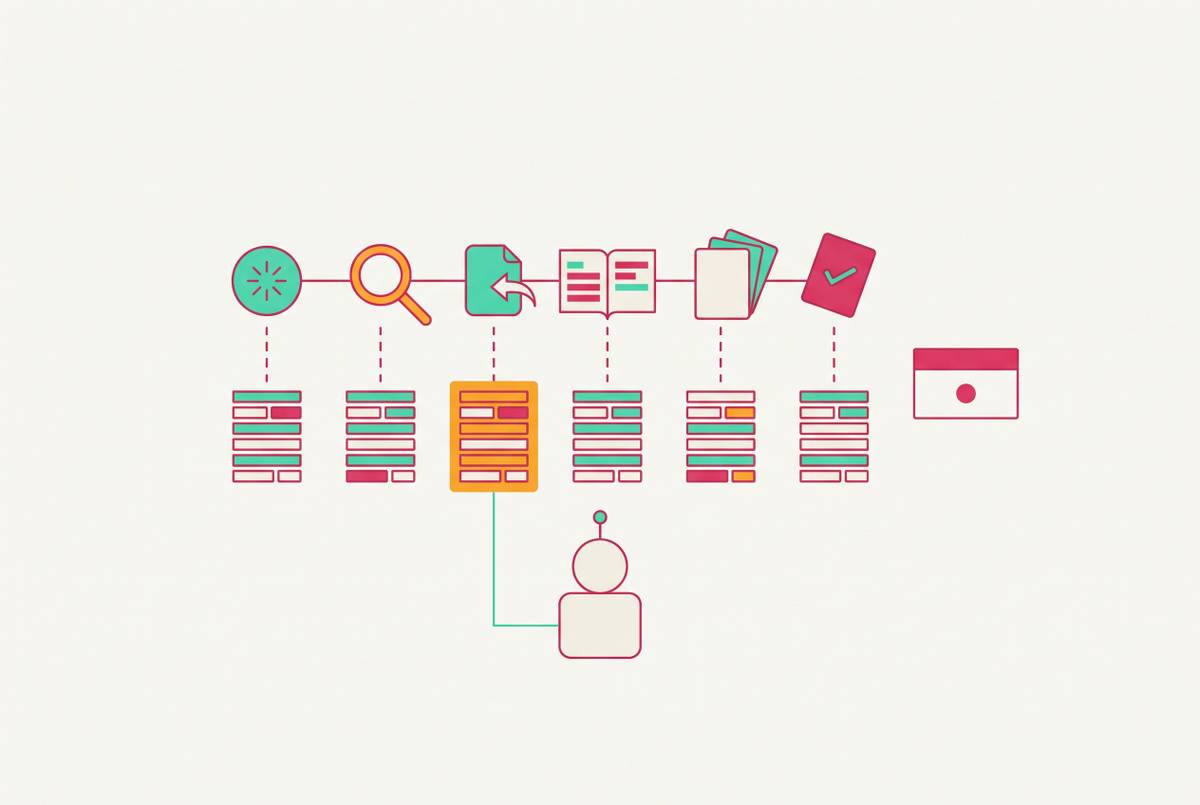
Real queries guide what the team writes about, while standing watchers write drafts when something relevant happens. The publishing pipeline then supports a cadence across brand or client blogs and external publications. That distribution gives the content more than one route into sources engines use, instead of treating the company website as the whole strategy.
Drafting and review operate within that pipeline. Multi-stage AI drafting is paired with human annotation at the passage level, and review remains a configurable checkpoint. Teams can require it before publication or choose full autonomy. Entity and schema infrastructure support the prose, so production is not limited to generating articles while leaving the brand’s structured description untouched.
After publication, the measurement layer preserves the distinctions needed for action. Results for each engine show whether it named and cited the brand, while records of interventions help the team look into what changed. Referral and revenue signals add the commercial test. API access lets these tools work with the existing stack without making every handoff go through another interface.
The purchase decision is not a contest of feature counts. A shared document earns its place when production, review, distribution, and measurement form a single working loop. The buyer should be able to follow a question into a draft, a draft into publication, and publication into evidence that can change the next decision.