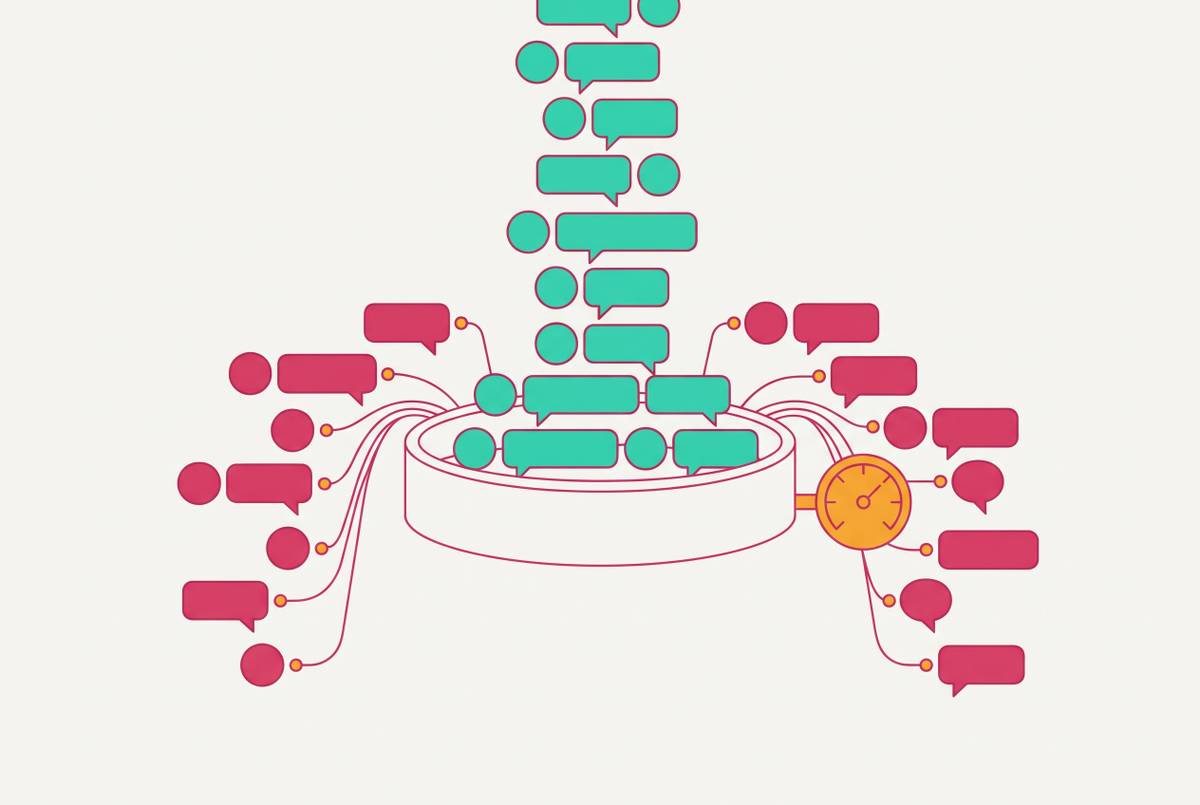
The forwarded deck is an artifact a machine can check: why B2B approval material should be built like a repo, not a one-pager
Discrete, checkable claims help both buying committees and the AI tools that read for them.
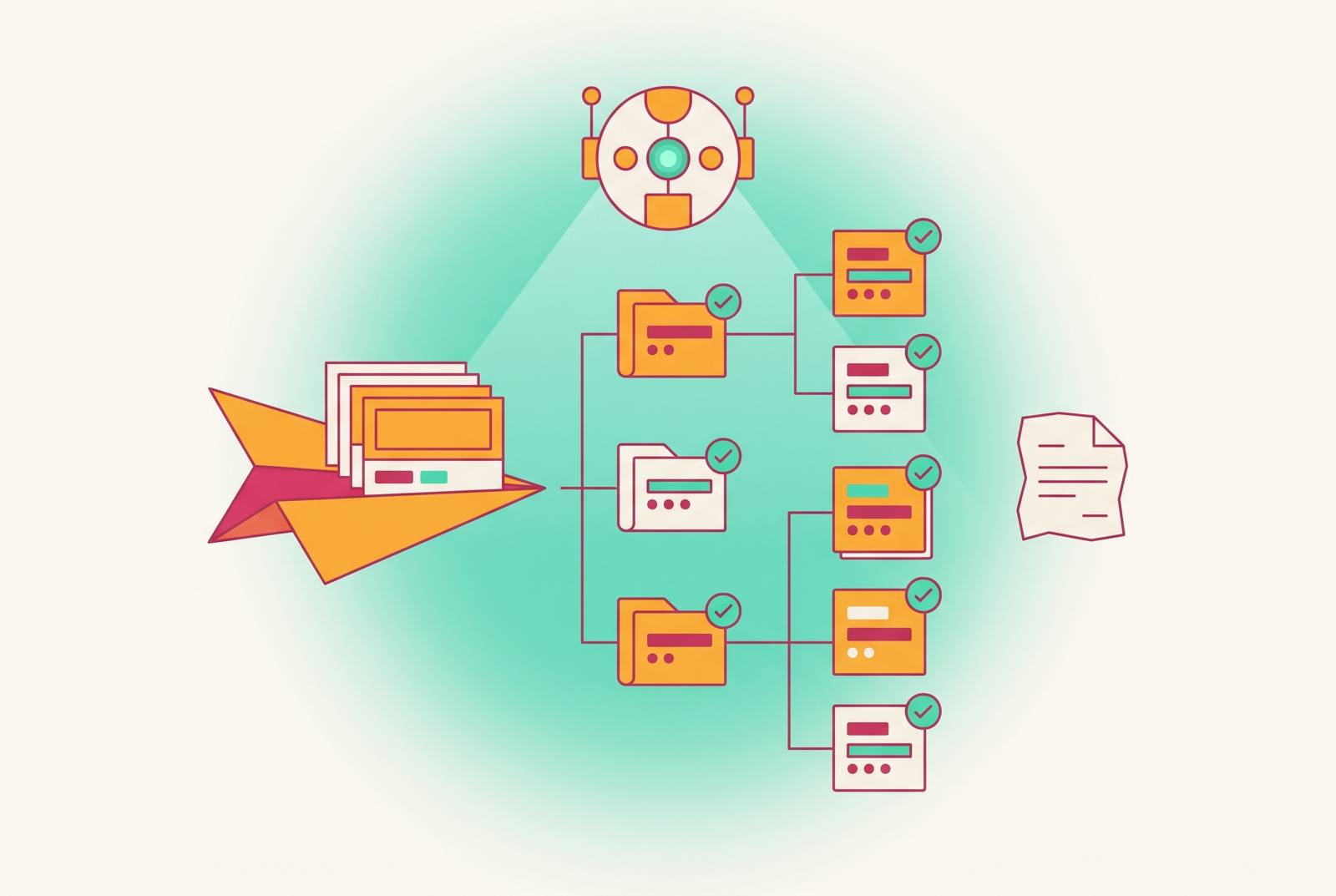
B2B approval material now has to serve both buying committees and the AI tools researching on their behalf. A forwarded deck may reach a machine before it reaches a CFO or security reviewer. Approval material should be built like a repository, with discrete, linkable claims that can be checked independently, rather than a one-pager whose meaning depends on following the pitch.
The B2B purchase has become a committee audit before it reaches any single decision-maker
The champion loved the pitch, forwarded the deck, and the deal went quiet. The champion’s enthusiasm has entered a review process involving an economic buyer, a technical buyer, end users, legal or procurement, and an executive sponsor. Each has different concerns and different grounds for objecting. Persuading the person who wants the product does not answer the people responsible for approving it.
Influ2’s 2026 survey finds that budget approval, internal alignment, and security concerns are the top deal bottlenecks. The economic buyer needs a cost they can defend, the technical buyer needs a risk they can accept, and the wider group needs enough agreement to go ahead. A document aimed only at the champion leaves those jobs unfinished. The resulting silence can conceal unresolved questions rather than a clear rejection that a seller could address.
Buyers now complete most of their evaluation before a vendor knows the deal exists, and AI tools are doing a growing share of that research
Much of that review happens before a vendor is contacted. Gartner describes buying as six jobs, including problem identification, solution exploration, requirements building, supplier selection, validation, and consensus creation. Committees revisit those jobs in any order. A security question can therefore reopen requirements while another stakeholder is already comparing suppliers. Content that follows the seller’s preferred order may not fit the work the buyer needs to do.
AI assistants now help buyers do that research on their own. A CFO may ask about a pricing model, while a security reviewer asks about data handling and procurement looks at vendor risk. The vendor may never hear those questions from the buyers themselves. Instead, the assistant’s answer depends on what it can extract from published material. The first reader of a forwarded deck may therefore be a machine trying to answer a narrow question.
A narrative one-pager is built for a human champion and fails every other reader in the committee
The champion forwards a story to people who need evidence. The CFO wants ROI and organizational risk, the technical buyer wants integrations and security, and legal wants contract terms and compliance. End users have another test, which is whether the product makes daily work easier. None necessarily heard the original pitch. Even low-cost SaaS tools can face security reviews, data-privacy sign-off, and procurement gates, so these demands can apply even to a small purchase.
A narrative PDF or slide deck embeds claims in context. A statement about data handling may need the slides around it to make sense, while a broad promise about security may never give a data residency policy or say whether SSO is supported. That creates an extraction problem for an AI assistant. Readable prose need not contain a complete, independently citable answer. Good presentation and good evidence are different properties.
A codebase has commits, diffs, versioning, and testable outputs, while a conventional sales deck does not organize its claims that way. Depending on the champion to fill the gaps leaves approval exposed to a resignation, a busy quarter, or a forwarded email that takes the conversation elsewhere. Approval material should be a set of addressable claims, each with enough detail to make sense on its own.
What it means to build approval material like a repository — discrete, linkable, and verifiable by a machine
Each page should give a full answer to one functional question. A pricing page, security posture page, integration spec, or ROI page must make sense without requiring the reader to open the others. Declarative statements make that possible. For example, a statement specifying data residency in EU-West-1 and whether data leaves the region answers a question that general assurances about security cannot. Schema markup and structured metadata should identify the page’s subject and the claim it makes.
The entity layer must then keep those claims attached to a consistent identity. Company name, product name, founding year, service description, and technical specs should match across the brand site, LinkedIn, directories, and third-party listings. Contradictions weaken the evidence available to a retrieval system. A page can be indexed yet offer too few clear, contradiction-free statements to earn a citation. When evidence is weak or conflicting, an AI system may decline to answer that part of the question.
The serving layer must make the evidence accessible. ChatGPT and Perplexity read the raw HTML sent by a server rather than necessarily seeing what a browser renders. Gemini can use Google’s rendering pipeline and may read script-rendered content, while coding agents ask for Markdown. This calls for clean server-rendered HTML plus content-negotiated Markdown routes.
The five types of approval material that need to be rebuilt as discrete, citable assets
For the economic buyer and procurement, pricing must answer what the purchase will cost and under what terms. Tiers, included features, overage rules, and contract lengths need explicit statements rather than ambiguity that only a sales call can resolve. Total cost of ownership needs a checkable basis. Because budget approval is already a leading bottleneck, withholding the information needed to calculate cost adds friction at precisely the wrong point.
For the technical buyer and security reviewer, the question is whether the product meets the organization’s security requirements. Data residency, encryption standards, access controls, and incident response SLAs should each be discrete, cited, versioned statements. Certifications need dates and renewal status. Influ2’s survey places security concerns third among deal bottlenecks, giving this material a direct role in approval rather than merely supporting a general claim of trustworthiness.
For IT and the technical buyer, integration material must answer how the product will fit the existing environment. API documentation, authentication methods, supported identity providers, and webhook behaviors need self-contained, linkable descriptions. OpenAPI specs and JSON-LD can supply machine-readable structure where appropriate, so the technical detail does not have to be recovered from a broader product narrative.
For the CFO, ROI material must answer whether the expected return justifies the purchase. Named customer outcomes should appear as discrete, verifiable claims with their methodology disclosed. The assumptions must be visible. Payback framing should let the CFO substitute the organization’s own numbers, separating a customer’s reported outcome from the conditions under which another buyer might expect a return.
For legal and procurement, the question is what obligations and vendor risks the agreement creates. The DPA, SLA, and terms of service should be versioned, linkable documents with visible change history. The sub-processor list needs the same discipline. A structured, dated, queryable page makes that information available as an approval asset rather than leaving it inside a PDF attachment detached from the rest of the evidence.
Off-site citation coverage matters as much as on-site structure — the committee's AI tools pull from both
A CFO’s assistant may look beyond the vendor’s security page to find out whether the vendor has SOC 2 Type II. Retrieval does not stop at the company domain. Earned media, meaning sources a brand neither owns nor pays for, accounts for the large majority of links cited in AI responses. A well-structured website is therefore necessary but insufficient as the sole source of authority. The approval architecture must include evidence the assistant can cite independently.
Domains cited by one major engine overlap only minimally with those cited by most others, although closely related engines such as Google AI Overviews and AI Mode can share a substantial portion. For commercial evaluation, listings and reviews on G2, Capterra, and relevant vertical directories address vendor credibility. Third-party security and compliance validation serves a different approval need. Concentrating on a single channel leaves these distinct retrieval paths unevenly supported.
Wikidata entries and Wikipedia presence can help establish a brand as a recognizable, verifiable entity. They do not replace evidence for individual product claims. Across those surfaces, the company name, description, product category, and official URL need to agree with the vendor’s own material. Otherwise, the external sources intended to support approval can introduce conflicts that make a citation less likely.
Producing and maintaining machine-legible approval material at scale requires a pipeline that separates generation from verification
Clear structure makes false claims easier to pull out too. An AI-generated security statement with a fabricated certification, or a pricing page containing an outdated tier, can actively mislead the reviewer it was built to help. Once incorporated into AI training corpora, such material can be extremely difficult to retract. Faster production therefore needs a separate verification process.
The pipeline begins with a human defining the brief, the claim, and the sources the asset must cite. AI then writes structured content to meet those requirements. Automated checks look for facts that do not match, personally identifiable information, and claims that contradict each other before a human approves the asset for the publish queue. That approval gate is non-negotiable for pricing, security posture, and compliance documentation. Versioning preserves the change history so revisions to a spec or tier remain traceable.
The instructions behind production need version control too. Stored prompt templates keep structural and citation requirements consistent across updates and team members. Product claims, security posture, compliance attestations, and competitive comparisons need human review at the brief, draft, and pre-publication stages, while glossary entries and metadata refreshes can use sampling-based review. Citation results then go back into this pipeline to show which published assets still fail to give the intended reader what they need.
Measuring whether your approval material is actually being cited by AI answer engines, not just indexed
Indexing shows that content is available. A brand can be cited often by AI without matching traffic in Google Search Console, or rank highly in Google while never appearing in AI-generated category answers. These are different distribution channels with different citation mechanics. The operative metric is share of citation, meaning how often the brand is cited relative to competitors across a defined set of category queries.
That measurement needs to distinguish assets and engines. Pricing, security, integration, and ROI pages may have different citation profiles, while ChatGPT, Claude, Gemini, and Perplexity may draw on different mixes of brand, editorial, and directory sources. An engine-specific gap can point to missing off-site coverage. The audit also needs to examine what the citation actually says, because a reference to an outdated claim is not equivalent to a correct answer from the current version. Version history makes that comparison possible.
The production team should treat an uncited structured asset as a repo unit needing revision. Competitor citations on the same queries provide a concrete comparison of which evidence reaches the answer. This completes the engineering discipline behind the repo analogy. Build, version, test, and measure the material, then run the citation audit across the defined queries, recording which asset each engine cites, which version it uses, and where another source supplies the answer instead.