Competitive intelligence for SEO is incomplete until you instrument the AI answer: a measurement protocol for who gets named
A repeatable protocol shows which brands AI assistants name and when rivals displace yours.

Competitive intelligence for SEO is incomplete when it stops at rank reports. Those reports show where pages appear, but leave out which brands AI assistants name when buyers ask for advice. Closing that gap requires a repeatable measurement protocol, with fixed buyer questions, repeated runs across engines, and a scorecard that reveals where competitors are replacing a brand in the answer.
Why rank reports create a structural blind spot in competitive intelligence
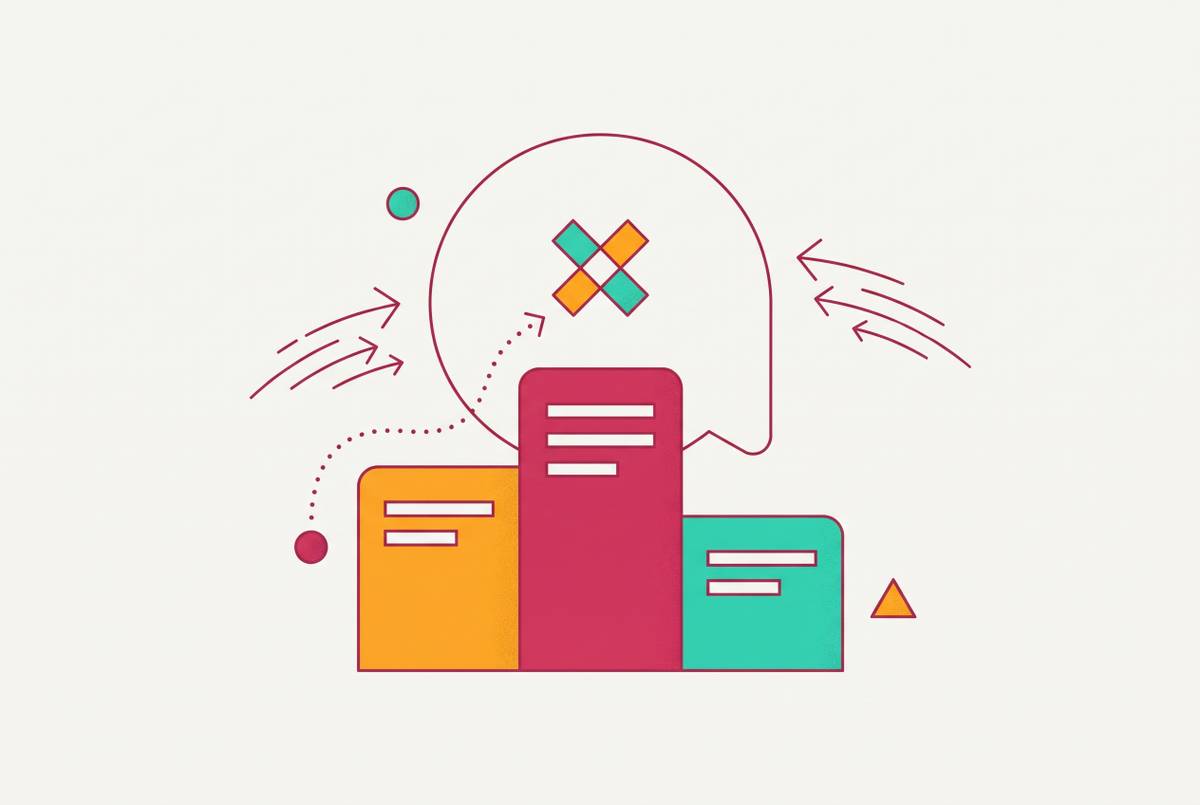
The rank-report dashboard in a marketing team’s weekly review can stay green while a competitor gains ground elsewhere. Its rows record URL positions in search results. They do not record whether an AI assistant mentioned, cited, or recommended a brand inside a generated paragraph. That omission is built into the instrument. A top organic position therefore cannot answer the separate question of who gets named when a buyer asks conversationally.
Ahrefs found that the share of Google AI Overview citations coming from top-10 pages fell from roughly three-quarters in mid-2025 to roughly a third by early 2026. Ahrefs also notes that the studies used different citation-counting methods, so the figures are not a perfect like-for-like comparison. Even with that qualification, they challenge the assumption that rank reliably stands in for citation. The separation is sharper with ChatGPT, where only a small fraction of Google’s top-10 pages appear among cited sources. A smaller competitor can become prominent in category answers without disturbing the incumbent’s reassuring dashboard.
Why each AI engine names brands through a different mechanism
That separation exists partly because AI engines do not share one source-selection mechanism. Gemini leans heavily on brand-owned websites for a majority of its citations, while ChatGPT relies more on internet consensus and third-party directories. Perplexity emphasizes Reddit and community sources, real-time retrieval, and academic or technical documentation. These are distinct routes into an answer. A strategy built around one route cannot be assumed to work through the others.
The practical consequence is that each engine needs its own measurement lane. An on-site content investment is more directly aligned with Gemini’s sourcing, while directory presence and third-party discussion are more aligned with ChatGPT’s. Perplexity adds another source mix to examine. Claude, in the default mode described here, uses training data without citation links or trackable traffic, so tracking brands there is a different kind of check.
What, then, would an overall AI visibility score conceal? It could blend strong performance on an engine that reads owned pages with weak performance on one that looks for outside consensus. That blend would obscure the reason for the gap. Separate engine readings preserve the connection between an answer and the sources that helped produce it.
Why AI answer visibility is unstable by design, and what that rules out as measurement
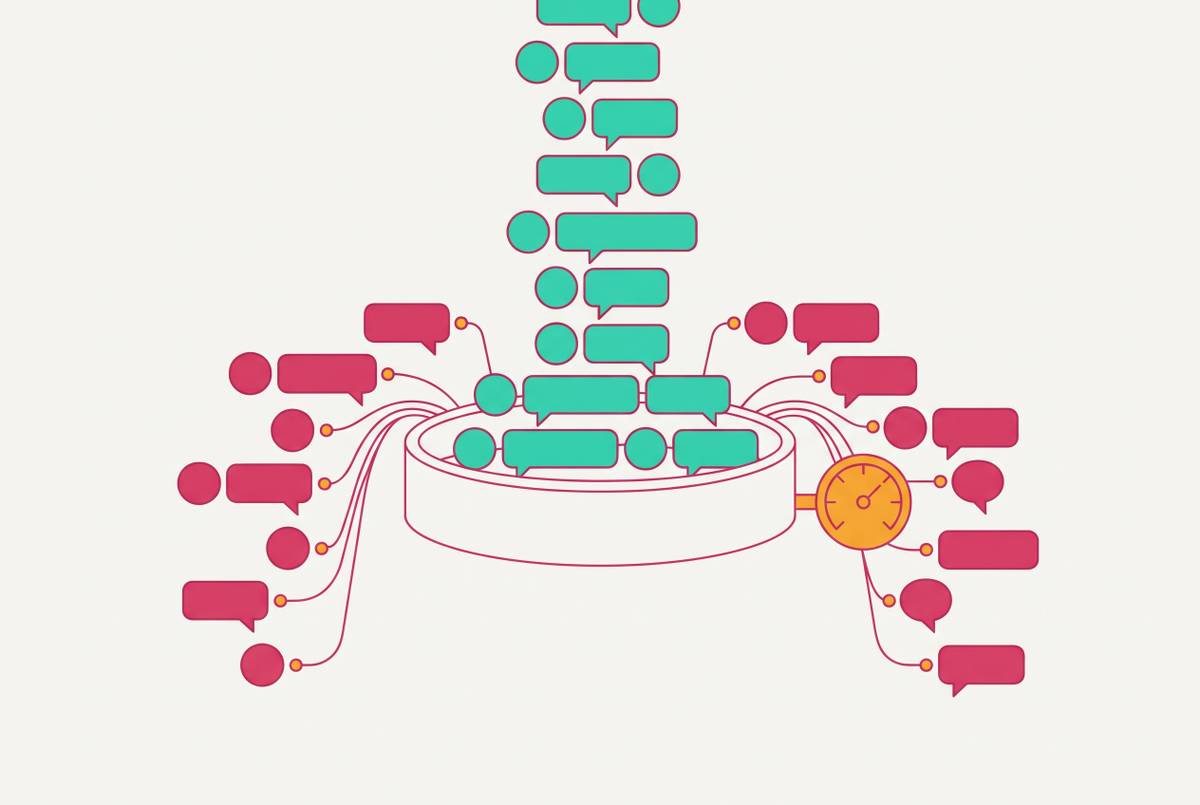
Even within one engine, the same prompt does not reliably return the same brands twice. AI answers are non-deterministic, so variation is part of the surface being measured. A screenshot records only one answer. A one-time audit has the same limitation. Neither establishes how often buyers asking that question would encounter a particular brand.
Top brands in tight categories appear in a majority of responses to relevant prompts, even as their placement changes between runs. But appearance alone leaves another question unanswered. Was the brand recommended for the buyer’s needs, or framed as a limited alternative?
An answer might call one brand “a good starting point for small teams” while describing a competitor as “more advanced.” Both receive mentions, but not equivalent endorsements. The framing is in the generated text, where a traditional rank tracker cannot see it. Sound measurement therefore needs repeated checks of both inclusion and context, using a fixed panel on a stated schedule.
What the measurement protocol actually looks like: prompt panel, sampling discipline, and cadence
To build that protocol, a team should start with unbranded buyer questions. “Best project management tools for small teams” asks the engine to select brands without a brand-specific nudge. The panel should reflect real buying language. Sales calls, support tickets, site search, and Search Console queries provide internal material, while Reddit, Quora, YouTube comments, and retailer Q&A supply outside phrasing.
Once the team picks those questions, it should keep them the same across measurement cycles. Otherwise, a change in the answers could reflect a change in the questions, making shifts in competitive visibility harder to distinguish. Each platform needs its own tracking column. Sessions should be logged out because personalization history can skew responses and make side-by-side readings unreliable. Every named brand belongs in the record, including the brand commissioning the work.
Each prompt should run several times per session, with 10–20 runs per query when the team needs more precise citation-rate estimates. The record should distinguish mentions from linked citations and retain the answer’s framing so that inclusion is not mistaken for endorsement. Repetition reduces the influence of a stray answer. Weekly sessions are the minimum viable cadence for fast-moving categories, while monthly sessions are acceptable for established, stable ones.
The four metrics that convert prompt-panel output into competitive intelligence
Mention inclusion rate measures how often the brand appears by dividing the number of answers that name the brand by the number of valid answers attempted. Unlike a raw mention count, that rate preserves the relationship between appearances and the amount of sampling. It measures presence. The framing in the record then helps show whether the brand comes across in the way it wants.
Share of citation asks a different question about linked support. It measures the brand’s portion of the citations recorded in the panel, kept separate from mentions in generated text. A brand can be named without receiving any source link. Counting those outcomes as the same would mix up exposure with citation and hide how engines differ. The scorecard needs both readings.
Cited-source diversity asks where the engine gets its evidence. It records the domains used and their provenance, distinguishing owned pages from third-party sources and earned media from directories. Competitor displacement then asks where a rival gained while the brand lost on the same prompts over time. A competitor’s gain alone is not displacement. The matched change is the competitive signal.
Citation gap analysis extends that signal into a diagnosis. It identifies sources the engine reads for the category that never name the brand. This moves the investigation beyond whether visibility declined to which trusted sources are missing the brand, giving the content or PR team a specific target.
How the GA4 layer connects AI answer visibility to traffic and pipeline
The prompt panel measures what AI answers say, but it cannot show which visits convert. For that, a team should create a GA4 channel group for identifiable LLM referrers and run it beside the panel tracker. The two layers answer different questions. The panel records exposure and competitive framing, while GA4 records attributable sessions and their conversions. Neither should be presented as a substitute for the other.
The connection is incomplete because some AI-referred visits arrive without referrer data and disappear into direct or dark traffic. A channel group cannot bring back a missing referrer. Its traffic reading is therefore a floor for AI influence. Only around 29–31% of ChatGPT brand mentions include clickable citation links that could lead to a visit visible in GA4, leaving much of the exposure outside referral measurement.
Perplexity is easier to track because its answers cite 4–8 sources with clickable links, and those clicks show up as referral sessions in GA4. That makes it especially useful for connecting answer visibility with attributable pipeline. Branded search lift supplies a further, directional indicator. Increased AI mention rates tend to precede more direct branded searches, which Search Console can show even when the original exposure has no attributable click. This does not make every branded search an AI-driven conversion.
How the sourcing architecture determines whether the content you publish becomes a citation
Once the referral layer is in place, citation gaps help show where to change what gets published. Across AI engines, third-party domains supply much of the cited material, so a strategy confined to owned pages leaves important sources untouched. The useful output is not merely a low visibility score, but the particular publications, directories, review platforms, or communities an engine consults that do not yet name the brand.
Two connected content layers are needed. Owned ground-site content is material the brand controls and structures for machine legibility and answer-capsule extraction, while third-party presence adds evidence beyond what the brand says about itself. The balance depends on the engine. A Gemini gap may point toward owned content, whereas a ChatGPT gap may point toward outside consensus or directories. Citation gap analysis should therefore remain segmented by engine when it becomes a publishing plan.
Owned pages still have meaningful levers. The original GEO research, published at KDD 2024, supports structural elements including authoritative citations and statistics as ways to improve visibility. In that research, citing external sources more than doubled visibility for lower-ranked content. Answer capsules and FAQ sections also form part of the owned-page approach described here. These additions support extraction, but promotional tone has a negative citation correlation, making neutral, factually grounded writing more suitable than sales copy.
Why the content pipeline that feeds AI citations requires human review gates, not just volume
Once citation gaps identify a topic and a target surface, faster drafting is only one part of the work. The draft still needs human editorial judgment. Review gates are the control for catching promotional framing before publication and preserving the standard that makes the content worth citing.
The lesson for production is to write for people first, then layer GEO structure onto the readable draft. Answer capsules, FAQs, and cited statistics can make useful information easier to extract. They cannot rescue a promotional argument by themselves. A multi-stage AI drafting process with structured human review can support faster production without treating publication volume as the measure of success. The relevant outcome is whether the work earns a place in the sources and answers being tracked.
The measurement cycle gives that pipeline its direction. Citation gap analysis shows which topics and third-party surfaces to work on next, publishing fills those gaps, and the next panel run checks whether citations followed. A completed article is not proof of progress. The loop needs the next reading, including cases where an expected citation never appears, to tell which publishing work changes the competitive position and which leaves it the same.
What a standing AI competitive intelligence instrument looks like in practice
The prompt panel supplies a fixed reference frame, the sampling schedule supplies repeated observations, and the scorecard reveals where the competitive relationship changed. GA4 adds the attributable funnel outcome without claiming to capture all exposure. Citation gap analysis then turns a change in visibility into a source-level question that the publishing pipeline can address.
For a small team, the first build can be modest. A fixed panel run manually several times per prompt on two engines each week, recorded in a simple spreadsheet, provides a workable starting point. Consistency is the essential investment. The next steps are the four-metric scorecard, the LLM referral channel group, and a publishing process tied to the gaps the panel reveals. Automated tooling can expand that system without changing its logic.
Content can keep shipping while trusted third-party sources omit the brand, and a healthy search dashboard can conceal the shift toward a rival in buyer-facing answers. As AI answers become a primary discovery surface, that omission becomes harder to dismiss. An instrumented system provides a continuing signal of who gets named, where the balance is changing, and which source gap deserves the next action.