ChatGPT Business Hub only counts the answers you already win: how to instrument the questions you lose
Business Hub tracks only your wins, so here is how to measure the losses.
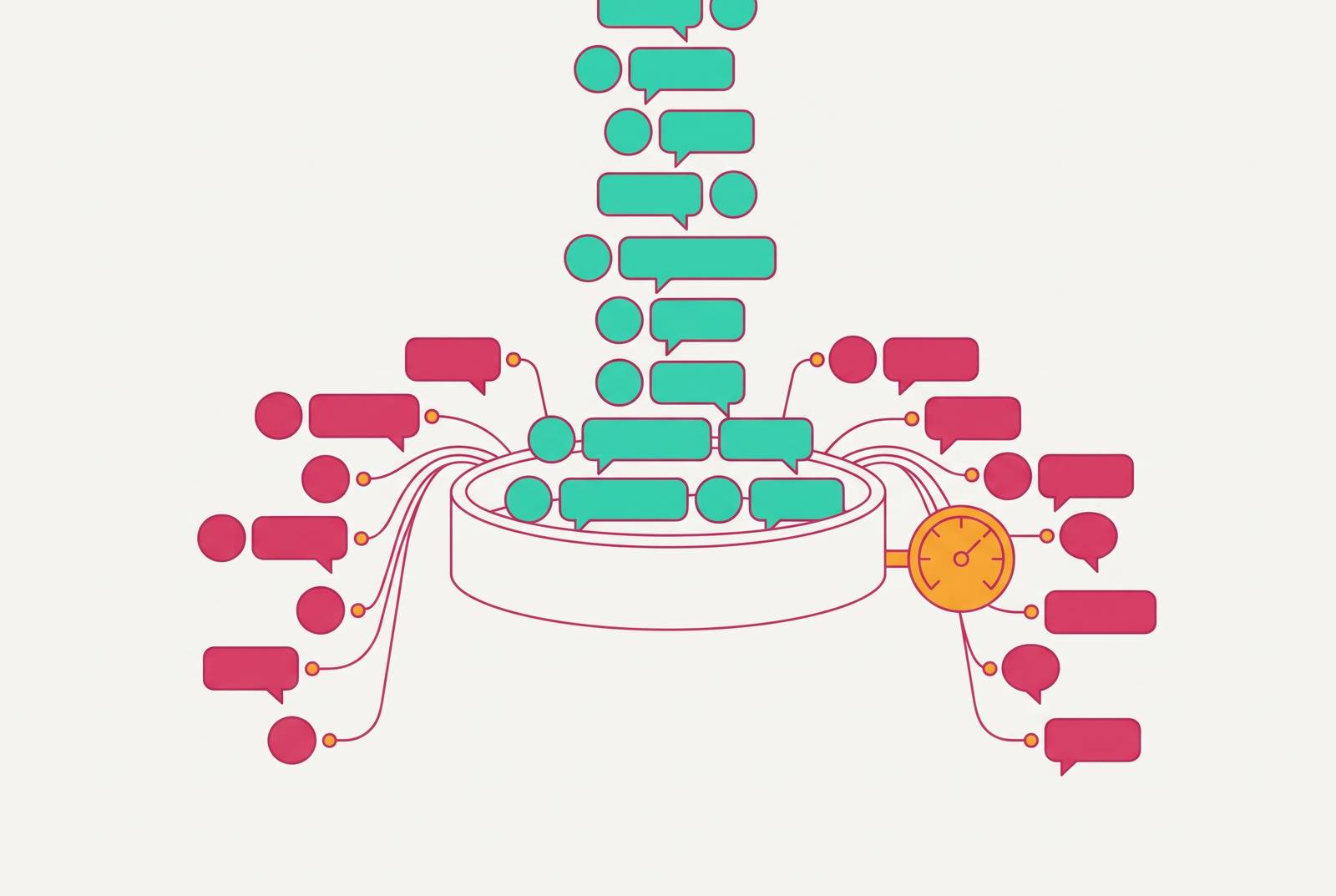
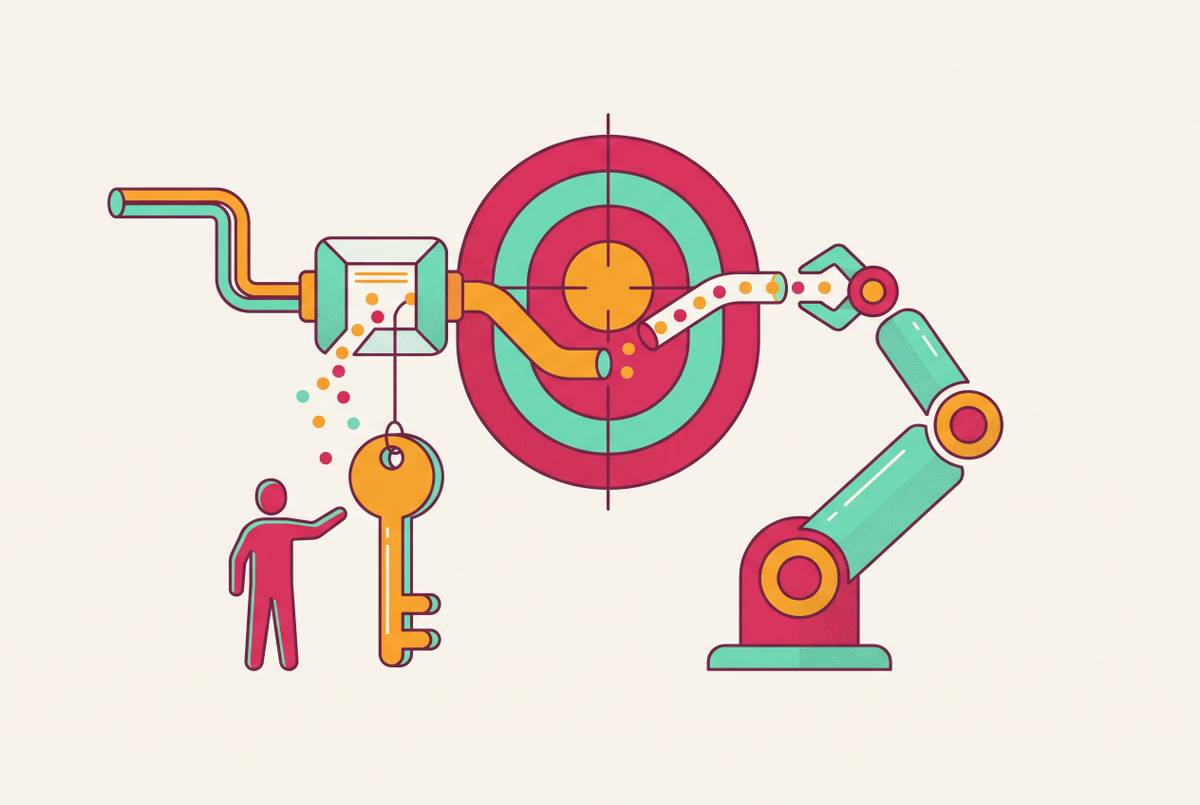
ChatGPT Business Hub measures the answers in which a business already appears. That makes it useful for confirming visibility but insufficient for understanding competitive position. Closing the gap requires a parallel measurement system that tests unanswered opportunities across engines, then connects those findings to what the business publishes.
What OpenAI launched on November 10, 2026 and what Business Hub actually gives you
OpenAI launched Businesses in ChatGPT in beta on November 10, 2026, giving companies a way to claim a verified profile, correct business details, connect product feeds with pricing and availability, and see engagement data through Business Hub. OpenAI says ChatGPT reaches 1.2 billion people each week. The scale gives the launch practical weight. It is the first time a major AI answer engine has given brands an owned analytics surface inside the product, rather than leaving them to infer their presence from outside.
Claiming a listing involves identity verification run by Persona, which may require a government-issued ID, business registration documents, or proof of authority to represent the business. Once verified, a business can update its website, description, category, logo, delivery and return policies, and connect a product feed. OpenAI publishes no public checklist of verification criteria. That leaves agencies managing listings at scale without a detailed public standard against which to prepare each application.
Business Agents add a different kind of presence. These labeled brand chatbots appear when a business surfaces in a ChatGPT answer, but access is restricted to eligible US e-commerce and online services businesses. Local businesses and businesses outside the US cannot access agents yet. OpenAI describes the launch as “an early step” and plans to extend it to more markets and business categories. That framing is worth preserving, because a useful new product can have a limited scope without failing at its intended job.
The structural design choices that limit what Insights can show
Business Hub’s Insights panel starts from aggregated activity, with privacy thresholds determining which figures appear. A blank figure therefore means the data has been withheld under those reporting rules. OpenAI also withholds users’ conversations and Business Agent chats from businesses, so the prompts behind individual mentions are not visible. These choices protect conversations while limiting how far a business can trace an event back to the question that produced it.
For an online business, OpenAI counts a mention only when ChatGPT references the business’s website. Discovery topics describe common themes in conversations where the website was cited. But sourcing and recommendation are not the same event. A topic can reveal where ChatGPT drew on a website without establishing that it recommended the business to the user.
Clicks have a similarly precise meaning. OpenAI’s help note states, “Clicks don't confirm website visits or conversions”. The panel records activity at one stage, not a complete path from question to sale. More fundamentally, mentions, clicks and discovery topics all depend on the brand or its website surfacing first. If neither appears, there is no event for Insights to report.
These are legitimate tradeoffs. An aggregated, privacy-first reporting system can describe qualifying events while withholding the conversations that explain them. The missing view of an absent brand requires a separate measurement approach.
What the blind side looks like: the queries where a competitor was named and you weren't
Consider an EdTech company that ranked on the first page of Google for its core terms but appeared in zero AI engine responses for its target prompts. Its search rankings offered no warning of that disconnect. No existing dashboard had flagged the gap, which emerged only through a deliberate audit. The example illustrates a simple distinction between being easy to find in search and being selected for an answer.
A live dashboard example from November 10, 2026 showed 690 mentions and 24 website clicks for one business over the measured period. How many questions about this business’s category named a competitor without naming the business at all? The figures cannot answer that question. The missing denominator prevents a business from treating its recorded mentions as its share of relevant answers.
Time makes the gap harder to interpret. AI answer engines do not return stable results for the same query, so a point-in-time snapshot can misrepresent a brand’s standing. Surely rising mentions still show improvement? They show more recorded wins, but they do not establish that the brand is gaining ground across the questions buyers ask. Mentions can also hold steady while competitors gain visibility on new query types where the brand has never appeared.
That silence is not a neutral competitive position. While the business sees no event, another brand may be in the answer. Without tests to find those losses, the questions behind them are left out when the business decides what to publish next.
Why Business Hub covering only ChatGPT makes the blind side larger than it appears
Business Hub is ahead of comparable first-party offerings on other engines, but that advantage can make its view unusually influential. It is the available dashboard, so it can become the default picture of AI visibility. Availability does not make it representative of every engine. Reading it as a complete competitive view is like using one market’s sales figures to judge a global position.
The engines draw on different source pools. Google’s AI Mode and Perplexity draw the large majority of their brand citations from Google’s conventional top-10 search results, while ChatGPT draws a much smaller share from that pool. How well a brand does in one engine therefore says little about how well it does elsewhere. The EdTech gap between search rankings and AI answers is one form of this broader problem.
The strategic risk follows from that sourcing difference. A business optimizing entirely for ChatGPT’s metrics may choose content that fits poorly with the engines where its category audience searches. This is not an indictment of OpenAI’s scope. Any first-party tool for just one engine would have the same boundary around what it can show. The missing perspective has to come from measurements that cross that boundary.
The instrumentation layer that closes the gap Business Hub leaves open
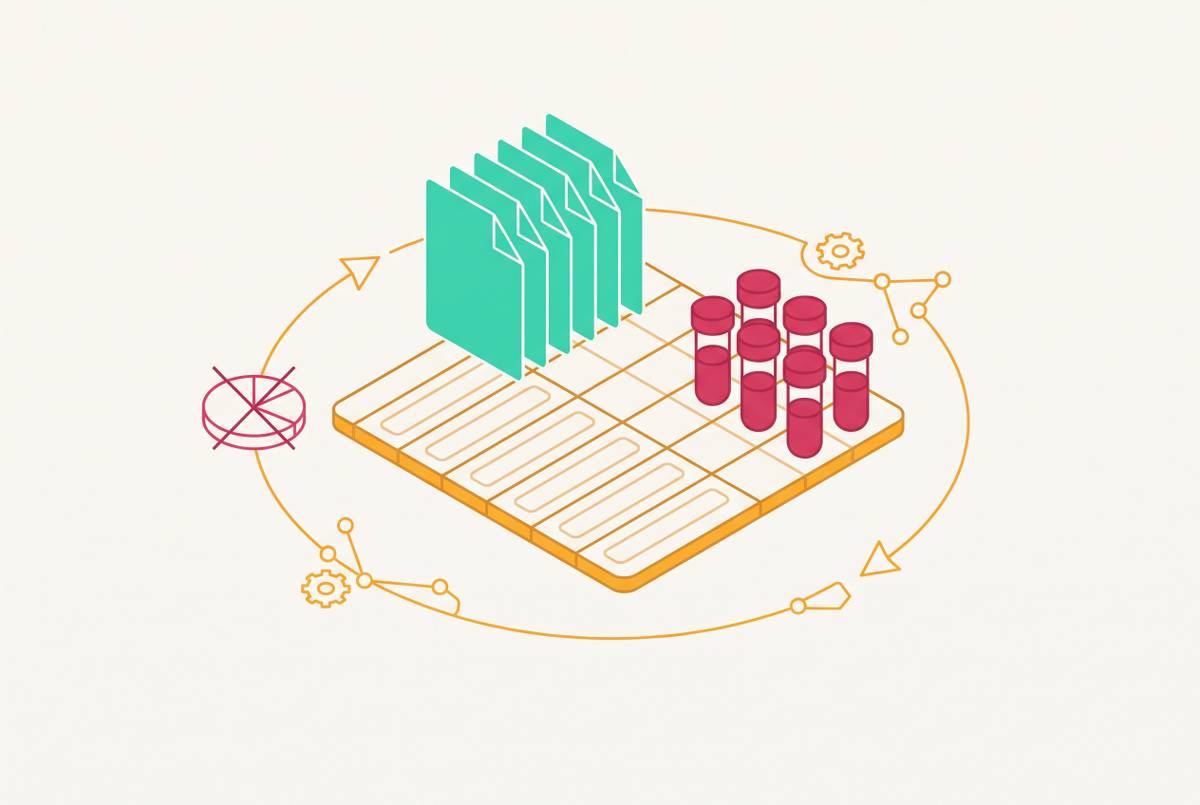
For a team trying to fill these gaps, the first layer is a structured prompt corpus built from its top commercial queries. Those prompts should run regularly across ChatGPT, Perplexity, Gemini and Google AI Overviews. The key output is absence. Which prompts omit the brand, and which competitors appear instead? Repeating the same corpus over successive weeks also exposes changes that a single snapshot would hide.
The second layer adds cross-engine tracking when the volume justifies it. SE Ranking, starting at EUR 89/month, tracks where brands appear across AI search surfaces. Ahrefs Brand Radar tracks mentions and entities across multiple engines and distinguishes brand-name appearances from citations with clickable links. A name in answer text and a source link are both useful signals, but the link offers a route to measurable downstream traffic.
The third layer looks for influence that leaves no attributed click. AI citations can lead people to search for a brand later or navigate directly, with those behaviors arriving in GA4 and Google Search Console without attribution to the original AI session. Overlaying known citation events against weekly branded search volume can expose a change consistent with that influence. It is a proxy. Its value is that it tests whether visible citation activity coincides with a real change beyond the answer engine.
A team can begin with the prompt corpus alone, add a tracking tool as coverage grows, and introduce branded-search correlation once it has a citation baseline. Each addition answers a different question.
The content architecture that earns citations on the queries you currently lose
Once the corpus identifies missing answers, the team can decide what to publish. What content would address those questions?
Content for Google organic search and content for LLM citation do different jobs. Commercial category pages, high-intent comparison content and transactional pages serve the former, while definitional content, entity relationship pages and brand authority signals serve the latter. ChatGPT may often cite a page that does not rank in Google, or a page may rank without those citations. Neither surface replaces the other. The prompt corpus helps the team decide which job to tackle when an answer is missing.
At paragraph level, the recommended structure is answer-shaped. The first paragraph beneath a heading is the section most likely to be lifted into an AI answer, so it should begin with a one-sentence direct answer. A sentence explaining its significance can follow, then one or two sentences of supporting context. This creates a self-contained, quotable unit. It also gives the reader the answer without requiring a search through several paragraphs of setup.
At site level, the ground-site and phantom-site distinction separates two publishing roles. The ground site is the brand’s primary domain, where content builds entity authority, while separate sites can reach topic clusters or audiences the primary domain does not cover. Both contribute to the retrieval corpus available to LLMs. Coverage is not confined to one hero page. Publishing on a regular cadence adds to that surface over time as answer engines find more of the site.
Volume, however, needs a quality gate. Fabricated statistics and misattributed quotes in AI-generated content can create phantom citations, or false claims that an LLM may repeat. These errors can damage credibility in the answers a brand hopes to earn. Human review within a multi-stage pipeline is the check that keeps a broader publishing program from becoming a larger source of falsehoods.
What a working instrumentation loop looks like in practice
The operating rhythm begins with weekly or monthly runs of the prompt corpus across engines. A team records presence and absence, then updates its map of which brands appear for which questions. Missing answers become inputs to the publishing cadence. Depending on the gap, the resulting work may be a definitional page, an entity document or comparison content. Later prompt runs test whether that work changes the citation rate.
On a rolling basis, the team overlays branded search volume against citation events to look for downstream lift. Monthly reviews then bring Business Hub Insights together with the third-party observations. The two views serve different purposes within one decision. Insights shows first-party activity it has recorded, while external testing shows which of the sampled questions still leave out the brand. Together, they help distinguish content that coincides with new visibility from content that has not yet changed the tested answers.
There is an important limit to acknowledge. Third-party tools use simulated prompts, so their findings are directional. But directional evidence about losses is more useful than no evidence, and branded-search correlation provides a real-world check on whether the sampled visibility corresponds with a change in behavior.
Business Hub confirms recorded activity, repeated testing exposes missing answers and volatility, and publishing responds to the gaps the tests reveal. The next round then evaluates that response. Treating AI visibility as an engineering discipline means changing the content on evidence, rather than mistaking access to a dashboard for a measurement strategy.