SEO and SEM share one query table: how a technical B2B team should split pages and capped paid tests with an engineer's loop, not a budget percentage
A shared query table lets technical B2B teams test paid spend against organic defaults.
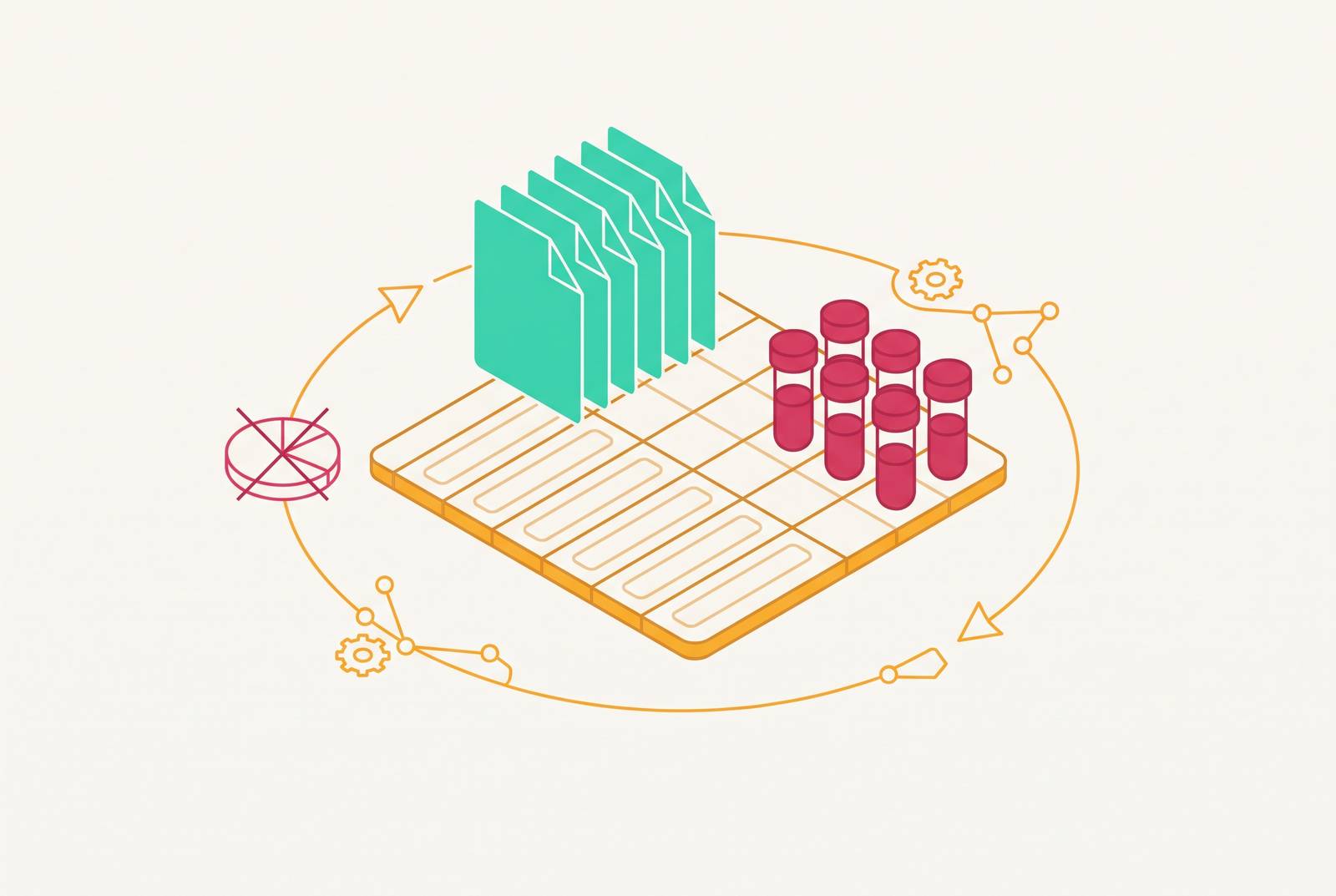
SEO and SEM are two instruments working on the same queries. For a technical B2B team, the useful decision is which instrument handles each query and what evidence would change that assignment. One shared query table makes that decision testable, with organic pages as the default and capped paid experiments admitted through a unit-economics gate.
Why SEO and SEM share one query table, not two budget buckets
A query ranks organically at position four while a paid campaign bids on it, yet neither owner has made a clear choice to pay for both placements. The organic report shows the ranking, and the paid report shows how the campaign did. Neither view exposes the possible cannibalization cost. Separate ownership can let the overlap persist without a decision about its value.
What evidence would show that this query is worth paying for? Answering requires the organic position and paid performance to be visible together. A budget percentage allocates money before resolving which queries need faster feedback, which already have useful coverage, and which deserve a page whose value can compound over time.
The engineering frame is two read/write heads over one dataset. Each instrument acts on a query and returns evidence that can change its next assignment. The team also needs evidence of whether pages appear in AI-generated answers, which neither a ranking report nor a paid report shows in full. That complication belongs in the shared state.
One shared query table for pages and paid tests
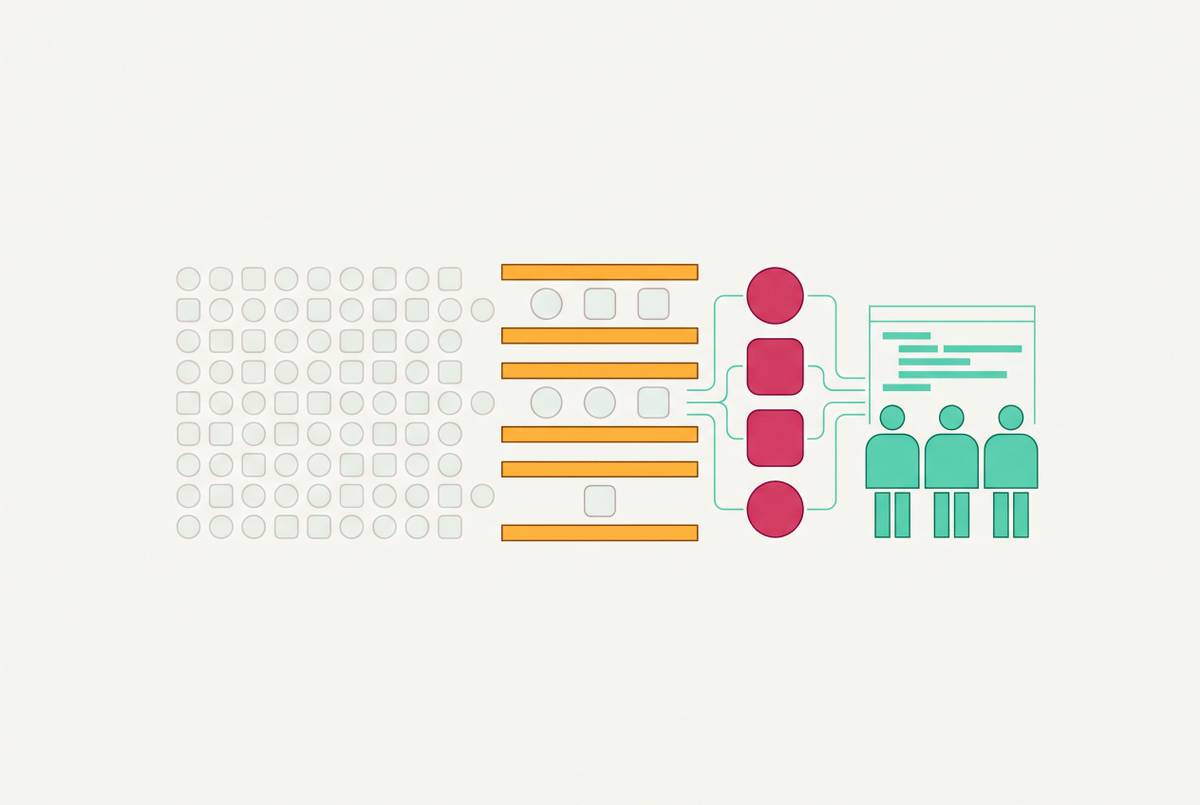
Each row needs enough state to support that decision. Its minimum fields are the query string, estimated search volume, intent stage, current organic position or “not indexed,” AI citation presence by platform, and an assignment of page or paid test. Intent stage distinguishes awareness, evaluation and decision. Citation presence records yes or no for each platform.
The table is a live dataset. A keyword list can name work without recording why it belongs in one channel or what would cause that choice to change. Here, the assignment is explicit and asymmetric. Every query defaults to an organic page unless a paid test passes the unit-economics gate. Search volume, a rush to get results or what a channel owner wants cannot on its own move a row into paid.
The economic case is compounding coverage, while paid tests have a narrower role in obtaining a signal quickly under controlled conditions. The default establishes where a query goes when there is not yet an adequate case for paying to test it. Paid must earn its exception.
That exception can improve the organic backlog as well. Conversion data from a capped experiment helps show which queries bring demand, without the team having to wait months for organic ranking to give it an answer. A negative result also informs prioritization, although it does not prove that organic coverage has no value. Both outcomes must write back to the same row. Otherwise, two separate lists can keep giving a query different assignments after the evidence has changed, and the team has to rely on memory to bring the shared state up to date.
Unit-economics gate before any paid spend
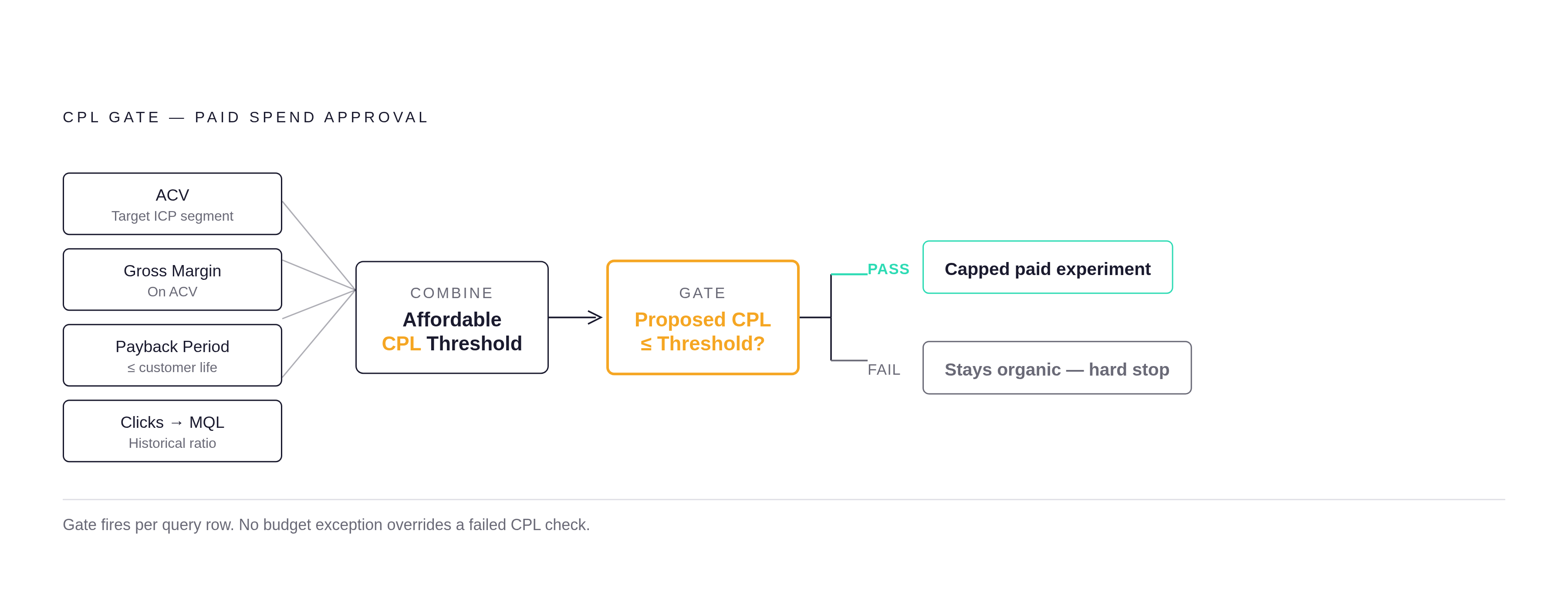
The gate needs four inputs before the team starts spending. These are average contract value, or ACV, for the ideal customer profile segment the query serves, gross margin on that ACV, the target payback period, and the estimated clicks-to-MQL ratio. MQL means marketing-qualified lead. The ratio must come from historical data or a prior paid experiment on a comparable query, rather than an estimate chosen to make the proposed test look viable.
The payback period sets the recovery constraint. It sets how many months the team has to recover customer acquisition cost, or CAC, up to the limit of average customer life. Contract value alone cannot tell the team how much it can afford to spend on acquisition, because revenue is not gross profit. Gross margin supplies that distinction. A large contract with weak margins does not give paid acquisition the same room as an equally large contract with stronger margins.
The arithmetic is a template. The team uses its contract value and margin to work out how much gross profit it will have within its chosen recovery window, then checks whether the proposed acquisition cost fits that allowance. Expected click cost and clicks per MQL show what the cost per lead would be. Establishing customer acquisition cost from those lead-level figures requires evidence linking qualified leads to customers, so the gate must keep that unknown link explicit in the payback calculation.
The lifetime-value-to-CAC ratio provides a secondary check. A weak ratio signals that the team should fix the economics before scaling paid, while a strong ratio on a proven query can suggest room to spend more. With either result, the team still needs to test the query. The purpose is to define an affordable CPL threshold.
This changes how the team reads competition. The strongest position is not necessarily the lowest cost per lead, but the ability to afford a higher CPL because the underlying economics are better. The gate quantifies that spending limit. If the proposed test cannot fit within it, the row stays with the organic page assignment rather than receiving a paid allocation simply because a monthly budget remains.
Cap, stop rule and weekly diff for a paid test
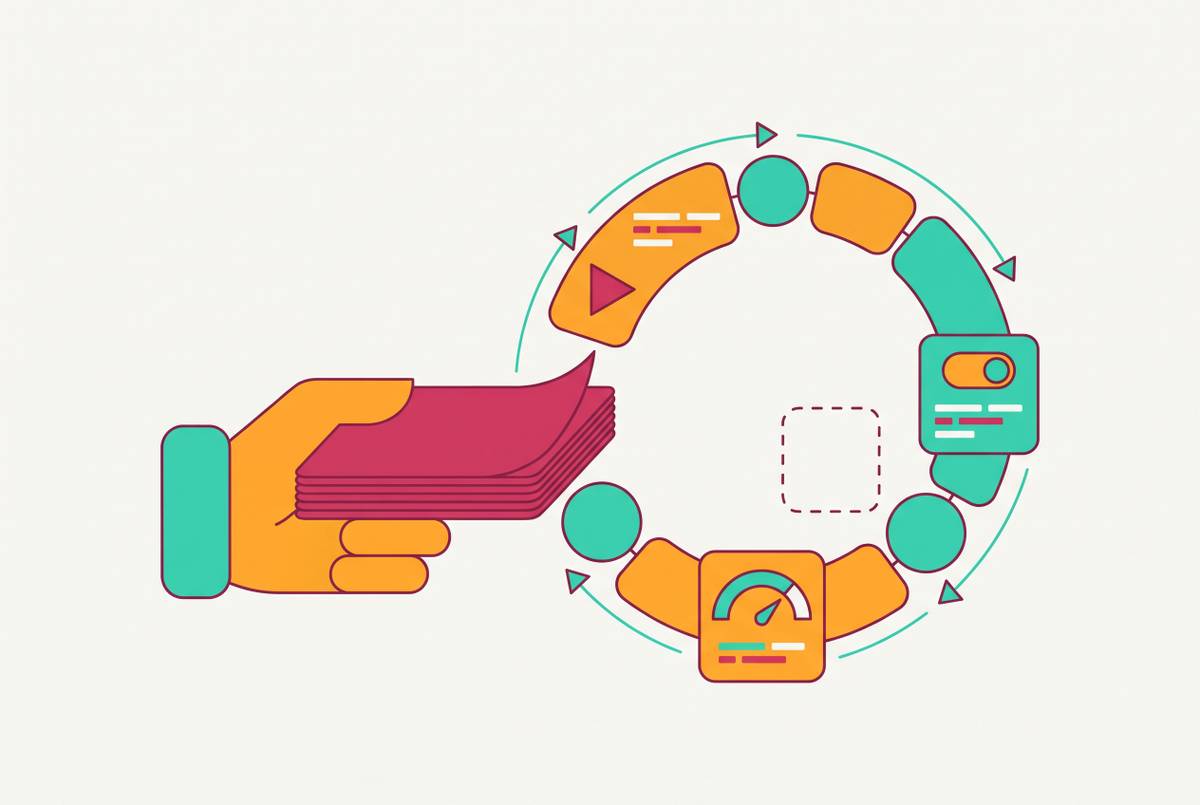
Passing the gate permits a bounded experiment. Before launch, the team commits to a spend cap, a stop rule and a success condition. A paid test without an exit is a bug with a billing account. The agent-loop analogy fits because, along with a goal and permission to act, the test needs a budget, measurement, human review and a way to make sure it stops.
The spend cap is a hard dollar limit set around the data needed to make the routing decision. It is not whatever the team can afford this month. The stop rule then names a falsifiable failure condition, such as pausing if three consecutive weekly diffs produce no MQL, or stopping if CPL exceeds the gate threshold for two consecutive weeks. Extensions require a new gate calculation. Otherwise, the condition is merely a preference that can be relaxed whenever results disappoint.
Success needs the same advance commitment as failure. The team defines the CPL and MQL volume at which the experiment confirms demand and the query moves to a scaled campaign. That prevents promising-looking results from becoming an excuse to renegotiate the bar after the test. It also distinguishes learning from scaling. A test can provide useful intelligence for page prioritization without earning a larger paid commitment.
The weekly diff makes these commitments a standing ritual. In a time-boxed review, the team walks through what changed and asks whether each routing assignment still holds. Query-level CPL and impression share are compared with the prior week, then read against the same row's organic position and AI citation presence.
A stable CPC does not settle that review. CPL can worsen while CPC remains steady, and a simultaneous decline in CTR makes a CPC-only view even less informative. The diff keeps those movements visible without treating one metric as a substitute for another. When a paid test fails the gate on two consecutive weekly diffs, the query returns unconditionally to the organic page assignment. The result, including a negative one, updates the organic prioritization queue.
Why the organic default now produces two separate visibility jobs: ranking and AI citation
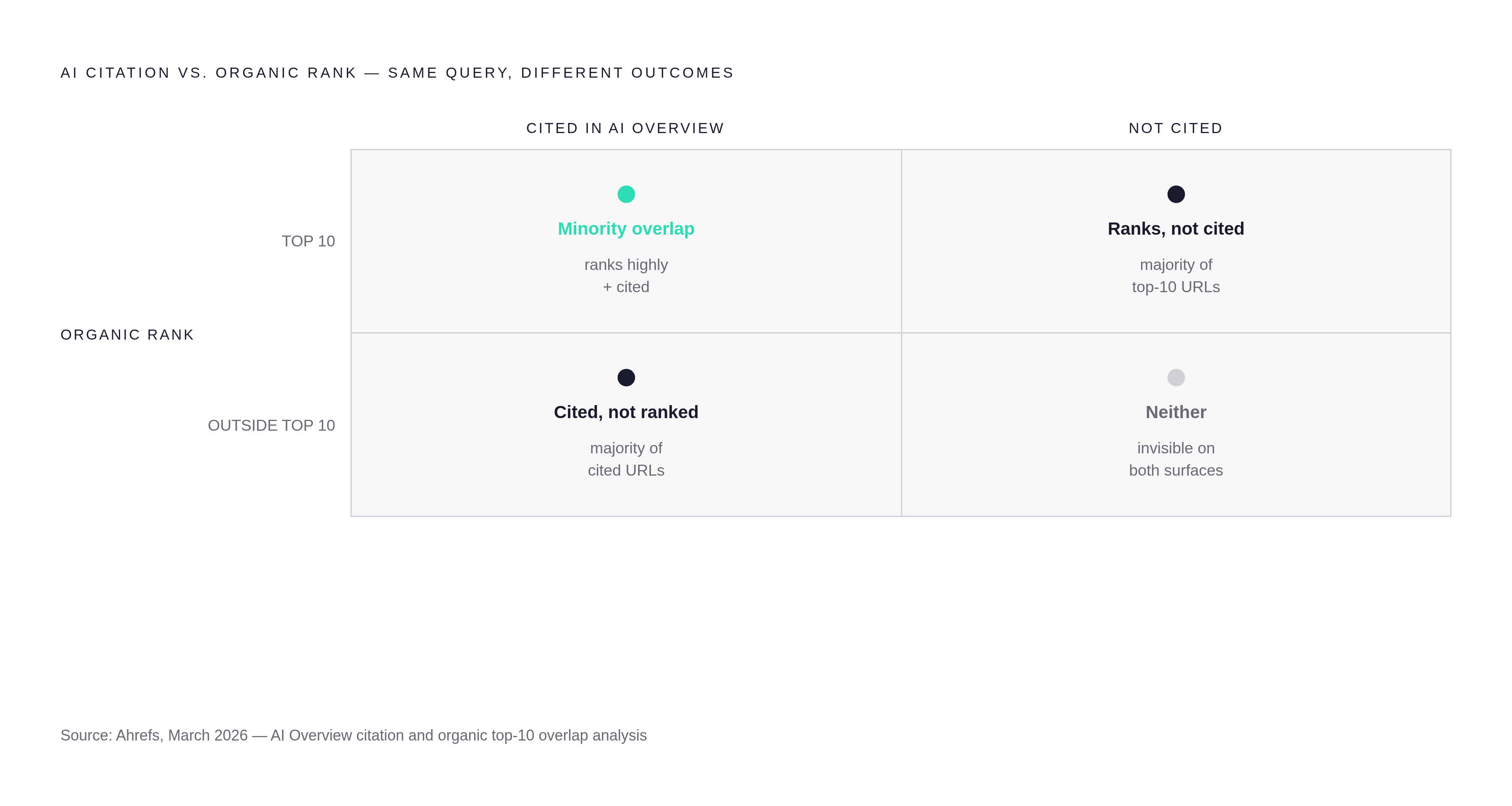
Returning a query to organic does not reduce its coverage question to a ranking target. A page can appear in traditional results without being cited in an AI-generated answer, so the page assignment now contains two distinct jobs. One concerns ranking, and the other concerns citation. Treating either as a proxy for the other creates a measurement error before the team even considers traffic or conversions.
Ahrefs' March 2026 analysis found that only a minority of URLs cited in AI Overviews also ranked in Google's organic top ten. That finding challenges the assumption that the same pages win both surfaces. A strong position is insufficient evidence of AI citation coverage, just as a citation does not establish that the page ranks well in traditional results.
Why might the outcomes diverge? In an AI answer environment, the selection concerns statements that can be extracted and used in an answer. Claims with sourced numbers do a different job from prose that covers a topic in full. A long page may cover a topic in depth while making the claims an answer could use hard to extract. At the same time, an answer can use a statement with a clear scope even when its source is not the strongest traditional search result.
For B2B buyers who research through answer engines, a citation shows that a source is being seen in a way that ranking alone misses. It is still not the same as a visit or a sale. The distinction is diagnostic rather than a demand to replace every page with short claims. Organic coverage now has to be understood across separate outcomes, and the shared table needs to preserve those differences so that a stable ranking does not conceal an absent citation.
Measuring the same queries for AI answer citations
AI citation tracking belongs on the same weekly cadence as the paid diff. The team runs the top commercial prompts derived from the query table in ChatGPT, Perplexity, Gemini and Google AI Overviews, then logs whether the brand appears as a named or cited source. Each platform gets its own presence field.
Google's GA4 documentation introduced a channel just for AI Assistant in May 2026. Google Search Central announced Search Generative AI performance reports in Search Console in June 2026, with reports just for Search and Discover. Microsoft's Bing Webmaster Tools made its AI Performance dashboard available as a public preview in early 2026. These provide native measurement sources, but a referral channel and a citation observation still answer different questions.
When an existing page is not being cited, the team can check for lists, FAQ schema and specific claims that an answer can extract. That is a narrower question than whether the page is generally good. Its claims need to be specific and grounded enough to be used as evidence in an answer.
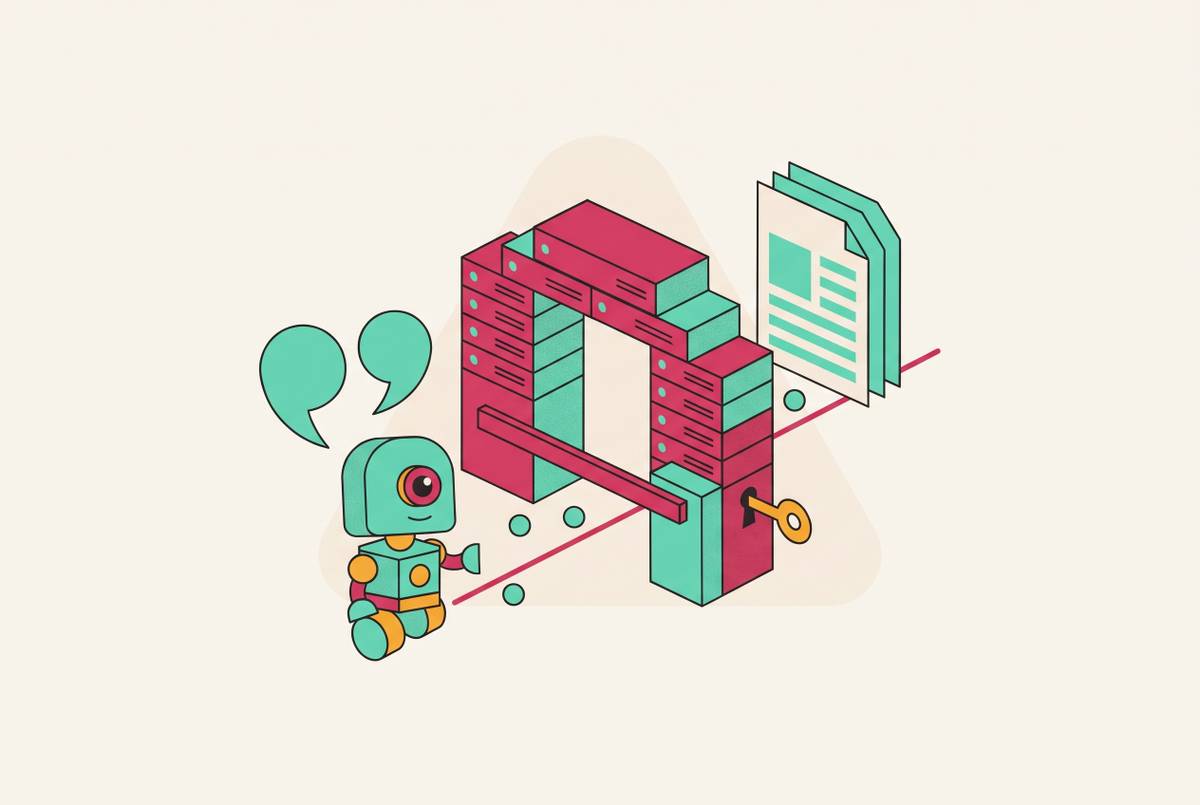
Entity consistency supports the same work outside the page itself. The brand's name, description and services should match across its website, LinkedIn, industry directories and authoritative reference sources. Inconsistent descriptions create ambiguity about what the brand is and does, while consistent ones reduce citation hallucination risk. This does not turn an absent citation into a guaranteed future citation.
Consider a row whose organic position is stable, whose paid test has exited, and whose AI citation presence remains absent. The next action is a groundability audit of the existing page. The audit asks whether the page offers clear, supported claims that an answer can use. Here, measurement changes the work attached to the row. The table remains a live decision instrument because new evidence has an explicit route back into the team's next action.