What a "go-to-market consultant for early B2B startups" page hands a founder, and what stays unowned when the plan is a deck: GTM as code you can run, measure and change
Strategy decks describe a go-to-market motion; technical founders can build one that runs.
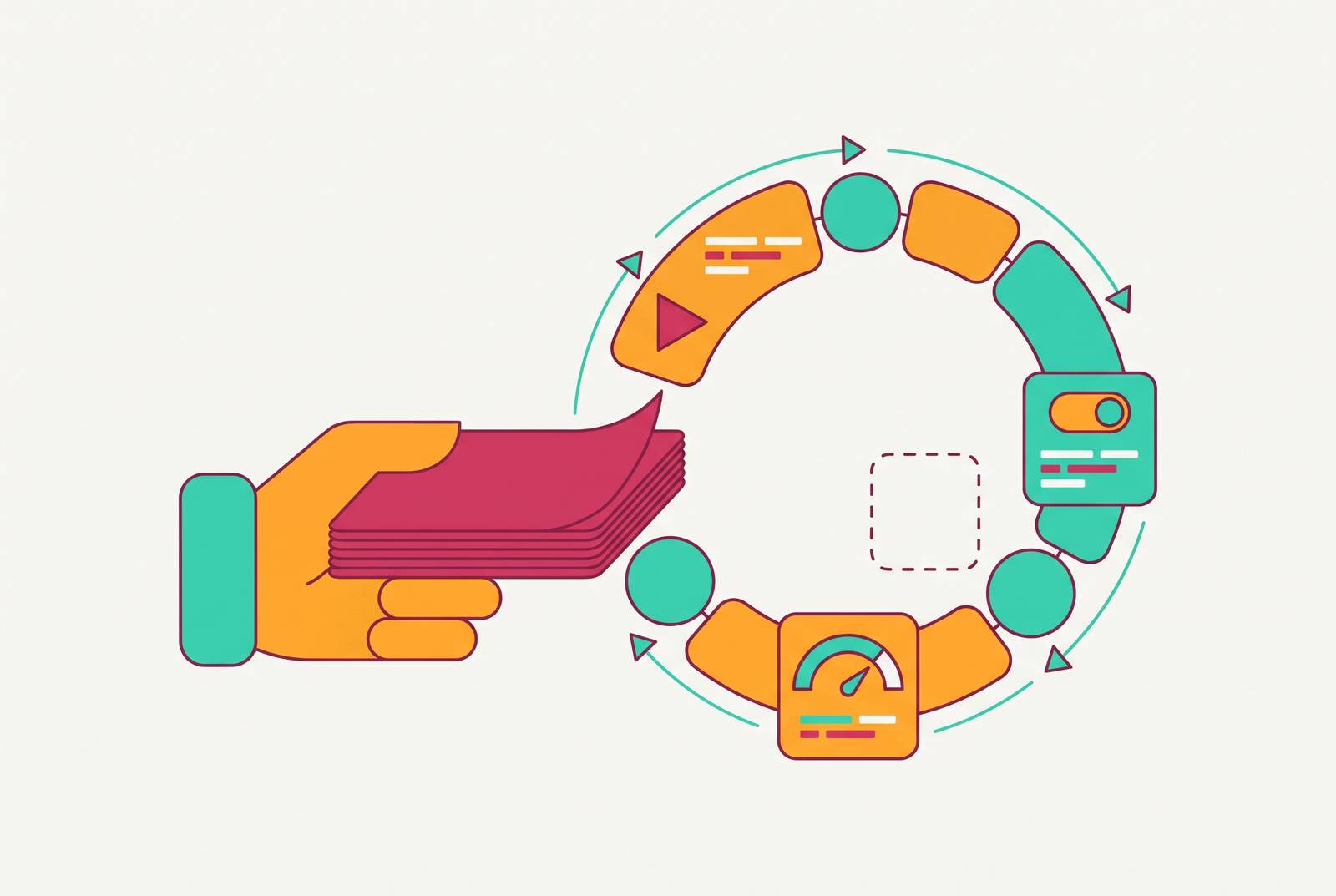
A go-to-market consultant can give an early B2B founder a useful strategy without giving them a way to execute it. The gap is an operating system. For technical founders, the alternative is GTM built like software, with runnable workflows, observable results, and changes driven by evidence. That gives the founder ownership of the work and what it teaches, beyond what a deck can describe.
What a GTM consultant delivers and where the engagement ends
A founder leaves a standard GTM engagement knowing who buys, why now, and how those buyers will hear about the product. Those answers can sharpen positioning and give scattered sales work a direction. The deck is a real deliverable. Its boundary is that describing a motion does not make that motion run.
That boundary also separates two different kinds of engagement. A GTM consultant is project-based and strategy-focused, defining the system and building playbooks. A fractional CMO or VP Sales owns a function and is accountable to pipeline. These are not interchangeable promises, and a strategy engagement does not quietly become an operating role when the document is handed over.
The trouble starts when that distinction remains unstated. Framework-first diagnosis, no measurable outcomes, strategy without an execution plan, and the wrong motion for the product can all weaken an engagement. A missing handoff SLA leaves a further gap. Even a sound plan can arrive without an agreement about who will turn it into working infrastructure.
Why founder-led sales persists longer than the deck assumes
The 2026 State of B2B GTM report identifies founder-led sales as the runaway choice at the earliest revenue stages and a leading motion well into the growth phase. That establishes the operating context for the plan. The founder is not merely approving a sales strategy. The founder is still running the deals.
This motion works, but selling is only part of the work that sustains it. Research, enrichment, content, and sequencing have historically required headcount that a seed-stage founder does not have. A playbook can say which roles should do those tasks without providing anyone to do them. Who executes the sequence while the founder handles the next conversation? A plan for a sales team that has yet to be hired leaves that question unanswered today.
Technical founders stay in founder-led sales longer than most. Their ability to build execution systems is therefore an advantage, but it can also hide the operational gap. Being able to write software does not turn a persona slide into a prospecting workflow. The useful handoff is something buildable, with a clear path from the proposed motion to the work it requires. Otherwise, the founder receives a description of a team that does not yet exist.
What stays unbuilt when the plan is a deck
Pipeline infrastructure is the first missing layer. A deck may name an outbound motion without wiring up the prospecting and enrichment that sustain it. Automation can remove those manual tasks without adding headcount, while hiring SDRs to compensate for its absence is a more expensive path. The order of investment changes as a result. A founder who follows the plan to the letter may hire before putting the work into an instrumented system.
Measurement is a separate gap. A document can name reply rates and meetings booked, but it cannot track them. Nor does counting completed workflows show whether those workflows help the business. Pipeline influenced, time saved per rep, and conversion changes by stage connect the work to outcomes. Without that connection, automation can become overhead with an impressive activity count.
A standard deck can explain how buyers will find a brand through established channels without explaining how an AI engine will cite it. Those are different discovery requirements. Being present in a channel does not by itself make the brand a usable source for an answer.
Compounding content is the fourth gap. The same report finds that much of the early-stage B2B pipeline comes from founder content. Turning an instruction to publish into a repeatable content pipeline requires producing material both people can read and AI engines can extract.
Why AI lowering execution costs makes the missing infrastructure more urgent, not less
LLMs and orchestration tools change what one technical operator can execute. Work that required SDRs, researchers, and content contractors can now be assembled without that whole team. This makes GTM-as-code viable at seed stage. But cheaper execution only helps when there is a defined system to execute. The constraint shifts from finding enough people to giving the tools useful work.
That shift raises the premium on positioning, motion choice, trust, and taste because more execution cannot correct a poor choice of direction. Technical founders selling to technical buyers can benefit from both their judgment and their ability to build. Neither advantage replaces the other. A system needs a worthwhile motion, and that motion needs a way to learn from its results.
A careful founder might still ask whether AI tools are too new to trust with a custom GTM system. The central risk, however, is operating without feedback. Founder-led sales based on intuition and a deck is already a system, just one without enough instrumentation. Most B2B marketers now run some AI workflow, yet only a small fraction extract measurable bottom-line impact. Access to tools is not the dividing line. A framework for deciding where to point them, and whether that choice worked, is.
What GTM-as-code actually means for a technical founder
GTM-as-code means treating go-to-market as instrumented, runnable, version-controlled work that can change on evidence. The software analogy sets a practical standard. A plan describes what should happen, while the system executes the work and reports back. For a technical founder, the constructive step is to express each part of the motion in a form that can run.
An ideal customer profile becomes a queryable filter. It generates a list. In this form, the targeting decision can feed the outreach pipeline directly. The strategy still supplies the judgment about who belongs.
The outreach pipeline then needs observable state. It tracks who was contacted, what was sent, who replied, and what converted at every stage. This tracking is especially useful while the founder remains responsible for every deal, because it preserves the sequence of events for later review. Its results become available as evidence for the next change.
Content needs the same repeatability, with a fixed cadence from keyword signal to research brief, AI draft, human review, and publication. Automation handles the steps around quality assurance, while QA remains human-gated. Quality limits what the pipeline can achieve. Lower production costs are therefore not a reason to remove the judgment about a piece’s fitness for publication.
The measurement layer runs on a cadence too. It records reply rates, meetings booked, SQL conversion by stage, and AI answer-engine citation frequency across ChatGPT, Perplexity, Gemini, and Google AI Overviews. These measures show what the work achieves beyond how much each workflow does. That is where version control earns its place. A GTM system that cannot change on evidence accumulates technical debt in the form of wrong motions run longer than they should.
The GEO layer a standard deck does not know to include
Generative engine optimization, or GEO, structures content, data, and brand presence so AI engines can surface and cite a brand when buyers ask questions. The goal differs from ranking on a list. It is to become a source the model trusts enough to quote. For a founder working from an older playbook, that changes what the content pipeline must produce.
The report places AI search in its “tried-and-true” quadrant for the first time, after “figuring it out” in 2025. This makes AI discovery part of the work to do now. Yet the engines do not draw from identical source pools. Only a small fraction of domains cited by ChatGPT are also cited by Perplexity for the same queries. To appear across them, a brand therefore needs work tailored to each engine.
Is this just SEO with a new name? There is a real connection, because Google AI Overviews and Perplexity pull heavily from conventional search results. ChatGPT, however, draws from a much smaller overlap with that pool. Optimizing only for Google leaves conversational discovery insufficiently covered.
The content foundation is a ground site on the founder’s main domain, built from answer-first, schema-rich, human-reviewed cluster content. This is an owned asset that can compound over time. It must serve readers and support extraction.
A blank-page experiment illustrates the role of entity structure in citation. Content-free pages violate Google’s guidelines, so the experiment is not a sustainable publishing model. Structured data belongs with quality content. In the system described here, human review remains the gate that prevents an extraction-focused pipeline from abandoning the people it is meant to help.
How to measure whether the system is working, not just whether it is running
A running workflow proves that work happened, while whether the motion worked remains a separate question. The measurement layer has to make that distinction visible. Otherwise, GTM-as-code becomes a faster deck, with automation in place of a feedback loop. The constructive test is whether the founder can use its results to revise the motion.
To measure the pipeline, start with weekly reply rates, meetings booked, and SQL conversion by stage. These leading indicators show how the work is going before revenue is the only signal left. Raw send volume and open rates do not show how well the work is going in the same way. Neither does the number of workflows built. Pipeline influenced, time saved per rep, and stage-level conversion changes show whether the engineering effort earns its place.
AI visibility requires a distinct measurement track because standard analytics undercount AI traffic. The practical approach is to run a fixed set of target queries through the main answer engines on a cadence and record whose name appears. Citation frequency is only one dimension. Citation position, including whether the brand is the first, second, or third source, and share of voice against named competitors show more of its place in the answers.
Those results must remain engine-specific. Perplexity draws a comparatively higher share of citations from conventional top-ranking search results than other AI engines, while ChatGPT has much less overlap with that pool. Google AI Mode’s overlap is more variable, with relatively low figures in large-scale studies and higher figures in smaller benchmarks. A single visibility score can obscure these differences. The measurement layer needs to preserve them so that one engine’s results do not stand in for another’s.
Is that too much to instrument at seed stage? The minimum is a weekly query run across four engines and a pipeline tracker at three stages, a morning’s work to set up. That gives the founder a feedback loop to start with, without much work to track the results. From there, ownership becomes concrete. A measurement system the founder runs produces evidence the founder owns and can act on, while a consultant’s report leaves that evidence in someone else’s workspace.