The harness is the marketing surface now — not the model
The sources and tools around an AI model matter far more than the model's capabilities.

Brand visibility in AI answers depends less on which model powers a product than on the system wrapped around it. That system, the harness, decides what information reaches the model and how it is used. For marketers, the useful question is not which model wins a benchmark, but which sources, tools, memories, and social signals shape a recommendation.
Why the model underneath an AI product is the wrong thing to optimize for
Meta Superintelligence Labs launched Muse Spark on April 8, 2026, as the first model from a rebuilt Meta AI stack. Artificial Analysis gave it a capability score of 52 on the Artificial Analysis Intelligence Index, placing it in the top five benchmarked models. It tells a marketer almost nothing about whether a brand will appear when someone asks for a recommendation.
A new model changes what an AI product can do, so its arrival seems like a new opportunity to win attention. But what would “optimizing for the model” actually mean? The model does not choose every source, tool, or piece of user context it receives on its own. The surrounding system makes those choices, so a launch can change where a brand can appear without the benchmark coverage explaining how.
What the harness is and why it controls what gets cited
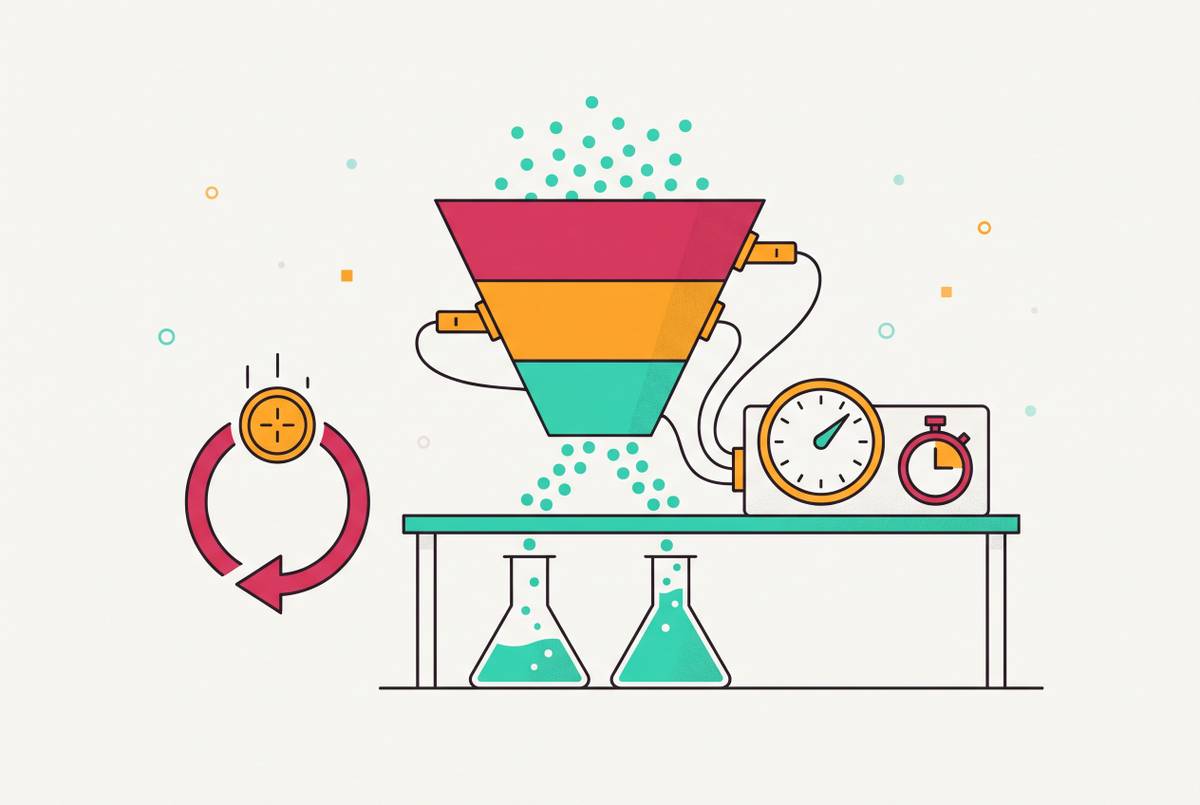
The harness is the set of instructions, memory, retrieval chains, tool integrations, and social-graph signals wrapped around a model. It governs both the information available to the model and the conditions under which it answers. The weights are only part of the product. A brand can therefore be useful to an answer yet remain absent because the active harness never brings its evidence into view.
Retrieval chains determine which external sources are pulled, how they are ranked, and how their content is divided into chunks. System instructions and personas shape how a query is interpreted and what counts as authoritative. Tools add another filter before the model reasons. Live web search, shopping APIs, and database lookups provide different pools of information, while persistent memory can change which brands are relevant to a particular user.
Muse Spark’s Shopping mode makes the distinction concrete. Meta describes it as drawing on styling inspiration and brand storytelling across its apps, including ideas from creators and communities people already follow. Meta also says Shopping mode can search Facebook Marketplace listings near a user together with options from across the internet. These are not interchangeable sources of evidence. An editorial page can enter through web retrieval, while a product can surface through a listing or social context, so improving one route does not necessarily improve the other.
How Muse Spark's harness differs from every other platform's — and why that creates a new citation surface
Muse Spark introduces a marketing surface that cannot be understood simply as another version of ChatGPT or Claude. Its link to Meta’s social infrastructure lets it draw on creator content, community interests, and shopping data when it makes recommendations. That changes what qualifies as a useful input. The usual generative engine optimization or answer engine optimization approach, which focuses on earning editorial citations, covers only part of that environment.
Does the same playbook work when a brand appears through Marketplace listings or advertiser feeds? Only partly, because a commercial presence serves a different role from a cited source. Editorial evidence still matters for non-shopping queries. Shopping mode, however, needs its own plan for how a brand will appear, and counting every product appearance as an editorial citation would hide how the product earned that place.
Muse Spark Open, released October 15, 2026, is a mixture-of-experts model with 816 billion total parameters and 42 billion active parameters. It allows enterprises to build deployments customized with proprietary data. The deployer then configures the surrounding system. For a brand, visibility in that deployment depends on whether that third party’s retrieval chain can find and trust its information.
Muse Glimmer creates another class of deployment. Released August 10, 2026, it is a 30-billion-parameter open-weight model under Apache 2.0 that runs locally on consumer hardware with a 24 GB GPU. Such local, offline, or enterprise-customized environments need not include Meta’s social graph at all. Their retrieval chain is whatever the deployer configures.
Why citation patterns vary so dramatically across platforms running similar models
Two platforms can produce citation volumes that differ by orders of magnitude for the same brand because their harnesses favor different inputs. A brand well-cited on Perplexity might be nearly invisible on Gemini. Perplexity’s retrieval chain prioritizes freshness and source diversity, while Gemini’s harness weights different authority signals. The contrast need not mean that either model understands the brand better.
The same separation appears within one product. Muse Spark has three reasoning modes, which are Instant, Thinking, and Contemplating, as well as a separate Shopping mode. Meta describes Contemplating as orchestrating multiple agents that reason in parallel. Shopping brings a different set of sources into play. A brand’s citation probability can consequently differ across modes even when the query stays the same, making a product-level average an incomplete description of its visibility.
Would model convergence eventually remove these differences? There is little reason to expect that outcome, because comparable capability still leaves platforms free to choose different tools, sources, instructions, and personalization. The harness remains a point of competitive differentiation. As models become more alike in what they can do, those surrounding choices are likely to matter more. Tracking a single engine would then miss the very differences that shape where a brand appears.
What actually earns citations in AI-generated answers — the signals the harness reads
Freshness is one signal that retrieval systems read. Recently published or updated material can have a citation advantage over older content because the retrieval chain favors it. Ownership is a separate question. A large share of AI citations comes from outside a brand’s domain, so authority on the topic can be more useful than control of the page.
Facebook Marketplace listings can appear with broader web results in Shopping mode as a distinct route into the answer. Meta identifies Instagram and Facebook as sources for Shopping mode, while it names Threads for cited recommendations more broadly. A brand’s presence on social media alone does not show that it appears in a given shopping harness.
Original evidence gives a source a different kind of value. AI-generated text without original evidence cannot reliably earn citations merely by restating material an AI system can already reproduce. Original survey data, proprietary case studies, and opinions from named experts in documented conversations give a source more to offer than a new summary of what is already known. Human review helps polish the prose and make that evidence defensible.
Brand mentions add another authority signal. Mentions across the web correlate more strongly with AI visibility than backlinks do, which suggests that familiar SEO measures do not fully describe what the harness reads. Correlation is not a promise of inclusion. Still, it helps explain why a focus on backlinks can miss other places where a brand appears in the sources used for answers. The useful distinction is between accumulating conventional search signals and supplying the kinds of evidence an AI product actually draws on.
Why measuring model rankings tells you nothing about your actual citation share
A frontier benchmark score and zero brand citations can coexist. The benchmark measures the model’s performance, while citation share measures whether a particular brand appears in answers to relevant prompts. They answer different questions with different instruments. A brand can therefore perform poorly on the topics it expects to own even when the underlying model performs well. Its market position does not guarantee that the harness will retrieve its evidence or recommend it.
A one-time citation audit has a separate limitation. AI citations can swing 40–60% within a single month, unlike organic rankings that can hold for months. That makes an isolated reading a fragile baseline. A one-time reading may show that moment accurately but give a false sense of how often the brand keeps appearing. A result from one platform also cannot predict a result from another, because each harness can change which sources it uses and how it makes recommendations.
Brand mention rate records presence across specific prompt categories, while citation share of voice compares a brand with named competitors by platform and mode. AI referral traffic and conversion behavior help test whether users who see citations go on to act. Correlation with branded search volume can also offer clues to what users may want to do next.
There is also a difference between being mentioned and being recommended favorably. AI answer engines can express negative sentiment in their answers, so a rise in mentions is not automatically a gain. Reputation belongs in the same measurement picture. A dashboard that counts where a brand appears without checking what is said about it can miss that distinction. The measurement gap is therefore not just about missing citations, but about misunderstanding what the appearances a brand does earn mean.
What a harness-aware content strategy actually looks like in practice
The practical response is to organize content work around the inputs each harness consumes. For retrieval-led environments such as Perplexity, Claude, ChatGPT, and Gemini, that means publishing on a cadence that keeps useful material fresh. It also means building presence on the third-party platforms those retrieval chains treat as authoritative. The owned site is not the whole field.
Original evidence should come first in that publishing work. Proprietary data, testimony from named experts, and documented case studies give an answer something specific to draw on and cite. Structure serves a different purpose. Comparison tables, FAQ schema, and llm.txt are ways to make published information more machine-legible and reduce retrieval friction.
For social-graph harnesses, the lesson is to manage social content and shopping presence as distinct inputs. Creator content on Instagram and Facebook feeds Muse Spark’s Shopping mode, while Threads belongs to the broader cited-recommendation surface Meta describes. Marketplace listings and shopping feeds need to be managed on their own. A strong editorial library does not automatically establish either presence. Likewise, a place in a shopping feed does not show that a brand has editorial authority in non-shopping answers.
For open-weight deployments, the owned site remains a durable asset because third-party deployers configure their own retrieval chains. That makes structured, fresh content grounded in original evidence useful beyond any one consumer product. But availability is not guaranteed inclusion. The strategy is to make the brand’s published information findable and credible to those chains, rather than assume that visibility in Meta’s own harness transfers to enterprise or local deployments.
Measurement then connects those activities to their results. Track ChatGPT, Claude, Gemini, Perplexity, and Muse Spark separately, with mode-level distinctions where relevant, and adjust against citation share, mention context, referrals, and downstream behavior. The deployment surface can move quickly. Muse Spark’s five-day reversal from closed weights to a commitment to open weights in August 2026, followed by publication of the weights in October 2026, illustrates a shift faster than a quarterly content calendar. Repeated measurement is how a team learns that the surface has moved before it spends another quarter optimizing for the old one.