What a competitor's Sheets backend teaches about building growth tooling for agents: partial views, stale context and write-ahead logs
Database logging offers a test for whether growth agents can recover and be held accountable.
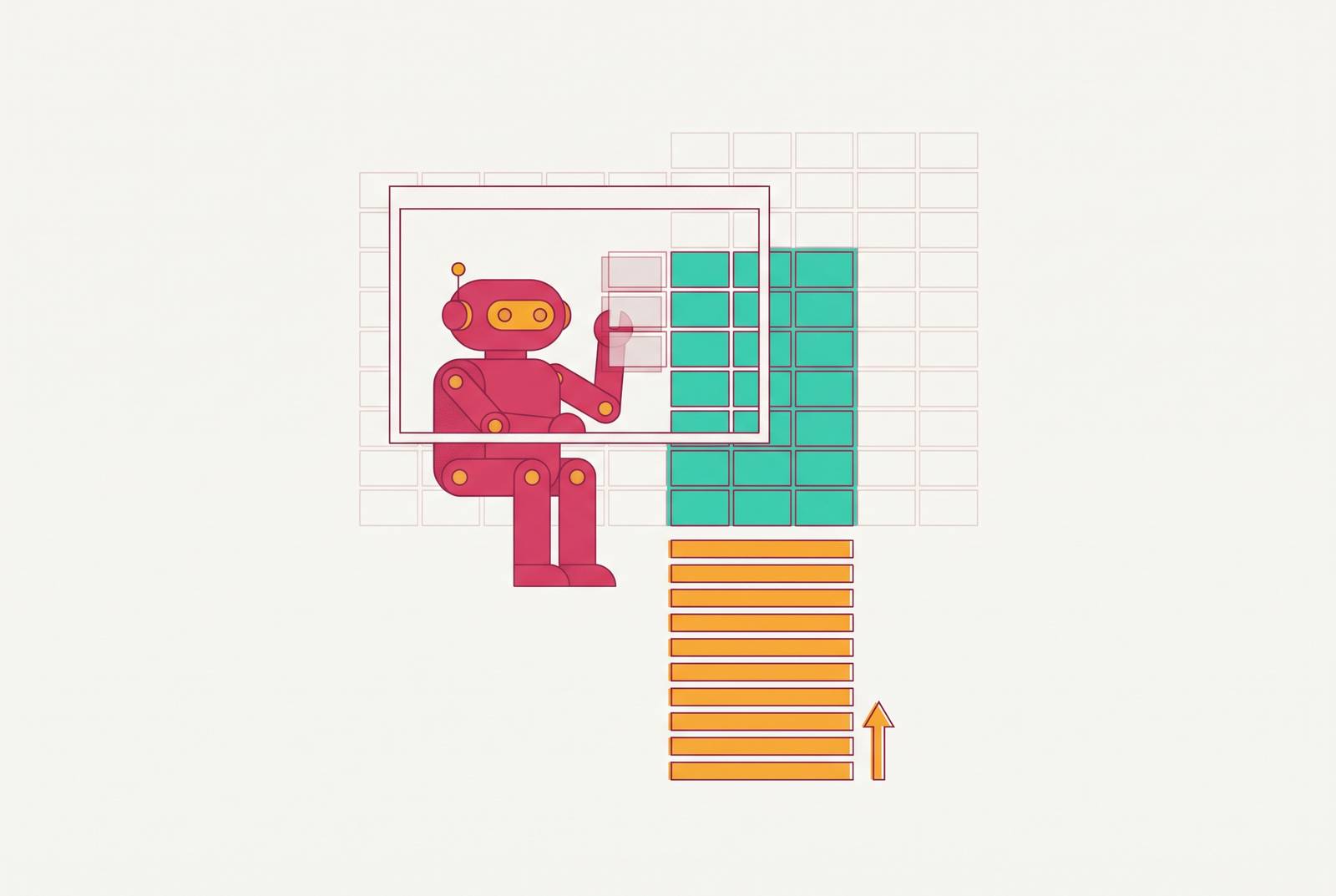
A spreadsheet backend raises a bigger question than where growth tooling stores its rows. Can an agent’s work survive failure, remain open to review, and be traced to an outcome? Serious infrastructure preserves the chain from action to result, rather than merely showing that an agent did something.
Why the write-ahead log is the right lens for evaluating agent-ready growth infrastructure
A write-ahead log records a change before the system applies it elsewhere. The system acknowledges the write only after that record is durable, so a failure leaves something to recover from. Expensive work can follow. If the machine dies halfway through, recovery loads the latest snapshot and replays the later records in order, so there is no need to guess what happened.
Two properties make that contract work. First, order belongs in the data itself, through sequence numbers, rather than being inferred from whatever finished first. Second, acknowledgement must follow durability, never precede it. Otherwise, the system can report success and then lose the very write it promised to keep, without leaving downstream systems enough evidence to detect the loss.
Postgres, InnoDB, SQLite in WAL mode, and RocksDB use this pattern because interrupted changes are a basic infrastructure problem. Growth agents face a version of it too. Drafting content, publishing it, and updating a tracking sheet are separate steps, each with a possible failure between them. A completed action is not yet a recoverable workflow.
What using a spreadsheet as a backend reveals about a system’s durability assumptions
A spreadsheet backend makes the distinction between current state and recoverable history unusually visible. Rows show what the system currently knows, but that is not necessarily a history of how it reached that state. The distinction is easy to miss. For a buyer, the useful question is what surrounds the sheet to preserve ordering, recover interrupted work, and stop stale processes from writing.
A sheet alone does not provide the WAL contract. Without enforced sequence numbers, concurrent writes can collide without a dependable record of their order. After failure, the sheet may hold an update that was only partly made, with no sequence that can be replayed. Nor does the sheet itself establish fencing, the mechanism that prevents a process which has lost authority from returning and overwriting newer state.
Consider an agent that publishes content, records the action in a sheet, and crashes before confirming the downstream effect. Should it retry, skip, or seek review? The row alone may not show which step to take. This is a concrete reason to ask which layer makes the action durable and the next step unambiguous.
How the WAL’s “durability before acknowledgement” property maps onto a content pipeline’s stage gates
In a content pipeline, a stage gate works much like the WAL’s acknowledgement boundary. An outline must be locked and reviewable before drafting begins, and a draft must be approved before publication. Publication must then be confirmed before post-publication measurement starts. Each handoff needs a durable output as well as a signal that the agent before it has stopped working.
Order is equally important to editorial state. A retraction applied before the original publication is confirmed leaves a different situation from a retraction applied afterwards. Sequence cannot be left to timing alone. Likewise, if publication fails, recovery should be able to re-apply the confirmed draft without regenerating the content or repeating human review that already happened.
The outline is a particularly valuable gate because a structural flaw caught there costs minutes, while catching it after drafting can cost hours. But recording approval is only part of the principle. SHIELDFS research from Azure Research describes cryptographic commitments maintained in trusted memory and verified during reads in a confidential-computing filesystem. The relevant parallel is verification both when saved state is written and when it is used. That parallel clarifies why a later stage must respect the commitment made at an earlier one.
Partial views and stale context: the agent’s version of a dirty read
Even perfectly preserved work can rest on outdated evidence. An agent reading a URL gets a snapshot from crawl time, while approval and publication happen later. Other sources may have been sampled at different times. The resulting context can be neither the current web nor a consistent historical view, but a collection of partial views.
Calling this a dirty read is an analogy. The data is still there, but the context is stale. Logging when context was sampled gives recovery a basis for flagging it as stale relative to the committed state. Without that record, rerunning the agent on today’s snapshot can produce a different recommendation with no clear account of why it changed.
For growth teams, the consequence can be contradictory entity information. A brand’s name, description, founding year, or services may drift across its site, LinkedIn, industry directories, and Wikipedia. An agent that reads only one surface can introduce another variant. Monitoring before and after publication is needed to record entity signals and make the drift detectable.
Contradiction also changes how useful a page is to an answer engine. AI systems can be designed to abstain when evidence is weak, although current models frequently fail to do so. A page with few extractable, contradiction-free statements may therefore receive no citation. The brand may get no error signal, which makes its own monitoring loop essential to understanding the silence.
Why the gap between “agent took an action” and “that action is attributable” is where serious infrastructure separates from demos
The difficult part of a WAL is coordinating the promises around it. In the design described here, only one process may append, and a displaced process must be fenced before it forks the sequence. Cleanup must also preserve any segment holding the only copy of a write. A log file alone is not enough.
Mixpeek’s WAL guide describes a failure in which a shard crashed after sealing a segment but before shipping it. On boot, it quietly dropped writes that had already been acknowledged. The fix made boot recovery replay sealed-but-unshipped segments. Handoffs need safeguards because work can exist in one place without yet being safely available to the next.
Growth pipelines have much the same boundaries between what an agent does, human review, confirmation of publication, and measurement of citations. Attribution requires a chain connecting the published piece to the action that produced it, the person who reviewed it, and the gates it passed. Measurement then shows whether the citation signal changed afterwards. That last connection leaves open whether publication alone caused the observed change.
BtrLog research from TU München and TigerBeetle adds a related concern about reuse. It describes logging backends built for one purpose and tied so closely to the recovery protocols of one engine that other systems cannot easily reuse them. For growth buyers, the structural question is whether an external system can reach the pipeline’s logging and measurement layer, rather than depend entirely on one vendor’s interface. Can the buyer attribute what agents did and replay the work when a step fails?
What agent-ready growth infrastructure actually needs: a monitoring loop that closes the WAL
Answering that question requires the measurement record to connect publication with the downstream citation signal. The pipeline needs a recoverable account of what was published and what the answer engines showed afterwards.
Systematic category queries across ChatGPT, Claude, Gemini, Perplexity, and Google AI Overviews provide the basis for recording mention rate, citation rate, sentiment, and competitor positioning separately. The same brand can have very different citation volumes across platforms.
The editorial record must stay linked to what those engines showed. Each stage needs stored output that recovery can reuse, while publication confirmation establishes when downstream measurement can begin. Human review provides a decision boundary against work based on stale context, though it is not a substitute for technical fencing of writers. The ability to reject or reverse a proposed action before it ships must be part of the workflow.
Schema markup, llms.txt, and semantic metadata belong within a substrate whose claims agree across surfaces. They do not literally serve as sequence numbers. Their structural role is to prevent a replay from silently operating on conflicting descriptions of the same entity, while the log preserves which context informed the action.
The strongest objection: WAL sophistication does not guarantee citations, and pipeline quality does not substitute for content quality
A buyer can fairly ask whether this turns a problem with content into a search for infrastructure to buy. A durable pipeline can faithfully publish inaccurate, unsupported, or unhelpful material at scale, turning volume into amplified risk. Durability and attribution solve different problems from content quality and citation performance.
Structured data can help describe a page, while the reliability of its claims and whether an answer engine will cite the brand remain separate concerns. There is no universal formula for that outcome. Visibility is an outcome to investigate.
It is also fair to say that GEO and AEO in part make digital PR and original content important again. For infrastructure, whether the strategy’s execution can be measured and changed on evidence matters more than whether the strategy is new. If citation rates do not move after publication, a durable record helps establish what actually shipped and whether the pipeline completed its work. That makes content a constraint to examine rather than allowing every disappointing result to be blamed on an invisible execution failure. The WAL makes the feedback loop precise enough to identify what is not working and revise it.
The buyer’s checklist: WAL-pattern questions to ask any growth tooling vendor
Buyers should ask about recoverable evidence. Each question should permit a direct answer from a vendor that has built the underlying mechanism. A polished demonstration may show the successful path.
Where is each action by an agent logged, and which durable store must accept it before the system says it has succeeded? The answer should distinguish a WAL or append-only log from a spreadsheet that records only current state.
Does the system enforce sequence numbers across pipeline stages so that a correction follows the original?
If publication fails, can the system re-apply the already-reviewed draft without regenerating it or repeating completed human review?
How is stale agent context prevented from writing after newer context has taken over? For a shared sheet or document, the answer must identify how that boundary is enforced.
For any published piece, can the system show which action by an agent produced it, who reviewed it, and what the citation signal was afterwards? This is the practical test of attribution across handoffs.
Does measurement query more than one answer engine, log the results for each one, and link them to the actions in the pipeline that they follow? An aggregate visibility score does not answer that question by itself.
Can an external agent reach the logging and measurement layer through an API, or only through the vendor’s own interface? That answer shows whether the record can be used in workflows beyond the demo.
A vendor unable to explain durability and attribution has not established that its system is ready for production.