How developer relations teams can treat community feedback as a product signal — and why that's a growth engineering problem, not a content one
Community feedback needs structured routing, not manual triage, to drive product decisions.

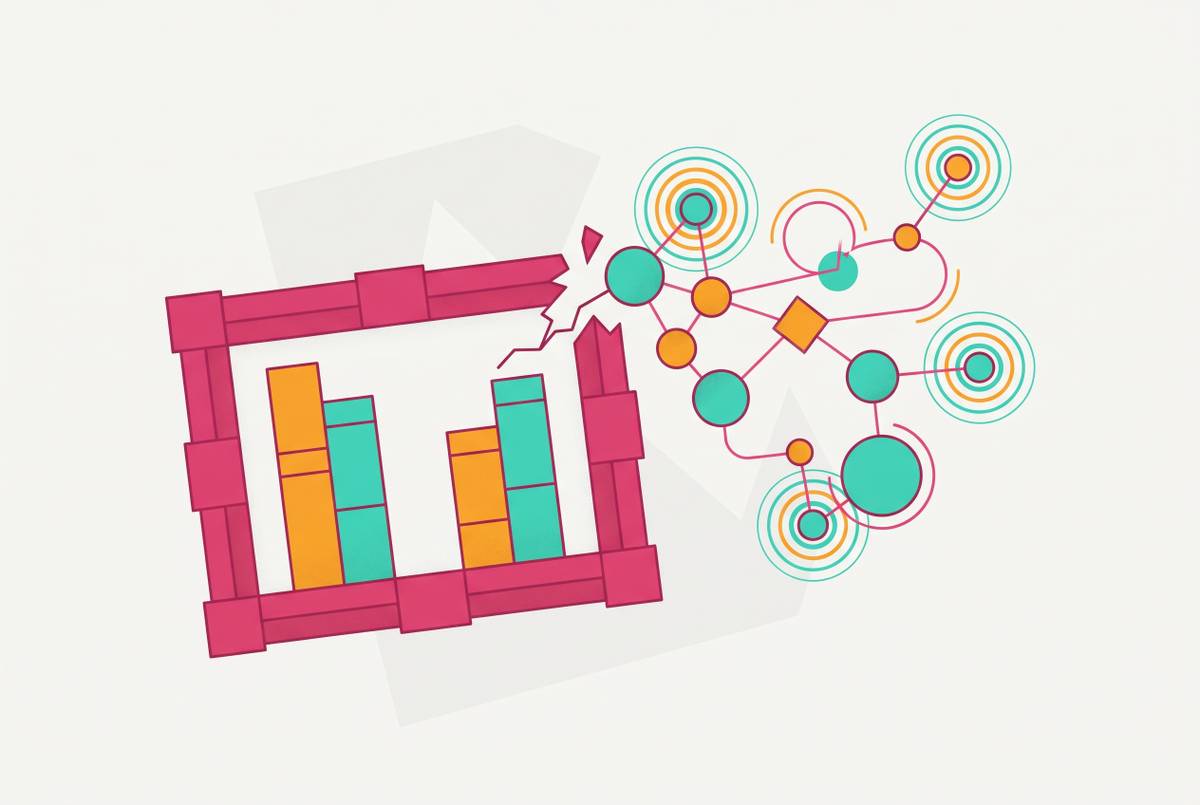
Engineers instrument product telemetry so it arrives automatically, continuously, and in a usable form. Developer relations teams too often handle community feedback manually, episodically, and without structure. That is a design failure. Community signal needs a pipeline from collection to product action and back to the developer. Building that pipeline is a growth engineering problem.
What developers say before they file a ticket is the signal product teams never see
Support sees the problems that developers take the time to report. Product telemetry sees what they do. DevRel sees what they ask before they give up, the workarounds they share, and the confusion that keeps returning in community conversations. These are different views of the same product. A question asked before a support ticket exists can reveal friction that neither a reported problem nor a record of product use explains.
Take the question asked in Discord at 11pm. It might become a ticket, but it might also end with the developer quietly working around the problem. The absence of a ticket does not mean the experience was smooth. When five developers express the same confusion in the same week, that repetition is evidence of a shared obstacle.
The distinction is especially useful for onboarding decisions. Telemetry can show that developers did not complete a step, while community questions can help explain what they could not understand or accomplish. Support provides another view, but only for people who report the difficulty. What about those who ask their peers instead? Their questions give product teams a chance to understand a gap before it becomes a formal complaint, or disappears behind a workaround.
Still, proximity alone does not produce useful evidence. “Developers want dark mode” gives a product team little basis for judging the underlying need. The stronger version is specific about the pain, its recurrence, and its context. “Fifteen community conversations last month surfaced eye strain during long coding sessions as the specific pain, and two competitors shipped this recently” gives the team something to evaluate. As an illustration, the contrast shows why a feature request and a supported product signal are not interchangeable.
The stronger version makes a roadmap decision possible on better terms. Product can weigh the problem against other needs because the feedback explains more than a preference. If that context stays in the memory of the person who heard it, however, its usefulness depends on that person being present at the right meeting. The missing slice of evidence is valuable precisely because it is not reliably available elsewhere.
Manual routing is the failure mode, not a personnel problem
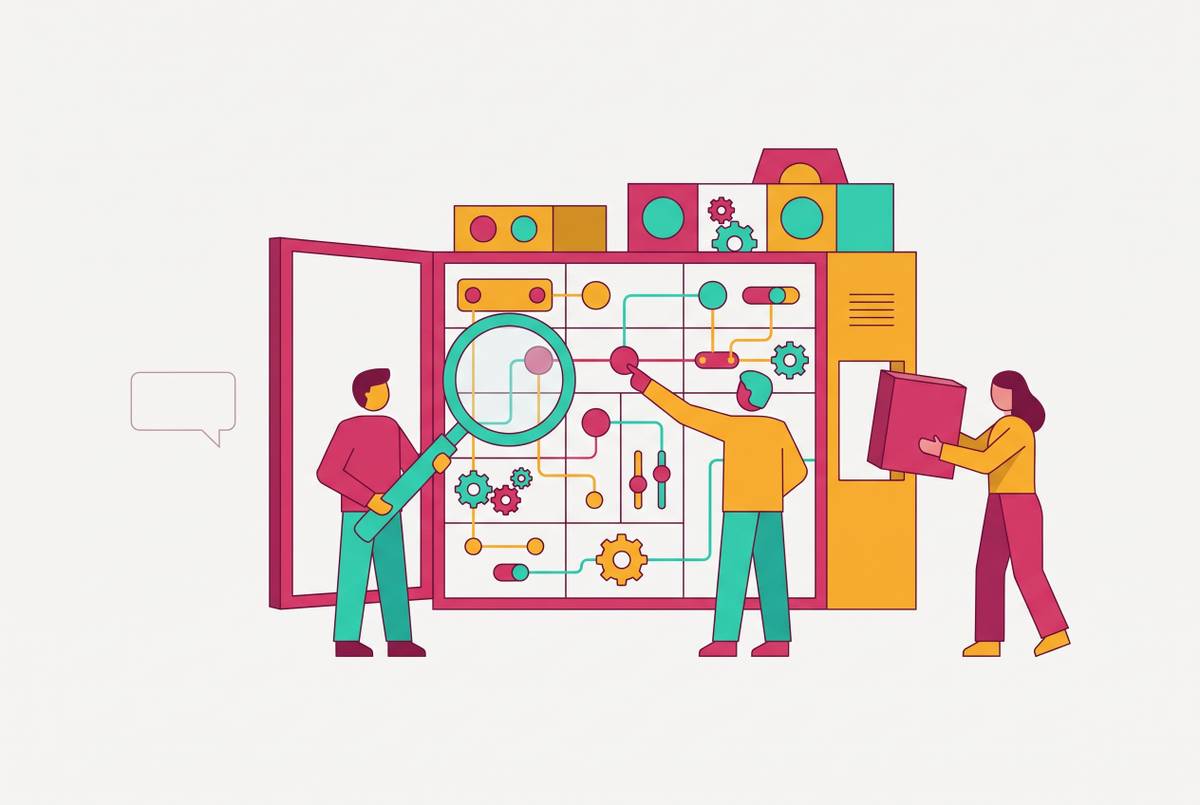
Konrad Sopala’s account of Auth0 describes a model in which feedback data “got decoupled, triaged, built on, and marketed” by a cross-functional group that included product, engineering, DevRel, sales, and product marketing. Sopala calls the model “pure cross-functionality.” The important feature is the division of work. Feedback did not remain solely a community concern, waiting for DevRel to turn it into a persuasive summary.
A person may understand a developer’s problem perfectly and still have no dependable path for getting it to the team that can address it. Without defined inputs, classification logic, and routing rules, someone has to decide anew at every handoff where the information belongs and how to explain it. The work repeats with each new conversation. As volume and variety grow, periodic summaries become the practical fallback.
A weekly sync seems like a reasonable answer. It gives people a regular time to talk through feedback, which is better than leaving it scattered. But a weekly sync is still a batch process with a week of latency and, by itself, no structured classification. It is like reading logs by hand without alerts in place. The meeting may surface an important problem, but the route still depends on someone noticing, remembering, selecting, and explaining it.
The consequence is not simply a slower handoff. A summary can reach the team after the roadmap decision it could have helped shape, while reports of the same problem stay split across channels. A spreadsheet nobody reads and a quarterly Slack summary that produces a single Jira ticket are versions of the same failure. Information has been stored, but it has not been given a dependable route. Storage is not the same as flow.
Marketing-aligned DevRel teams tend to optimize for content and demand, while product-aligned teams come closer to feedback routing but do not necessarily systematize it. Changing who the team reports to will not, on its own, build the missing architecture. Routing needs to be designed as a continuous process. Meetings can then help teams interpret the signal.
What it looks like to instrument community feedback the way engineers instrument telemetry
To build that process, a team needs five connected stages, which are collect, classify, validate, route, and close. Each stage gives the next one something it needs. Collection preserves the conversation’s useful context, classification makes related observations comparable, and validation establishes whether they form a pattern. Routing delivers that evidence to the team able to act. Closure connects the resulting response back to the developer.
Forum questions, office-hours conversations, and Discord threads are all potential data points, so structured capture needs to cover those touchpoints. The aim is to preserve enough context for the underlying friction to remain understandable after the conversation ends. Without that context, collection just moves unstructured material somewhere else.
Classification makes that material usable across conversations. The notes on a signal should name its friction type, feature area, severity, and recurrence. Those dimensions answer different questions about what is going wrong, where it belongs, how serious it is, and whether it keeps happening. They should not collapse into a single label. A recurring misunderstanding and a severe isolated problem may both deserve attention, but the evidence for each is different.
Validation then asks whether the signal represents one voice or a pattern. This is where the pipeline does more than forward requests. The dark-mode example links repeated conversations to a specific pain, which the request for the feature alone does not fully explain. Recurrence gives product a basis for assessing the pattern. It does not, on its own, decide what should be built, because severity and the nature of the friction remain part of the judgment.
Routing should deliver that evidence to the right team with the context needed to evaluate it. Defined rules assign an owner to address the friction developers encountered, while the supporting conversations explain why it was surfaced. Product should not need a DevRel translator in the room to understand the case. That is the practical test of the handoff. If the receiving team has to reconstruct the problem from raw threads, collection has happened but the pipeline has not finished its work.
The final stage confirms what happened to the signal and communicates back to the developer who raised it. A pipeline makes that kind of commitment operational by connecting listening to a product response. The engineering analogy requires making the path from conversation to action dependable enough that useful evidence does not wait for someone to write a good summary.
The flywheel only closes when developers see their feedback become a product change
An internal product response is not yet a closed community loop. The developer who supplied the signal may have no way to know it was received, understood, or used. Inward routing and outward communication serve different purposes. The first helps product make decisions, while the second shows contributors that speaking up can lead somewhere. A program that invests only in the inward leg leaves the people supplying its evidence outside the process.
When feedback leads to a product change, the outward response should connect that change to the problem the developer raised. The connection is the source of trust. A general product announcement may tell developers what shipped without showing that their specific friction helped shape it. Communicating back to the contributor completes a relationship that an internal handoff cannot.
A closure step confirms that the signal received a product response, rather than promising that every requested solution will be built. Product still has to weigh competing needs and interpret the evidence. Developers need visibility into what happened to their contribution.
The compounding effect depends on that visibility. When developers see feedback become product changes, they have a reason to contribute again. More contribution provides more signal, which can support better product decisions and, through those decisions, adoption and retention. Without the outward leg, the pipeline erodes the contribution rate it depends on. The system can become good at extracting information while giving contributors little reason to keep supplying it.
That relationship also creates a more concrete business argument. Trust is not separate from the pipeline’s performance, because sustained contribution is part of what keeps the evidence flowing. Yet warm sentiment alone cannot show whether that evidence improved the product or its adoption. “Developers love us” describes a relationship. Connecting community signal to a product change and then to an attributable business outcome gives DevRel a case at the revenue table.
Why this is a growth engineering problem, not a content one — and what that means for measurement
Blog views and conference attendance describe the reach of content and events. They do not show whether community friction reached product, whether a change shipped, or whether onboarding improved. If feedback routing is treated as content work, reporting will tend to emphasize the activity around the signal. Reclassifying it as growth engineering changes the unit of measurement.
The measurement infrastructure should mirror the pipeline’s stages. Recurrence counts by friction category show which problems keep appearing, while routing latency measures the time from community signal to product team acknowledgment. Closure rate shows the share of routed signals that get a product response. Each exposes a different weakness. A large volume of collected feedback says little about effectiveness if acknowledgment takes too long or routed signals receive no response.
Downstream measures test whether those responses improve the developer experience. Onboarding completion, time-to-value, and conversion connect product changes to the progress developers make. They are not substitutes for pipeline measures. A team needs to understand both whether the evidence moved through the system and whether the resulting work helped developers move through the product. Otherwise, a team can look successful because it handles lots of feedback, even if it has no proof that the work helped anyone.
Tessa Kriesel’s playbook identifies three north stars, which are growing developer active users, decreasing time-to-value, and measurable revenue influence. Those goals judge community work by how developers use the product as well as how much content the team puts out. They also raise a harder question. Which observed changes can reasonably be connected to the feedback pipeline? Attribution is not solved by choosing better metric names, so the obligation is to instrument as many relevant events as possible and make the path from signal to outcome visible.
Sopala argues that, especially in the AI era, work that has no direct effect on revenue is treated as a cost center, and cost centers get cut. That makes an unmeasured feedback loop difficult to defend. A team in that position should report friction patterns surfaced, product changes shipped from community signal, and onboarding drop-off reduced. The engineering work gives DevRel evidence of its contribution to growth.