What an agency should ask before running AI search work for every client through a vendor's agent library
Four tests of isolation, evidence, cost and approval before committing.

Running every client’s AI search work through a vendor’s agent library is a decision about both who controls the work and how quickly it gets done. Before committing, an agency should test the infrastructure beneath the agents, including client isolation, report evidence, costs, approvals and external access. The agency needs to remain accountable without depending on the vendor’s permission to prove what happened.
Why routing every client through one vendor's agent library is a governance decision, not just a tool choice
An agency that delegates client-facing work to an agent does not delegate its responsibility for the output. The model may live elsewhere, but the client relationship stays with the agency. That makes adoption a structural risk question before it becomes a capability comparison. A convincing demonstration shows what an agent can produce, while an agency’s ability to govern its use across a client roster remains a separate question.
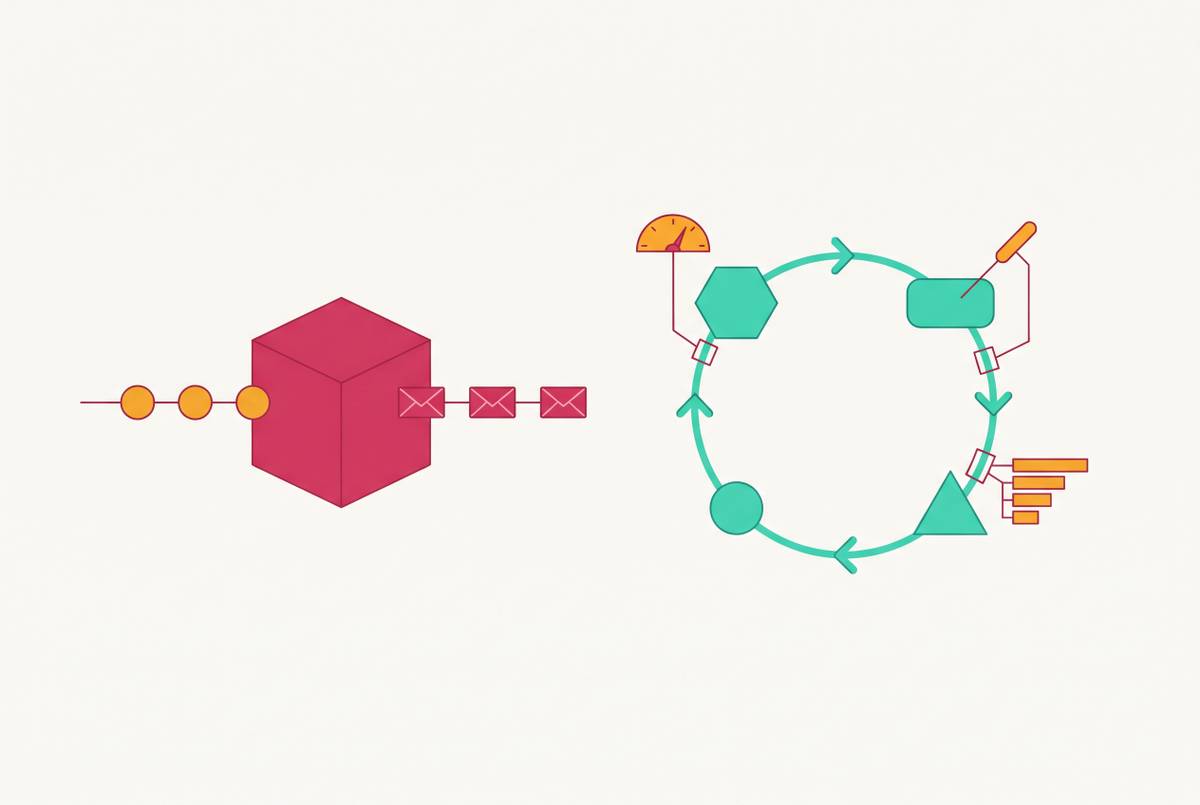
Gartner’s August 2025 press release distinguishes assistants that depend on human input from agents that operate independently, and calls the repackaging of assistants as agents “agentwashing”. The distinction changes what needs scrutiny. An assistant and an end-to-end agent give people different opportunities to intervene, so the product label cannot establish how much control people retain. The first four tests check for brand-rule isolation, verifiable reporting, a clear cost per run and human approval that cannot be skipped. Those controls interlock, while the agency needs external callability and ownership of the audit trail to oversee them from outside the vendor’s interface.
Per-client brand rules as configuration, not prompt memory
Brand rules need a durable home in the system. If an agency runs several client workspaces under one vendor account, each client’s voice, terminology and positioning must stay within that client’s workspace. Rules held only in conversational prompts depend on what someone remembers to include in each session. That leaves a structural path for one client’s parameters to contaminate another client’s output, even when the team intends to keep them separate.
Jasper’s platform documentation describes its “Context” layer as “your company knowledge and expertise in a form AI can use”. It presents that layer as a distinct architectural component, with governance and brand control as platform properties. The documentation also describes workspace-level brand and style guides with rules that apply automatically to all content when it is generated. That is a useful model for evaluation, rather than proof that every agency requirement is met. The agency still needs to check whether the rules are inherited within each client workspace or kept only for a session.
Teaching staff to write careful prompts cannot take the place of that boundary. Human prompt discipline is difficult to audit across a roster and can fail silently when staff change. If exhausted credits trigger a fallback to a generic model, does the client’s brand configuration still apply, and can that fallback be disabled? The agency should ask whether that behavior exists and is safe.
The agency needs these answers in writing before it signs the contract. Can each client workspace be locked to that client’s brand parameters at the platform level, with no cross-client bleed, and can those parameters be exported at contract end?
Verifiable, exportable evidence behind every client report, with variance stated
Isolating the inputs does not establish the integrity of the outputs. A well-configured agent can still produce a report that the agency cannot substantiate outside the vendor’s dashboard. If access can be revoked, or the underlying methodology changes without a record the agency can retain, a correct figure at delivery may become impossible to defend later.
Agent-pulled metrics should be cross-checkable against the relevant GA4, ad account or CRM dashboards during every reporting cycle. Any difference between the agent’s output and the source platform should be flagged for human review. Run-to-run variance also needs to be stated. Otherwise, a client cannot distinguish a reported change from variation in the measurement process itself.
Reconstructing a report requires more than a final export. Every data pull, transformation and narrative-generation step should have a timestamped record, so a disputed figure can be traced through the process that produced it. Query-level data, prompt sets, run timestamps and stated confidence intervals need to remain readable without continued vendor access. A branded report alone does not provide that independence. The measurement layer is effectively the vendor’s to withhold if the agency can keep the presentation but not its supporting evidence.
Contract terms must make that distinction explicit. Agencies should confirm whether CSV and JSON exports, API access to query-level data and report branding are included at their tier or require an enterprise upgrade. The closing questions are therefore specific. Does every report include the raw query-level data it was derived from, the prompt set used, the date and time of each run, and stated run-to-run variance? Can that evidence be exported in a format the agency owns independently of the vendor relationship?
Metered cost per run so agency margin per client is knowable
Even a well-governed reporting pipeline can undermine an agency’s economics if its costs are opaque. A fixed-fee retainer promises a set service for a known price, while a variable-credit system charges based on what the agent does. Those models can work together only when the agency knows its maximum exposure per client before the invoice arrives. The subscription price alone cannot answer that question.
Monitoring runs, content drafts, report generations and prepared outreach pitches can draw from the same credit pool at different rates. Intended workload and actual consumption can therefore diverge. A failed tool call may be retried, a declined draft regenerated or a monitoring query rerun after a schedule change. Even if the client asks for nothing extra, those actions can compress the agency’s margin.
That makes metering a governance issue as well as a finance issue. The agency needs to connect spending to the client workspace and the actions performed there, rather than discover only that a shared balance has fallen. Without that link, the agency has to guess how the agent will behave when it sets the retainer price. Nor does a spending limit settle everything. What happens at the limit may affect the service the agency has promised, including output quality and whether brand configuration remains in force.
Before onboarding a client, the agency should ask for the cost ceiling per client workspace per month and the behavior that follows when credits run out. A predictable bill is not enough if the route to predictability changes the work being delivered.
An explicit human approval step before anything publishes
The controls for configuration, reporting and cost can all fail before an output reaches a client. A mandatory human approval step provides a chance to catch those failures before publication or delivery, provided the reviewer can see the relevant evidence. Responsibility already rests with the agency. The gate gives it a practical way to exercise that responsibility rather than act as a passive conduit for a vendor’s model.
Jasper’s platform documentation names “governance” as a platform component and describes a workflow moving from brief to execution “with greater control”. That raises the question of approval but does not show how the system will behave for every agency that uses it. The useful follow-up is what control means at each output. Can a person reject the action, and does the system prevent it from proceeding without approval?
An approval button is not enough on its own. Meaningful review requires someone who understands the recommendation, can inspect its evidence, has time to assess it and has genuine authority to reject or override it. Fast approvals without annotations, questions or disagreement can conceal a weak process. The role may look staffed while the escalation path remains unused. An unblemished approval record is therefore not, by itself, evidence that the gate works.
Every new client deployment should start in draft-and-approve mode. The agent does the work, but a human reviews it before any action, establishing both an approval habit and a baseline for deciding which actions may later warrant lighter oversight. Before signing, the agency should ask the vendor to identify every step that can publish content, post a reply, send outreach or deliver a client report. For each step, the written answer should name who approves it, describe the evidence they see and say whether the system blocks action when no approval has been given.
Whether each agent is callable from the agency's own stack, not just from the vendor's UI
An agent may follow brand rules, produce evidence and wait for approval, yet still need someone to run it through the vendor’s interface. That limits its role in the agency’s infrastructure. If the agency cannot call it externally, connecting the work to other systems may depend on manual steps that must be rebuilt when the tool changes.
First, establish whether each agent can be triggered through an API. A CRM event, monitoring alert or scheduled job in the agency’s own orchestration layer should not require a person to navigate the vendor’s interface before work can begin. The direction of travel also needs testing. Can outputs move programmatically into a client’s CMS, a reporting dashboard or a Slack channel, or are they restricted to vendor-native exports?
An MCP hook raises the same question at the wider pipeline level. Can the agent participate in an agentic workflow the agency controls? External callability gives the agency a way to incorporate the vendor’s capability into its own systems instead of organizing all work around the vendor’s screen. It does not replace the earlier requirements for evidence, isolation and approval.
A team’s ability to use that screen is not the disputed point. The problem compounds as the client roster grows and manual operation becomes a bottleneck. Automation requires APIs, so agency heads should establish callability for each agent they intend to use. Otherwise, the library may do well in a demonstration but leave the agency relying on a workflow it cannot easily monitor or replace.
Who owns the audit trail when something goes wrong
When a report contains a wrong figure or an outreach email goes out without approval, the decisive question is who can prove what happened. An explanation from the vendor is not the same as evidence in the agency’s hands. The agency needs to reconstruct the sequence independently if it is to defend its work to a client, a regulator or a court. That is where all the earlier tests converge.
A useful audit trail records actions and their order. Timestamped logs should cover data pulls, transformations, draft generation, approval requests, approvals or rejections, and publication, in a format the agency controls. The record also needs to show the input state for each action, including the brand configuration in use, the prompt set and the data sources queried. For every approval gate, the evidence should identify the human reviewer, what they were shown and the time between presentation and approval.
Brand isolation establishes which rules applied, while report evidence makes the figures traceable and cost metering exposes the actions consuming credits. Approval records show who authorized an output, and external callability allows the work to sit within the agency’s wider operating system. None is a substitute for an independently readable record.
The practical test is a simulated post-incident review. The agency should ask the vendor to take a disputed metric from a report delivered several months earlier and show exactly what evidence can be retrieved, in what format, and whether reading it requires vendor access. That exercise tests the controls as a connected system. The agent library is only as good as the infrastructure beneath it.