B2B Video as a Programmatic Growth Channel: What Demand Generation Teams Are Getting Wrong
Programmatic systems link video production to distribution and measurement.
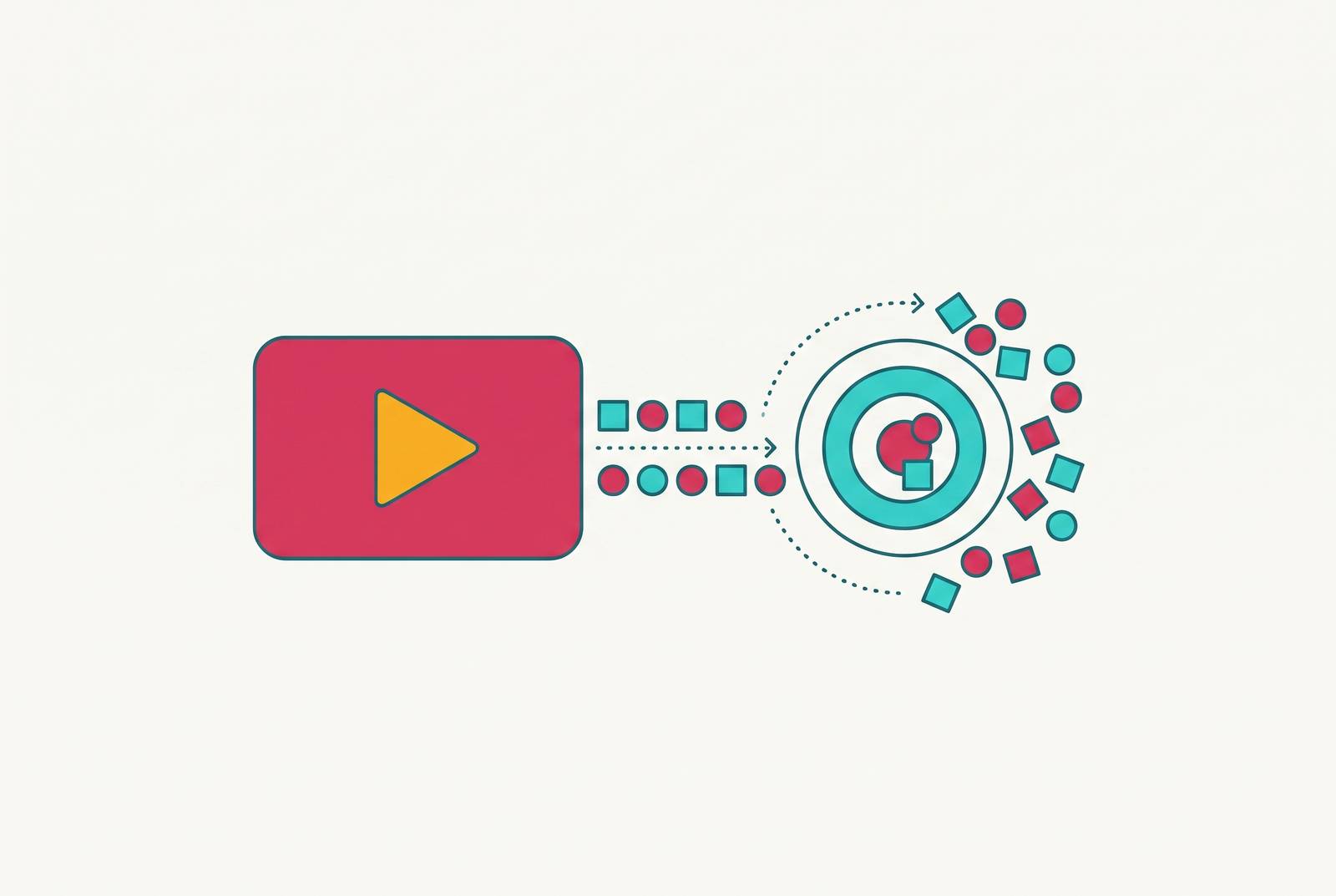
B2B video is a growth channel too often managed as a series of production projects. Demand generation teams fix that by building a programmatic system that links the inputs for production to channel-specific distribution and pipeline measurement, so each video’s results shape what happens next.
Why B2B video investment keeps growing while pipeline attribution stays flat
B2B video has reached saturation-level adoption, and most marketers report that it has helped generate leads and increase sales. Yet pipeline attribution remains chronically undercounted. Those claims can both be true. A team can believe video helps buyers without being able to show which videos influenced an account or contributed to a conversion. Spending more does not always make it clearer what that spending brings back.
The distinction is between weak performance and weak evidence. If a team cannot connect video engagement to downstream activity, it cannot reliably tell which problem it has. Producing more content does not resolve that uncertainty, because the next video enters the same measurement gap as the last. Better production alone does not show how the video helped, either.
A demand generation team needs the means to connect buyers’ attention to video to its pipeline. Without that layer, reports of success and doubts about the budget can persist together, with neither giving the team a useful basis for its next decision.
How treating video as a campaign asset rather than a system creates the attribution gap
A team commissions a video, uploads it, and marks the project done. The work has a clear deliverable but no defined distribution trigger, pipeline signal, or feedback loop into production. In that model, measurement is not merely forgotten at the end. It falls outside the boundaries of the project.
A completed asset records what the team made. Distribution becomes the task of getting it published, leaving how it should reach buyers undecided. Reporting then inherits whatever signals happen to be available, instead of collecting the signals needed to judge the video’s intended role.
Single-touch attribution deepens the problem because video rarely earns the last click in a multi-touch journey. A buyer may watch before taking a later action, but a last-click view gives the credit to that later touch. The video’s contribution disappears from the budget discussion. The channel can then be defunded because it is under-measured, even with its performance still unproven. Changing that outcome requires a different definition of when the work is done.
What a programmatic video system looks like versus a video content calendar
A content calendar records titles and publish dates. A programmatic system connects a trigger to production, format adaptation, channel-specific distribution, measurement, and feedback to the next trigger. A calendar can keep a team busy without defining how any of those stages depend on the others. A system makes those dependencies part of the work.
Consider what happens around a product launch. In the calendar model, someone decides to “do a video about the launch” and manually arranges the sequence again. In the system model, a product launch or ideal customer profile signal starts a production sequence on its own, with the inputs and outputs set out in advance. Automation can leave room for people to use their judgment. It removes the need for someone to reconstruct the path from idea to distribution every time.
The same distinction applies to a hub-and-spoke content model. Creating several shorter pieces from a larger video produces more assets, but it becomes a system only when each spoke has a destination, format requirements, and a measurement plan. Where should it go, and what should it accomplish there? Those questions require format-to-funnel mapping inside the system’s logic. Without that mapping, even an orderly workflow can deliver the wrong content at the wrong moment and judge it against the wrong outcome.
Why production decisions belong inside the system, not upstream of it
Length, format, and the choice between human and AI production determine more than how a video looks. They shape which channels can distribute it and which signals can measure its performance. Production cannot be a separate creative task that comes first and leaves the demand generation team to find a use for what it makes. It needs the system’s requirements before the work begins.
The production brief is where those requirements become concrete. It should specify topic and tone, funnel stage, target buyer role, intended distribution channel, and success metric. These inputs give production a defined purpose. Without them, a team can approve a video’s creative quality while leaving unanswered whether its length and format suit the job it must perform. That uncertainty then passes into distribution and reporting.
AI belongs in this discussion as a decision about trust, throughput, and quality control. The practical hybrid is human on-camera capture with AI-assisted editing and format adaptation. Human capture preserves trust signals, while AI assistance compresses the production-to-distribution cycle.
Distribution logic and why LinkedIn-native upload and YouTube search optimization are different jobs
LinkedIn and YouTube are the two dominant B2B video channels, but their distribution logic differs. LinkedIn penalizes external links, so native upload is a different job from sending viewers to another site. YouTube rewards search-optimized titles. A system that treats the channels as interchangeable leaves an important design decision to whoever happens to publish the file.
On YouTube, that decision begins with what buyers type. “Q3 Product Update” describes the brand’s publishing occasion, but it does not answer a search for “how to integrate [category] with Salesforce”. The system should treat YouTube as a search engine. That requirement belongs in the production and publishing sequence.
A gated video creates friction when a champion needs to forward it to five other stakeholders in a buying committee. The system should set gating policy for each funnel stage, instead of relying on how the team has always done it. Publishing is only part of reaching the account.
Paid amplification belongs in the same design. For awareness or demand video, it should be a required component, with the ratio of amplification spend to production cost set as a fixed system parameter. Account-level delivery controls, including caps on impressions per account per week, keep the budget from going to just a small part of the target list. Otherwise, repeated exposure among a few accounts can coexist with no exposure among the rest.
Why AI-driven content pipelines change the production-to-distribution cycle but require human review gates
An AI content pipeline compresses the distance between a business signal and a published video. A product update or buyer signal triggers script generation, which feeds format adaptation and then channel-specific distribution. The sequence runs without someone having to move it along at every step. People review the work at set checkpoints, instead of waiting for someone to ask them to look it over.
Most B2B marketing teams have not moved beyond experimental AI workflows into systematic content production. A team using separate AI tools may get each task done faster but still have to link the tasks by hand. A pipeline changes the whole sequence, so the opportunity lies in how the stages work together.
But throughput also scales errors. Off-voice first drafts are common, and factually wrong content can move through an automated workflow just as readily as accurate content. The review gate needs a clear approval criterion and a defined place before publishing. It is the control that makes greater output safe.
The practical design uses best-of-breed tools for script, editing, format adaptation, and distribution, connected by an orchestrator. All-in-one platforms trade quality at each stage for convenience. Whatever connects the stages, a human approval gate must remain part of the pipeline itself. Faster movement through production is useful only when the system also controls what reaches buyers.
Video as an AI citation surface, and why most teams leave that value unretrieved
Distribution now includes the possibility that an AI answer engine will cite video-sourced content. For that purpose, the retrievable text around the video is crucial. A case-study upload without a real transcript and structured metadata is far less likely to be retrieved by ChatGPT, Perplexity, or Google AI Overviews. The upload alone leaves much of that value inaccessible.
Transcript generation and structured publishing should be required steps in post-production, instead of work that gets done only when there is time. YouTube accounts for a meaningful share of AI Overview citations on visual and how-to queries. A well-transcribed, search-optimized video can therefore earn citations that a blog post alone would not.
Discovery, however, is not the same as attribution. A majority of AI-referred traffic is recorded as direct in GA4, while some appears as Referral or Organic Search. A video can earn citations and influence pipeline without receiving credit in the channel analysis that shapes the next quarter’s budget.
The campaign model treats the uploaded file as the finished output and leaves both retrieval and measurement undesigned. A programmatic model includes the text that makes the content discoverable and the tracking needed to understand the resulting activity. Instrumenting the output means accounting for more than the video player.
The measurement stack a programmatic video system requires
The measurement stack starts with signals that show whether the video did the job it was meant to do. These include completion rate by funnel stage, account-level engagement, downstream conversion from video-touched contacts, and AI citation frequency for video-sourced content. No single signal answers every question. Completion shows how much viewers watched, while downstream conversion shows what video-touched contacts did later. Funnel context ties those readings to the job set out in the production brief.
Account-level aggregation matters when a committee does the buying. One contact watching a video at a target account is a weak signal. Four contacts at the same account watching in the same week is a buying signal. Contact-level counts alone miss that distinction because they do not describe how engagement is spreading within the account.
AI citations require a separate tracking layer. A prompt library of buyer-relevant queries should run regularly across ChatGPT, Perplexity, Google AI Mode, and Claude, tracking whether video-sourced content is cited. GA4 and standard video analytics do not capture that information. To address the traffic attribution gap, the stack should also include UTM parameters on all transcript-linked assets and a direct traffic audit segmented by landing page to help identify AI-sourced sessions.
These outputs must then change the next production brief. If a product demo earns high account-level engagement but low completion, the system shortens the next version. If a transcript earns AI citations, it flags that content structure for reuse. Measurement is therefore not a report delivered after the work ends. It is the mechanism through which the next trigger starts a better-informed production sequence.