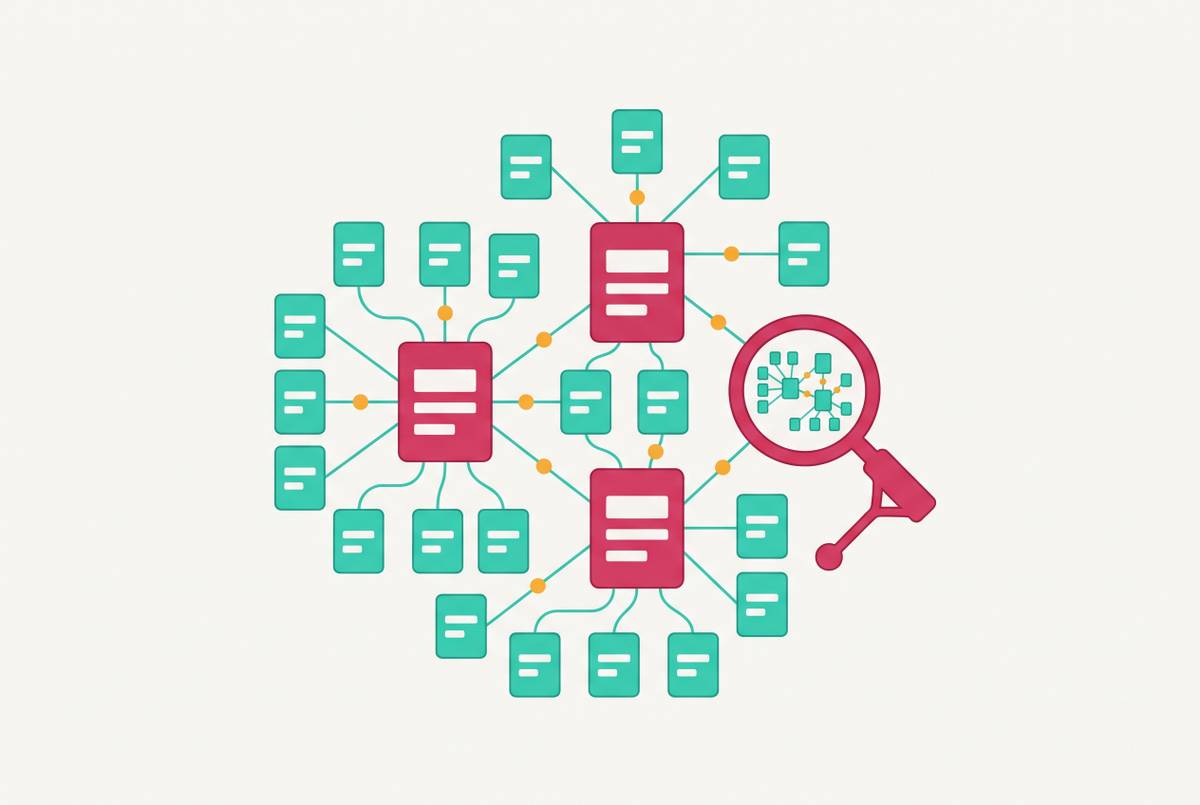
B2B founder social media is a buyer-list problem you can instrument: track which named buyers come back, and judge each post on that evidence instead of a posting cadence
Judge founder posts by which named buyer accounts return, not by likes.

B2B founder social media is a buyer-list problem. It earns its place in a go-to-market system when a team can connect posts to named accounts that return, research the company, and move toward a sales conversation. That requires a measurement system built around buyers, including what they encounter in AI answers.
Why founder social posts disappear into a metric that tells you nothing about buyers
A founder posts twice a week, watches likes accumulate, and still cannot connect the work to pipeline. Impressions and follower growth describe reach into an undifferentiated audience, a frame borrowed from consumer media. They do not reveal whether the VP of Engineering at a target account found a post useful and came back.
A B2B buying committee does its research in private before anyone contacts a vendor, so growth in the public audience tells little about how far it has got. Asking the founder to post more consistently answers a production question. How to recognize attention from the people who could actually buy remains unresolved.
What the visible engagement number is actually measuring
Visible engagement measures the people willing to react publicly. A LinkedIn DM can put it in front of a colleague, a Slack message can circulate it through a buying committee, and an email forward can reach a decision-maker who never clicks like. Private channels do not emit the signals standard analytics would need to reconstruct the journey.
Optimizing for it selects for public response while leaving private influence outside the decision. A buyer might follow the founder for months, hear a podcast, ask peers for a reference, and eventually search the brand name directly. Last-click attribution then credits the search. Better pixels cannot turn that private research process into a complete public record, so the useful alternative is to measure the account-level responses that can be seen.
The named-account list as the unit of measurement that makes founder social tractable
A named list of target accounts, defined before the content calendar, provides the starting point. Without it, a company visiting the website is simply a company visiting the website. With it, the team can distinguish attention from an intended buyer from activity outside the market it is trying to reach.
Each post can then be treated as a stimulus, with account visits, profile views, and buying signals as possible responses. The question changes from how much attention a post collected to which target accounts responded after publication. This makes the evidence relevant to a commercial goal.
Account-based marketing already works this way to keep the focus on named companies. Founder social is often left out of that work and put under brand or thought leadership. Connecting the two makes the founder’s publishing part of the same buyer research process that sales and marketing are trying to understand.
What to watch at the account level and how to weight each signal
Signal quality should determine weight. A thoughtful comment from a named contact who fits the ideal customer profile shows that they are paying attention. Several people from the same account engaging with the same post suggest that interest may extend beyond one curious reader. A profile view or website visit shortly after engagement adds evidence that someone has moved from noticing the founder to researching the company.
A reaction from someone outside that customer profile should count for less, even if it helps the post spread. Growth in the total number of followers also says little about buyer interest because it does not show which accounts have joined the audience. These distinctions prevent the account dashboard from becoming another vanity report. The identity and behavior together give the signal its value.
Intent data can help explain what is happening, but a spike in research at an account does not show why it happened. A named person asking a buying question or describing a pain point supplies something more specific. IP-resolution tools such as Clearbit Reveal, Albacross, or Leadfeeder address a different blind spot by surfacing company-level website visits without a form submission. Together, these signals can show research that public reactions alone miss, though they cannot show every buyer involved.
The lowest-tech instrument that works immediately is the self-reported attribution field
A team can start before buying any software. A mandatory inbound form field can ask what the prospect saw from the founder before making contact and which content proved most useful during research. Asking again on the first sales call gives the prospect room to explain. The answers can live in a CRM field or spreadsheet, tagged by content type and approximate post date.
This can produce useful patterns within a single quarter. Within weeks, prospects may name posts that were widely shared in private even though they got little public engagement. Their answers provide content intelligence as well as attribution, showing which topics and formats helped them understand the problem or evaluate the company. That evidence can shape the next posts.
The simplicity is an advantage only if someone reads the answers. When no one is in charge of the field or reads the sales notes, the answers have no part in deciding what to publish. The founder then keeps responding to likes while buyers are saying what helped them elsewhere in the system.
Connecting post-level stimulus to account-level pipeline movement in a lightweight tracking model
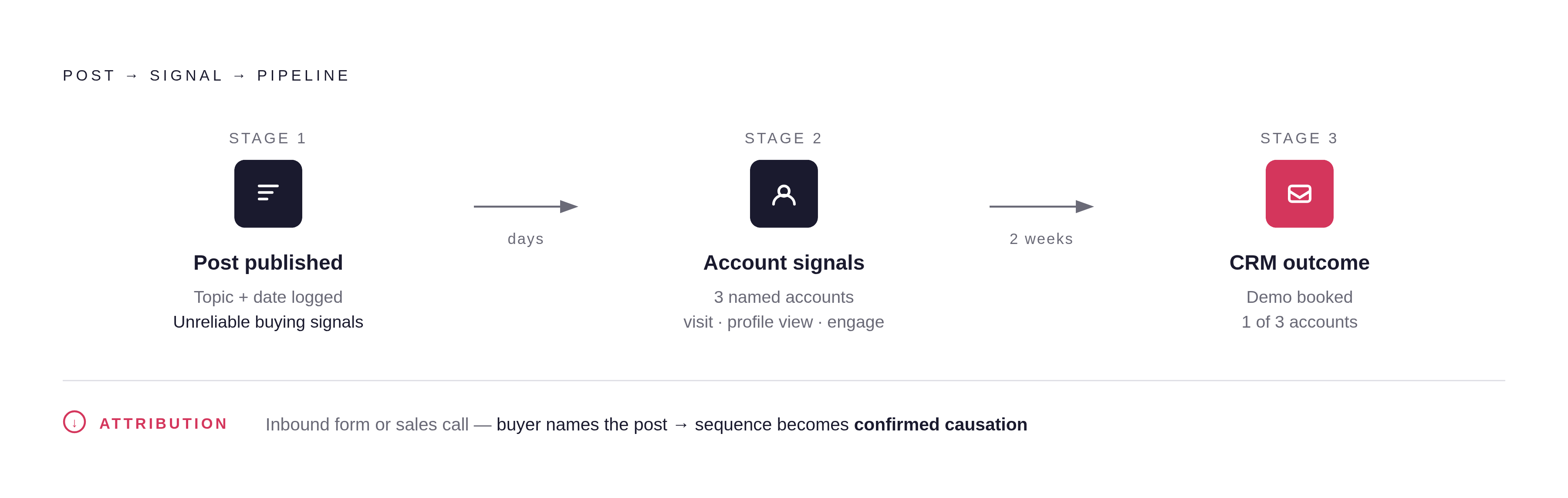
The publication record captures the topic and date. The response record captures which target accounts visited, viewed a profile, or engaged within a window afterward. CRM tagging then connects those accounts to a demo, trial, or first meeting.
Take an imagined post about unreliable buying signals. Three named accounts on the buyer list visit the website in the following days, and one reaches a demo call two weeks later. If that prospect also names the post in the attribution field, the team has more than a sequence of dates. It has a buyer’s account of the connection. Without that answer, the visits still provide useful correlation, but not proof that the post caused them.
A visit three days after publication supports a closer connection than one three months later. Buska can add person-level context through recurring scans of public social platforms, returning buying signals with an AI score and a link to the exact post. Combined with site visits and self-reported attribution, that context can expose a cluster worth routing to sales. The model need not reconstruct every touch to show which topics bring relevant accounts back.
Why optimizing for visible engagement actively works against buyer-list penetration
The two targets can work against each other. Broad, accessible content can attract reactions from many people precisely because it asks little specialist knowledge of them. A technically detailed post about a target account’s exact problem has a smaller audience. In a report dominated by likes, its specificity becomes a disadvantage.
For example, compare a broadly appealing post about posting consistently with a detailed explanation of how unreliable intent signals complicate buying decisions. The first may attract more reactions. The second may get little engagement but help someone with that problem enough that they share it with colleagues. Picking the next topic based only on public reactions can lead the founder away from the buyers the program is meant to reach.
The reporting structure can reinforce that mistake. Paid content gets credit for clicks and outbound gets credit for replies, while the founder gets no credit if no one records the post that started the research. Reach remains necessary, but reach into target accounts is a different objective from reach in aggregate. The buyer list makes that distinction visible.
Where AI answer engines extend the buyer-list problem beyond LinkedIn
The same buyers also consult ChatGPT, Perplexity, Gemini, or Claude while researching vendors. Establishing whether the brand appears in those answers remains a measurement gap in the same research process even with a strong LinkedIn presence. The team needs to ask whether the queries those buyers use return the company as an option.
Standard analytics cannot answer that question on its own. A team needs to observe whether the brand is named or cited in responses to the target questions. Even then, an observed citation is evidence of availability in the research channel, with exposure to a particular account still unverified. Keeping that distinction clear prevents AI visibility from becoming another inflated reach metric.
Citation visibility also changes over time. Because citations decay and cited content skews toward recent material, a single publishing effort cannot establish lasting coverage. Refreshing content around the same buyer questions gives the team a continuing body of work to measure.
Building a content footprint that earns AI citations and account-level site visits from the same publishing effort
The owned website, or ground site, gives the company’s answers a stable home, while distributed content extends their presence beyond that domain. These roles reinforce each other. A buyer can encounter the company through an external answer or quotation and then research it on the site.
On the ground site, a direct answer near the top of a page makes the useful part easy to extract. A 40–60 word answer capsule serves that purpose without replacing the fuller explanation below it. Named authors and original evidence, including proprietary data, case studies, and expert quotes, give the page substance beyond generic text. Those elements also give a researching buyer something concrete to evaluate.
Publishing off-domain gives AI systems other places to find what the company knows. Substantive Reddit AMAs, detailed category replies, relevant Quora answers, and quotations in publications that syndicate to Google News contribute to that footprint. The organizing principle is still the buyer’s problem. Citation tracking shows whether those answers appear, while account-level site tracking shows whether companies in the target market come to the site to learn more.
The multi-stage pipeline that keeps the system running without replacing human judgment at the gates that matter
Consistent publishing supports both renewed AI visibility and repeated contact with target accounts, but a lean founder cannot personally produce every artifact. A staged pipeline divides the work without surrendering judgment. AI can synthesize research, generate drafts, and supply structure. People still have to frame the piece, add what they know from experience, and decide whether it is fit to publish.
The work starts with people looking through customer interviews, patterns in sales calls, and content from competitors. AI turns those inputs into a structured brief, then an outline that an editor revises before drafting begins. That revision is where the argument’s order, relevance to the audience, and missing evidence receive attention. It is not merely a style pass.
Before a piece is published, automated checks for factual consistency and personally identifiable information go alongside required human sign-off. The gate is essential to the system’s credibility. Bypassing it creates “shadow content,” plausible but unverified text appearing under the founder’s name. A program built to earn trust from a small group of informed buyers cannot treat that risk as an acceptable shortcut to volume.
Measuring whether AI answer engines are actually naming and citing you, in the same cadence you track account visits
AI visibility software makes it possible to track brand mentions and citations systematically across the answer engines. The team starts with target query clusters based on the questions named buyers ask before they make a shortlist of vendors. Running those queries on a cadence, recording appearances, and comparing changes against published content creates a parallel to the account-response record. Neither layer needs to stand alone.
Reviewing citation frequency in the same cadence as account visits keeps the two connected without confusing them. A drop in citations can show that the company is appearing less often before any effect on pipeline can be seen. Accounts that come back, meanwhile, show that research is happening in a way an answer-engine test cannot confirm. Self-reported attribution and CRM records add the later evidence of what helped and what moved forward.
The founder who began with a calendar and a likes report now has a different basis for deciding what to publish next. The decision rests on which named accounts returned, what those buyers found useful, and whether the company appeared in the answers they were likely to seek.