Your launch checklist is an AEO system: how SaaS teams keep what AI says about pricing, integrations and comparisons current, as code instead of a quarterly review
Wiring content checks into release gates keeps AI answers accurate.
A SaaS launch changes more than the product. It changes the facts AI answer engines use to explain pricing, integrations, and alternatives to buyers. The launch checklist should therefore double as an answer engine optimization system, triggering content updates as part of delivery. Treating that work as code, with explicit review gates and citation tracking, closes a gap that quarterly reviews leave open.
Why AI answer engines pull from exactly the pages a launch checklist touches
A buyer types a comparison question into ChatGPT before speaking to either vendor. They want to know which product fits their team, connects to their existing tools, and falls within their budget. The answer helps shape their shortlist immediately. For mid-market and enterprise SaaS teams, this means evaluation can begin before a buyer reaches a product page or books a sales conversation.
What pages can answer that buyer’s questions? Discovery prompts draw on category pages and “best of” roundups, while evaluation prompts draw on comparison and integration pages. As the buyer gets closer to buying, pricing pages matter more. These are also the pages a launch touches. A new feature can change a comparison verdict, a new integration can change stack compatibility, and a packaging change can alter the price of getting either.
The overlap is structural. A conventional checklist treats those pages as deliverables that need to be accurate when the launch ships. Answer engine optimization, or AEO, treats them as signals whose usefulness depends on staying current. Their claims also sit beside what third-party sources say about the same product. A launch can therefore change the answer a buyer needs without changing the sources an engine uses to provide it.
How AI gets pricing wrong, and why launch day is when the gap opens
The stale-source example in the notes involved an old pricing announcement on a company blog, a PDF datasheet linked from the footer, comparison articles, and an outdated review-platform profile. The current pricing page was not the whole record. Updating it could not, by itself, erase the other accounts of what the product cost.
That is the opening through which stale pricing enters an answer. AI engines synthesize multiple sources, including review sites, comparison scrapers, and competitor blogs. Most citations come from third-party sources, and fewer come from the vendor’s own site. Those outside pages may remain untouched after a pricing change. Launch day creates a predictable mismatch between the product’s current price and the distributed record of its price.
Stale pricing tends to underquote, leaving buyers expecting to pay less than the actual cost. That expectation can survive until a purchase conversation exposes the difference. What if the vendor chooses not to publish pricing at all? Silence hands the answer to whoever publishes a number, including a competitor.
The concrete consequence of letting stale citations stand
A competitor’s comparison page had Senja’s pricing wrong. A vendor can control its own commercial terms without controlling the account of those terms that reaches a buyer. When an answer engine uses the competitor’s page, the vendor may have to explain a price expectation it never created. The friction arrives at the point where the buyer is trying to decide.
An outdated integration claim can also keep a product off the shortlist. A buyer asking which tools connect to an existing stack gets an answer based on the pages the engine can find. Fresher, structured competitor content can win the citation instead. An answer can shape a shortlist without sending a click, so standard analytics cannot show the visit that never happened.
What source-of-truth pages for pricing, integrations, and comparisons need to contain
The practical response starts with pages built to answer specific buying questions. For comparison pages, that means an opening verdict naming winners by use case, followed by a feature table using real product names. Pricing should appear in dollar amounts with a visible last-checked date. Buyers need more than a general claim of superiority. Separate passages explaining who should pick each product make the trade-offs clear without forcing the engine to infer a recommendation from marketing language.
Those passages need evidence and context as well. Real quotations from vendor documentation give feature claims a basis, while a FAQ block addresses the questions buyers actually ask AI engines. Together, these elements give ChatGPT and Perplexity self-contained passages to quote. The structure does useful work here. A comparison can say where another product fits better and still make a clear, specific case for the vendor’s own product.
“Works with Salesforce” does not explain which fields sync or what authentication method is required, so a per-integration detail page should document those facts. Pricing pages, in turn, need explicit schema and a published price, even if only a starting price is available. Generic copy cannot substitute for those details.
How a product is described changes while old pages still rank, or pricing changes in-app without changing everywhere on the site. Help documentation and marketing pages may describe different workflows. Comparison pages built to win buyers can keep making claims that no longer fit, while third-party mentions repeat how the product used to be positioned. These are recognizable drift patterns, which makes them candidates for event-driven maintenance.
Why maintaining these pages manually against a quarterly review schedule fails
A quarterly review follows the calendar. Pricing changes, integration deprecations, and competitor repositioning happen on their own timelines. The freshness window favored by AI search is also shorter than a quarter, leaving periodically reviewed comparison and pricing pages stale between reviews.
SaaS delivery already has checkpoints closer to those changes. Discovery sprints, weekly demos, Core Web Vitals and SEO gates, launch checklists, and runbooks all provide places where content accuracy could be considered. A separate quarterly review bypasses those opportunities. It asks someone to reconstruct changes after delivery rather than treating their content consequences as part of delivery. That separation leaves content updates disconnected from delivery, even when the pages themselves are well designed.
But can fresh pages change an answer drawn from old model training data? Not immediately, and that is a real limit. On-site updates do not rewrite a model’s stored knowledge, whose refresh depends on its provider. Keeping review profiles, directory listings, earned media, and partner posts consistent is the appropriate response, but it is not an instant correction to frozen knowledge. It builds a coherent record for live retrieval and future training, while older models can only reflect consistency that existed in the material they learned from.
Treating the launch checklist as a trigger for automated content updates
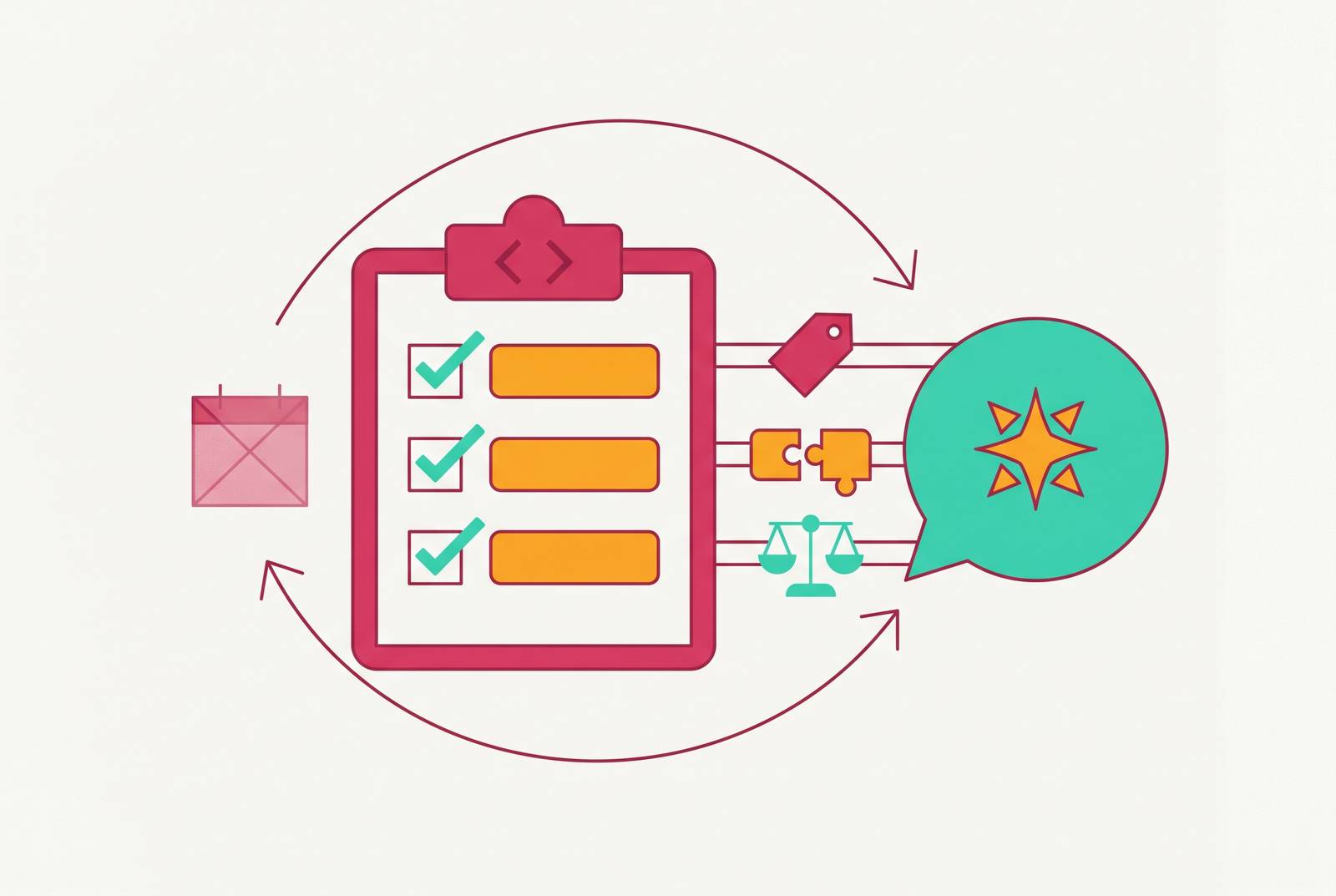
Content maintenance should be connected to release events. The same checklist that includes Core Web Vitals or SEO checks can include gates for pricing, integration, and comparison accuracy. This is a missing layer in an existing pipeline. “As code” means that the relationship between a product change and its content work is explicit, rather than dependent on someone remembering to notify marketing.
A pricing change should trigger verification and updates to the pricing page, its schema markup, and review-platform profiles. A new integration should ship with a structured detail page built from a template. Comparison pages should show last-checked dates and be checked again on a schedule tied to the product’s release cycle. Outside profiles belong in the launch scope too. G2 entries, integration directories, and partner pages give the same facts about the release, even though they are on other sites.
LLMs must not originate pricing, product specifications, or technical details for programmatic pages. They can draft descriptive or templated text, but generating the underlying claims introduces hallucination risk where precision is essential. A fluent sentence is not product evidence. The pipeline’s design must preserve that distinction rather than leaving reviewers to guess which parts of a draft are grounded.
Multi-stage pipelines can draft and share content, with a required human check of pricing, integration details, and feature comparisons before it goes live. That gate must be explicit and enforced. Otherwise, faster drafting merely accelerates the spread of an incorrect claim across more pages. Marketing teams are already handing repetitive launch work to AI agents, making controls that keep the product record accurate essential to that automation.
Building the off-site citation footprint that makes on-site accuracy stick
The next part of the checklist concerns sources outside the website. Once the official pages are up to date with a launch, that launch should also start a queue of off-site updates. Review-platform profiles on G2 and Capterra can be flagged for review, integration directory entries verified, and partner pages sent update requests. These sources should not drift independently. Their descriptions can either reinforce the official record or compete with it.
The wider footprint also includes partner blog posts, earned media placements, podcast appearances, conference recaps, and customer case studies on third-party sites. These surfaces can repeat the product facts changed by a launch, although the vendor does not control them all. That distinction affects how updates happen. An owned page can be edited directly, while a partner post or independent account may require outreach.
Why does that broader presence help? Citation depends on consistency across independent sources. A Wikidata entity can also provide a structured, machine-readable brand record, though changes there do not automatically update frozen model knowledge.
One common imbalance makes the need for breadth clear. A SaaS team may invest heavily in “[brand] vs [competitor]” pages while remaining absent from discovery-stage “best [category] tools” answers. Those comparison pages address buyers who already know the brand. They cannot do all the work of getting it considered in the first place. Off-site presence supports discovery, while detailed comparison content serves the later evaluation that discovery makes possible.
Measuring whether the pipeline is working: AI citation tracking as a launch KPI
The test is whether buyers receive accurate answers. Organic traffic and keyword rank cannot establish that, especially when an answer influences a shortlist without producing a visit. Share of Answer measures the percentage of AI responses for a target theme that mention the brand. Citation counts add a view of how often sources appear across engines. An accuracy rate must separately track whether pricing, integration, and comparison claims match the current product, because visibility alone says nothing about correctness.
For each prompt, tracking should record whether the brand appears and which sources the engine cites. Those URLs become the next update queue. If a stale comparison article supplies the wrong claim, the system has identified a specific source to address. Sentiment context adds another layer. An answer describing the brand as “a budget alternative” may reveal a positioning gap traceable to the cited pages, even when the brand is present.
Coverage needs to include ChatGPT, Perplexity, Gemini, and Claude because accuracy varies across engines. One engine cannot stand in for the others. The prompt set also needs enough breadth to avoid mistaking noise for a useful visibility signal, so teams should exceed 50 prompts before relying on the score. That measurement completes the connection between releases and their public record. A launch changes the product, the pipeline updates its descriptions, and citation tracking reveals which sources still need attention.