The AI Content Stack Is Splitting in Two — and That Tells You Something
The split between AI generators and control layers reveals production outpacing human judgment.

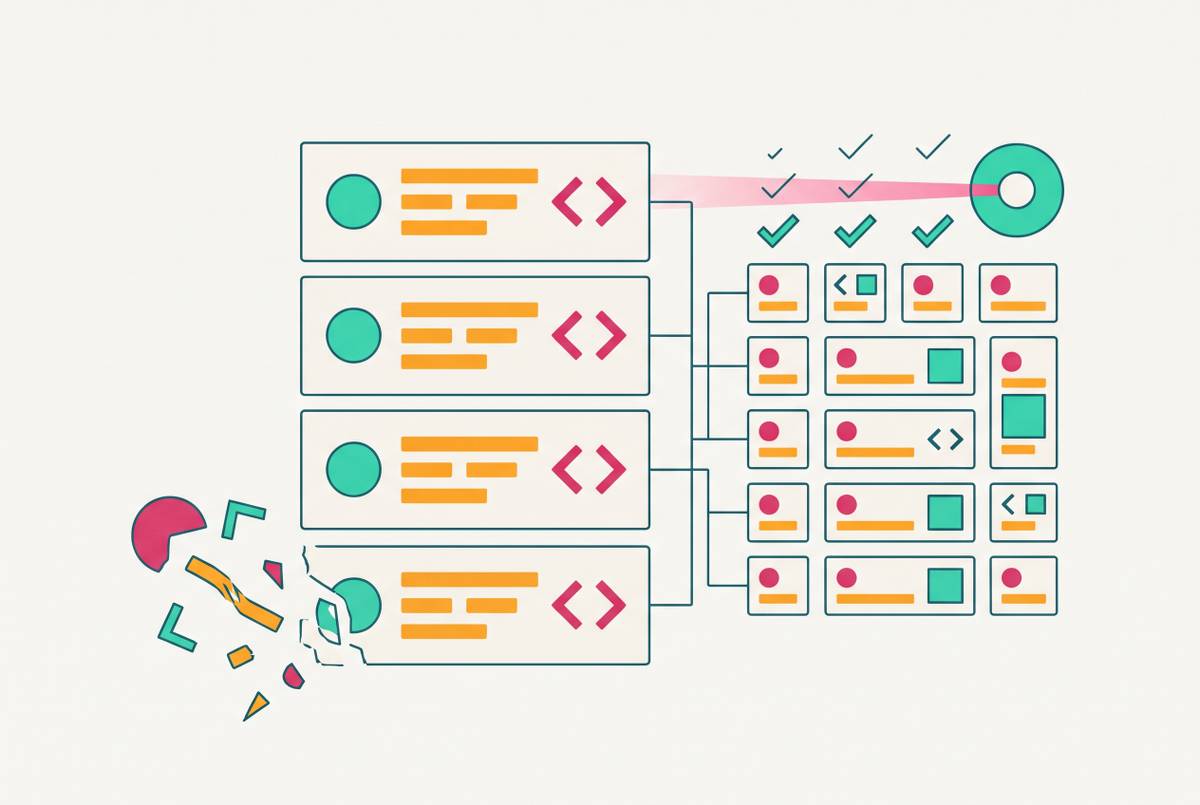
The AI content stack is splitting into generators and control layers. That split is less a sign of maturity than a diagnosis of a workflow in which production can outrun judgment. An integrated pipeline makes human review and measurement part of the work from the start.
Why the AI content stack split in two
A team can generate more content as soon as it subscribes. Review capacity does not scale with it. A team can gain the ability to produce far more drafts without gaining any more time to assess their accuracy, usefulness, or fit with the brand. Those different limits explain why the market has split into generation tools and control layers. One makes content, while the other helps decide what gets published.
That distinction also explains why the two categories can look like independent buying decisions. Drafting has an obvious output, while review involves judgments that are harder to turn into a production count. A finished draft is easy to recognize. Whether it deserves to ship is a different question, requiring attention that the subscription itself does not supply.
A parallel split is taking place in discovery. Content must serve machine agents that extract answers and mediate recommendations, while offering the human, verifiable depth that makes those answers worth citing. These are related demands, but they are not interchangeable. A page can be easy to extract from without containing much worth extracting. Most stacks were not built with either job in mind, so teams have to fit both into workflows built to draft and publish content.
What the productivity surge actually produced
Many marketers say their organic search performance is falling, going beyond a slowdown in growth. That is a consequential place for weakness to appear. Organic search has historically offered among the strongest returns for long-term, compounding work, so deterioration there calls the value of increased production into question.
Those reports do not prove that AI generation caused the decline. Nor do they isolate review capacity as the cause. They do, however, challenge the assumption that producing more content is itself progress. The architectural concern is that teams can increase draft volume without increasing the scrutiny that distinguishes useful work from material already available elsewhere.
Why should people pay attention to another version of the same article? When teams use similar generation tools and prompts, generic thought leadership, listicles, and rephrased competitor material become increasingly hard to distinguish. The marginal value of another interchangeable piece approaches zero. AI answer engines can synthesize responses without surfacing thin material that adds no citation value.
The “AI-first, human-last” workflow makes that risk explicit. Prompting a model, making a light edit, and publishing favors speed over original research, verifiable expertise, and the signals associated with EEAT. The reported outcomes are consistent with the architecture’s weakness. More drafts cannot compensate for less reason to read or cite them.
Why buying a generator and a controller separately is already the wrong bet
Purchasing generation and control without a shared workflow creates a structural problem. A research tool feeds a strategy spreadsheet, which feeds a generator, an optimization tool, a CMS, and finally analytics. Each stage can work well in isolation. Yet the work still depends on manual routing, approval chasing, and copy-pasting between them, with context vulnerable at every handoff.
That is where the bottleneck shifts. Faster drafting does not make an approval arrive sooner or keep source material attached to the claims it supports. Tool sprawl adds another burden, as teams pay for capabilities they use only partly while brand guidance and sources scatter across systems with no shared memory. The stack has more functions, but not necessarily a more coherent process.
Could a disciplined team enforce review across separate tools? Yes, in theory, and integration need not mean one vendor. The objection is important because the failure is the incentive structure that leaves slow, human review to absorb pressure from fast, cheap generation.
Under that pressure, review is the easiest step to compress. A separate control purchase does not resolve the imbalance unless the workflow makes its use unavoidable before publication. Meanwhile, generators are absorbing adjacent functions, so postponing the architecture decision lets whichever vendor grows fastest shape the process by default, with less say for the team’s editorial needs.
What a pipeline actually needs to do before a piece ships
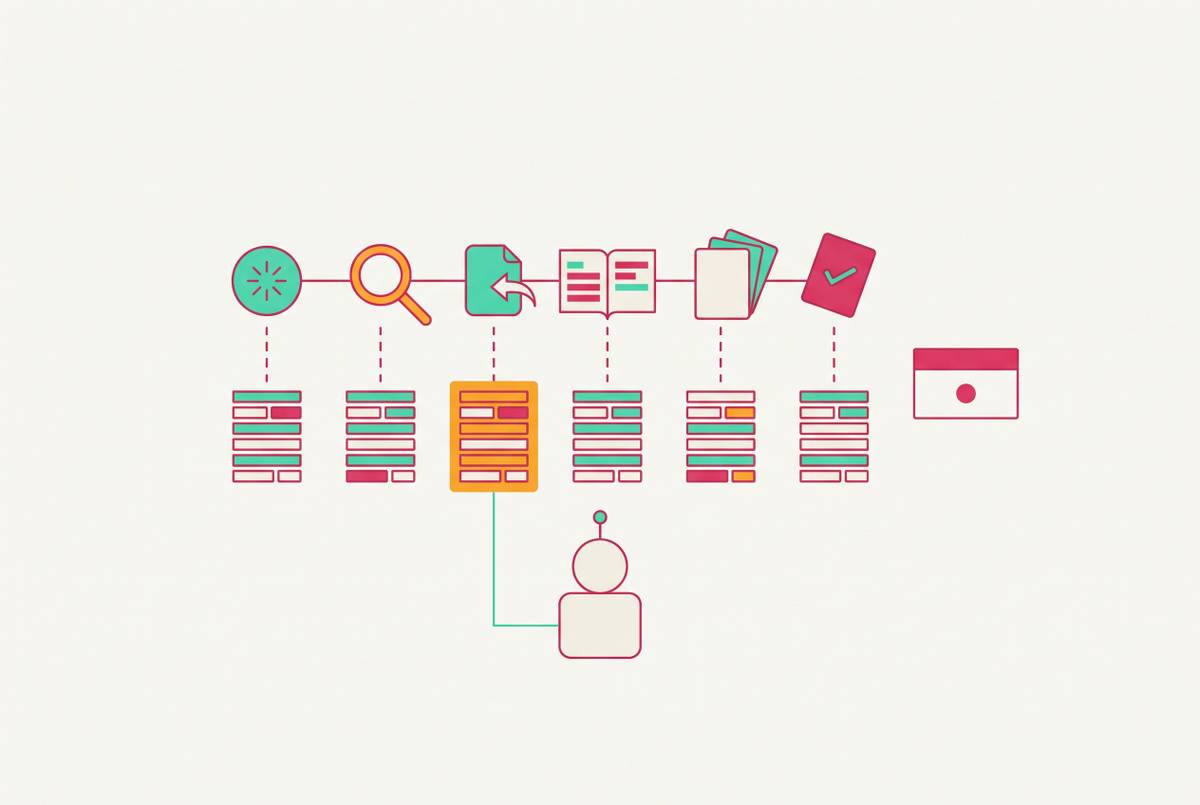
In an integrated pipeline, a person writes the brief, AI makes a draft and runs an optimization pass, and people then review and publish the work. AI citation monitoring comes after publication to track the output. This order places human judgment before generation sets the direction and again before the work becomes public.
The brief establishes the topic, structure, and success metrics. Those choices shape every later stage. A stronger drafting tool cannot repair a weak premise. Teams also need to check SEO and AEO signals during generation. Citation-worthiness, entity coverage, and extraction structure belong in the making of the article.
People then refine the work by testing what the automated passes cannot settle. Does the work sound like the brand, support its claims, and serve the intended strategy? Those questions require more than a light edit. Accuracy and editorial purpose become conditions of publication at this stage.
Publication does not finish the discovery job, either. Citation monitoring shows whether AI answer engines use the work, so it belongs in the pipeline itself. For a piece intended to earn AI citations, earning none means that objective remains unmet.
The third layer most teams have not budgeted for: AI citation optimization
Generative engine optimization changes what needs to be in the content before it is published. SEO helps a page get discovered, AEO structures it so an answer can be extracted, and GEO seeks a brand recommendation within an AI-generated response. These are three different jobs. Treating them as a single visibility score obscures whether the page was found, used as evidence, or translated into a recommendation.
The engines also draw on different signals. Ahrefs’ analysis found only partial overlap between pages cited in Google AI Overviews and top organic results, while its brand research found strong correlations between visibility and brand mentions in YouTube titles and transcripts. The October 2026 Machine Relations Index found that Perplexity surfaced community discussion more heavily than other engines, though editorial publications remained its largest citation category overall. Because Gemini uses Google’s Knowledge Graph, entity data has a role of its own.
This creates two surfaces for a brand’s presence. The owned “ground site” is the canonical, retrievable property where AI systems can find real, verifiable information to ground answers. The “phantom site” is the brand’s presence on high-authority third-party sources that models ingest. Consistent mentions there can contribute to AI citation independently of the owned site’s organic rank.
This is not simply “publish everywhere.” The two surfaces do different work, and volume alone fulfills neither role. Owned content supplies a source that can substantiate an answer, while third-party presence helps establish the brand beyond its own claims. An integrated pipeline must account for both rather than treating off-site visibility as compensation for a weak grounding source.
Why GEO playbook tactics are less reliable than their proponents claim
The need to earn AI citations does not make every GEO tactic reliable. Early benchmark findings suggested that adding quotations, statistics, and inline citations could bring large gains in citation-share. That promise is attractive because a generator can make those changes mechanically. But a repeatable editing operation is not necessarily a repeatable improvement in visibility.
Bajemon and Rochet’s September 2026 re-test challenged those findings. Statistics rewrites produced no positive pooled effect, while cite-sources was the only intervention with a statistically significant negative effect. The distinction is important here. Failing to detect a positive pooled effect is not the same as proving that statistics always reduce performance, and the result does not establish that useful sourcing should disappear from articles.
The priorities that hold up better over time stay closer to the basics of classical SEO. Accessibility comes first, followed by sound SEO, genuine brand mentions, topic-cluster coverage, extraction structure, and current information. This distinguishes the underlying conditions that make content usable and credible from surface changes intended to influence citation share.
That distinction strengthens the case for human refinement. A machine can insert a statistic, but someone still has to judge whether it is accurate, properly sourced, and relevant to the argument. The pipeline’s job is therefore to preserve depth and verifiable expertise while making them legible to machines.
What "Ghost Rankings" reveal about measuring the wrong thing
A “Ghost Ranking” occurs when an AI engine cites a brand’s content and recommends the brand, then suggests a competitor for the actual purchase or engagement. ChatGPT or Perplexity can make the brand visible without delivering the commercial outcome it sought. A dashboard counting citations alone can record success while missing that failure.
What, then, should the measurement layer capture? Citation quality and the commercial outcome of AI-referred traffic are more useful north-star measures than citation quantity alone. Mention frequency, citation position, sentiment, and share of voice help describe what that visibility means. They need separate tracking for ChatGPT, Perplexity, Gemini, AI Overviews, and Microsoft Copilot because the platforms behave differently.
The Bing AI Performance Dashboard offers a first-party foothold in that work. It has been public since February 10, 2026, with grounding queries added on March 24, 2026. Microsoft explicitly notes that it shows only a sample of overall citation activity. That limitation makes the data useful without making it a complete account of a brand’s AI visibility.
Traditional SEO tools do not surface these distinct signals. An organic ranking cannot show whether an AI response used a brand as evidence, praised it, or sent the user elsewhere. AI citation tracking is therefore a separate measurement category. Without it, the pipeline cannot distinguish being quoted from earning the recommendation that leads to engagement.
What an integrated pipeline with human review actually solves
An integrated design makes quality control part of the handoff from draft to publication, assesses AEO and GEO signals during creation, and includes citation monitoring after release. The draft cannot count as successful merely because it exists, and publication cannot count as success merely because it happened on time.
AI-generated suggestions remain reviewable, outputs remain auditable, and the ability to say no survives at each stage. That is a different role from adding polish to an otherwise automatic process. A suggestion must pass review before it becomes the brand’s public position.
A pipeline that publishes at cadence with review built in can avoid the manual approval routing that slows a fragmented stack. It can also connect owned content with the third-party presence that supports AI recommendations, without confusing the grounding role of one with the visibility role of the other. Integration is valuable because these activities inform the same editorial process.
The lesson for teams is to make those requirements part of the architecture decision, rather than purchases deferred until output disappoints. Separate tools can participate in that design, but separate responsibility for generation, review, and measurement leaves the central gap intact. The decisive test is whether the workflow preserves judgment as production expands. If it does not, buying more capacity only makes the unresolved weakness harder to contain.